
Crossing regional Australia in an iconic Toyota LandCruiser 80 Series is a rite of passage for generations of 4WD tourers. However, heading westward into a blinding late-afternoon sun across open outback highways turns the wagon’s expansive front cabin into an oppressive heat trap. Standard interior sun flaps only shade the driver’s eyes, doing nothing to stop infrared and ultraviolet solar rays once they penetrate the laminated glass. Fitting a heavy-duty 80 series sunvisor creates an architectural roof awning that intercepts harsh sunlight before it ever reaches the windscreen.
Beyond cutting down on dangerous highway glare and saving the factory dashboard from thermal fatigue, choosing the right 80 series sunvisor requires an understanding of how the 80 Series body differs from earlier utilities. Produced between 1990 and 1998, the platform introduced curved A-pillars and a raked windscreen while retaining traditional pressed-steel roof drip gutters. Selecting the proper 80 series sunvisor means choosing between solid steel and alloy mesh, checking snorkel clearances, and securing rain-gutter clamp brackets.
This comprehensive technical guide breaks down everything you need to know about an 80 series sunvisor—evaluating cab fitment across all model years, comparing solid steel against alloy mesh, detailing factory paint codes, and verifying Australian road regulations.
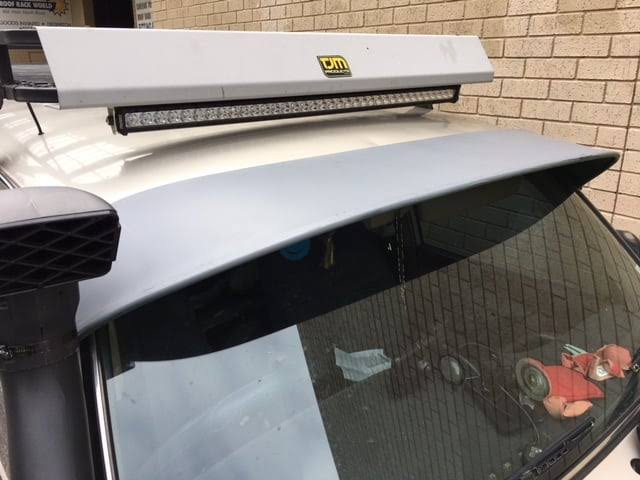
Cab Architecture: 80 Series Windscreen and Gutter Anatomy
When Toyota launched the 80 Series in 1990, it replaced the angular, boxy lines of the 60 Series with a smooth, aerodynamic body shell. Understanding how these contours interact with an exterior 80 series sunvisor is essential:
[ 80 Series Cab Architecture: 1990 to 1998 ]
• Curved, semi-raked windscreen glass with rounded upper corners
• Continuous, welded pressed-steel roof drip gutters running full vehicle length
• Structural A-pillar door frames with concealed weather-strip channels
• Shared upper cab sheet-metal dimensions across FJ80, FZJ80, HZJ80 & HDJ80
- Model Year Consistency (1990–1998): Unlike utilities that underwent major mid-generation body re-tooling, the upper cab structure, windscreen rake, and roof rain gutters remained identical throughout the 80 Series production run. An 80 series sunvisor engineered for an early 1991 HZJ80 bolts directly onto a late 1997 HDJ80 or FZJ80 without modification.
- Curved Upper Header: Because the 80 Series roofline features a distinct convex crown, an 80 series sunvisor must feature pre-formed mounting legs that follow this radius. Using universal flat brackets will distort the rain gutters or leave wide panel gaps.
- Rain Gutter Foundation: The presence of structural drip gutters allows an 80 series sunvisor to clamp securely to the roofline, eliminating the need to drill through the main outer roof skin.
For owners looking to restore or modify their wagon, purpose-built options such as the 80 Series sun visor provide precision-pressed brackets engineered specifically for the 80 Series gutter profile.
Solid Steel vs Alloy Mesh: Choosing Your Style
When selecting an 80 series sunvisor, the primary decision comes down to choosing between solid electro-galvanised pressed steel and expanded aluminium alloy mesh:
| Feature Specification | Solid Steel 80 Series Sunvisor | Alloy Mesh 80 Series Sunvisor |
| Base Material | Zinc-coated cold-rolled mild steel | Marine-grade expanded aluminium in a tubular frame |
| Solar Heat Rejection | 100% total direct blockout | 70% to 80% (Diffused filtration) |
| Airflow Behaviour | Diverts air over the roofline; requires rigid mounts | Air flows freely through open mesh louvers |
| Scrub & Branch Defense | Maximum deflection; slides heavy branches over cab | High resistance; branches slide over louvered screen |
| Paint Customisation | Supplied in grey primer ready for OEM paint | Pre-finished in durable satin black powder-coat |
| Component Weight | 5.5kg to 8.2kg | 2.5kg to 3.8kg |
| Aesthetic Stance | Classic factory-matched tourer with polished trim | Rugged, dark commercial utility appearance |
[ Solid Steel 80 Series Sunvisor ]
• Blocks 100% of overhead infrared radiation, keeping the dashboard completely shaded
• Heavy-gauge steel skin acts as external armor on overgrown high-country bush tracks
• Supplied in automotive primer ready for vehicle colour-matching
• Accented with a period-correct polished aluminium front edge highlight strip

[ Alloy Mesh 80 Series Sunvisor ]
• Expanded aluminium louvers allow high-speed highway air to flow through cleanly
• Eliminates wind buffeting, cab drumming, and high-frequency whistling at 110 km/h
• Lightweight construction places minimal dynamic load on roof drip gutters
• Powder-coated satin black finish complements dark bull bars and roof platforms
If your build prioritizes total cabin cooling, scrub branch deflection, and an authentic factory colour-matched look, a solid steel shield like the Solid 80 Series LandCruiser Sun Visor remains the benchmark.
If you spend thousands of kilometres cruising at 110 km/h on open highways and want near-zero aerodynamic resistance, an alloy mesh alternative like the Solid Heavy Duty Alloy Sun Visor or Solid Heavy Duty Alloy sunvisor delivers the ideal balance of glare diffusion and airflow efficiency.
Thermal Rejection: Protecting the 80 Series Dashboard
The 80 Series dashboard vinyl is celebrated for its durable design, but prolonged exposure to intense Australian ultraviolet and infrared radiation can cause irreversible heat degradation:
Direct High-Angle Solar Radiation (UV & IR)
       \   \   \
        v   v   v
    [=================]  <-- Exterior 80 Series Sunvisor (Blocks Top 30% of Sun)
            |
            v
     (Natural Air Flow)  <-- Dissipates heat before it touches the glass
            |
     [ Windscreen Glass ]
            |
     [ Dashboard Pad    ] <-- Stays significantly cooler, preventing cracking & warping
- Preventing Dashboard Warping: An 80 series sunvisor casts an unbroken shadow across the upper glass. By stopping overhead solar rays before they penetrate the glass, interior dashboard surface temperatures drop by up to 25°C, preventing the vinyl blistering and air vent cracking common on older wagons.
- Lowering Cabin Heat Soak: Shielding the cabin lowers interior ambient temperatures by 10°C to 12°C. This allows your air conditioning system to cool the expansive wagon faster, taking noticeable load off the engine on hot outback tours.
- Anti-Glare Underside Coating: Drawing on commercial road transport and aviation safety standards, the underside of an 80 series sunvisor is finished in non-reflective satin green or matte black enamel. This matte finish absorbs scattered light rays reflecting off the bonnet, preventing blinding reflections from entering the cabin.
For comprehensive cab shading across other classic utility builds, explore options like the Solid Toyota Landcruiser Sun Visor or classic Solid 4×4 Sun Visor for universal heavy-duty cab protection.
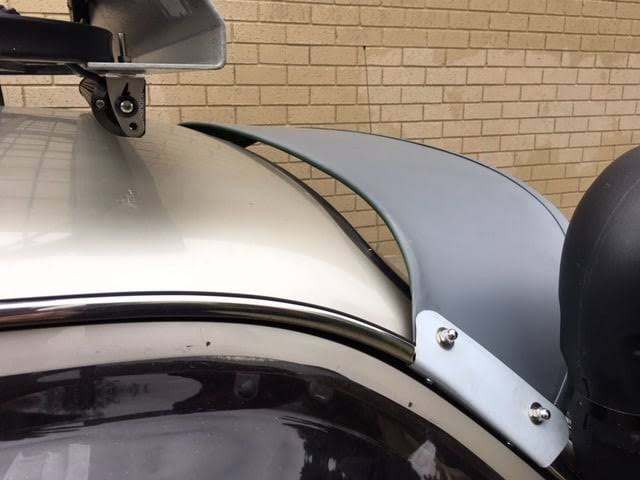
Snorkel Clearances: Factory Toyota vs 4-Inch Stainless Intakes
Most touring 80 Series wagons carry a raised air intake on the driver-side A-pillar to supply clean air to the 4.2L 1HD-T, 1HD-FT, 1HZ, or 4.5L 1FZ-FE engine. Ensuring proper clearance between your snorkel and your 80 series sunvisor is a vital pre-fitment step:
- Factory Toyota & Safari Snorkels: Standard plastic snorkels follow the driver-side A-pillar closely. A dedicated 80 series sunvisor incorporates a pre-formed scallop on its outer right wing, providing roughly 15mm to 20mm of clearance so the visor and snorkel never touch or rattle over washboard corrugations.
- Aftermarket 4-Inch and 5-Inch Stainless Snorkels: Custom large-bore stainless steel or alloy snorkels sit wider off the vehicle guard and pillar. When running a custom intake, always dry-fit your 80 series sunvisor before securing brackets. If clearance is tight, slightly slotting the snorkel’s upper A-pillar bracket provides the spacing needed to avoid metal-on-metal contact.
How to Colour-Match Your 80 Series Sunvisor
A solid steel 80 series sunvisor comes pre-treated in an automotive grey transit primer, ready for custom paint finishing to match factory Toyota bodywork:
[ Locate Toyota Paint Code on Engine Bay Firewall Build Plate ]
                               │
                               ▼
[ Wet-Sand Top Grey Primer with P400/P600 Sandpaper ]
                               │
                               ▼
[ Mask Polished Alloy Front Strip & Anti-Glare Underside ]
                               │
                               ▼
[ Apply 2 to 3 Coats of Automotive Basecoat Paint ]
                               │
                               ▼
[ Finish with High-Gloss 2K Polyurethane UV Clear Coat ]
Popular Toyota LandCruiser 80 Series factory paint codes include:
- Classic White: Code 045 (Extremely common across standard and GXL models)
- Dark Emerald Pearl (Green): Code 6M1 (Popular on mid-to-late GXL and VX models)
- Moonglow Pearl (Silver): Code 1A6 (Classic two-tone and solid silver finish)
- Pewter Metallic: Code 196 (Distinct grey metallic)
- Medium Red Pearl: Code 3H4 (Rich metallic red)
When painting your 80 series sunvisor, ensure the underside retains its anti-glare satin green or matte black finish. Never spray high-gloss white or metallic paint on the bottom face, as sunlight reflecting off your bonnet will bounce off the visor underside straight into your eyes.
For ute owners running adjacent heavy-duty platforms, options like the Solid 79 Series Sun Visor or Elite Toyota Land Cruiser 70-79 Series Sunvisor provide the same paint-ready flexibility for 70 Series workhorses.
Step-by-Step Installation: Rain Gutter Clamping & Sealing
Because the 80 Series features continuous roof rain gutters, installing an 80 series sunvisor is a secure mechanical process that preserves the vehicle’s outer roof panel:
[Thoroughly Clean Roof Drip Gutters of Road Grime and Old Wax]
                              │
                              ▼
[Dry Test-Fit Sunvisor Symmetrically Across Windscreen Frame]
                              │
                              ▼
[Position Gutter Clamps with Protective Rubber Isolator Gaskets]
                              │
                              ▼
[Mark & Drill Pilot Holes in Lower A-Pillar Door Seams (10mm Stop-Collar)]
                              │
                              ▼
[Treat Bare Metal with Cold-Galvanising Zinc-Rich Primer]
                              │
                              ▼
[Inject Automotive Polyurethane Sealant (Sikaflex 221)]
                              │
                              ▼
[Torque Stainless Fasteners Evenly & Allow 24h Full Cure]
1. Cleaning the Gutter Channels
Scrape out old, hardened wax and road dirt from the roof rain gutters using wax and grease remover. Clean gutters ensure the clamp brackets seat flat against the steel channel.
2. Dry Fitting and Symmetrical Centering
With an assistant, place the 80 series sunvisor into the roof gutters. Adjust until the visor is centered symmetrically across the windscreen, and confirm that both windscreen wiper arms clear the lower visor lip during their full sweep arc.
3. Gutter Clamp Assembly with Rubber Isolators
Never bolt bare metal clamp brackets directly against painted gutters. Fit high-density rubber or nylon isolator gaskets beneath each clamp plate. The J-hook clamp hooks beneath the rolled lower lip of the gutter, sandwiching the channel securely with high-tensile stainless steel bolts.
4. A-Pillar Secondary Fasteners
For maximum stability at 110 km/h, an 80 series sunvisor incorporates secondary locating screws that fasten into the outer A-pillar door-jamb seam. Drill clean pilot holes using a 10mm stop-collar, vacuum away all metal filings, coat the exposed edges with cold-galvanising zinc primer, and inject automotive polyurethane adhesive sealant (such as Sikaflex 221) directly into each hole.
5. Torquing and Curing
Tighten all fasteners evenly. The polyurethane will form a vulcanised, 100% waterproof seal that dampens acoustic vibrations. Allow the sealant to cure for 24 hours before driving at open-road highway speeds.
Australian Road Regulations and Compliance Standards
Any external frontal accessory must comply with national vehicle standards and state transport modification codes. When installing an 80 series sunvisor, your setup must satisfy the following safety rules:
- The 11-Metre Forward Field of View Rule: Under Australian Design Rule guidelines and state modification codes—including Transport Victoria VSI 8 Vehicle Modification Standards and Transport for NSW Light Vehicle Safety Check Rules—an external sun visor must not encroach into the driver’s primary line of sight. From a standard driving seating position, the driver must maintain an unobstructed view of the road surface 11 metres forward of the vehicle.
- Protrusion Limits and Radiused Edges: In accordance with Australian Standard AS 4876.1 and local regulations, external fittings must feature rounded, deburred edges with a minimum 5mm radius. Sharp brackets or un-radiused corners are strictly illegal on public roads.
- Lighting and Wiper Clearances: A compliant 80 series sunvisor must not obscure factory clearance lights or obstruct the sweeping motion of the windscreen wiper arms, complying with standards administered by the Department of Infrastructure ADR Vehicle Standards.
Frequently Asked Questions
Will an 80 series sunvisor fit onto a 70 Series or 100 Series LandCruiser?
No. An 80 series sunvisor is engineered specifically for the 80 Series cab. The 70 Series features a flatter, narrower windscreen with vertical A-pillars, while the 100 Series has a wider, gutterless aerodynamic roofline. The mounting bracket geometry on an 80 series sunvisor will not match either platform. Always select a visor built for your exact chassis code.
Can I install an 80 series sunvisor without drilling into my roof?
Yes. The primary structural mounting of an 80 series sunvisor utilizes heavy-duty vice clamps that hook around the vehicle’s factory roof drip gutters. You never drill through the outer roof skin. For high-speed highway stability, secondary locating screws fasten into the outer A-pillar door-jamb seam. When sealed with cold-galvanising primer and polyurethane adhesive, these small pillar fixings will never leak or cause rust.
Does an 80 series sunvisor cause wind noise at 110 km/h?
When fitted correctly, an 80 series sunvisor diverts air smoothly over the cab with minimal wind noise. Any whistling is typically caused by unsealed gaps between the mounting brackets and the A-pillar sheet metal. Sealing all bracket seams with automotive polyurethane and ensuring the visor sits centered eliminates whistling and high-speed flutter. If you want the quietest highway cruising possible, an expanded alloy mesh visor allows air to flow directly through the blade.
Why does an 80 series sunvisor feature an anti-glare green underside?
Quality visors feature specialized non-reflective satin green or flat black enamel on the underside. Borrowed from aviation and commercial road freight standards, this anti-glare coating absorbs scattered light rays reflecting off the bonnet. Painting the underside in a high-gloss body colour can reflect harsh sunlight into the driver’s eyes, making the matte finish an essential safety feature.
Will an 80 series sunvisor clear my 4WD snorkel?
Yes, provided you choose a dedicated 80 series sunvisor designed with a pre-formed right-hand wing scallop. This cutout clears factory Toyota and popular aftermarket plastic snorkels. If your wagon is fitted with an oversized custom 4-inch or 5-inch stainless steel snorkel, dry-fit the visor first to confirm there is adequate clearance between the snorkel pipe and the outer visor wing.
Summary: Equipping Your 80 Series for the Outback
Fitting a purpose-built 80 series sunvisor is one of the most practical and authentic upgrades you can make to your classic LandCruiser wagon. It eliminates blinding outback glare, saves your dashboard vinyl from irreversible UV heat damage, drops cabin temperatures by up to 12°C, and gives your wagon an iconic Aussie touring stance. By selecting a visor tailored to your cab contours, colour-matching the top skin with 2K clear coat, and clamping into the roof gutters with protective rubber isolators, your 80 Series will be ready for any remote journey.
Explore the dedicated 80 Series sun visor to upgrade your wagon’s cab protection, check out our full range of external 4WD sun visors for alternative vehicle setups, or pair your build with heavy-duty 4WD bull bars and front accessories to complete a dependable outback touring platform.