
Understanding how exterior vehicle modifications influence long-distance touring efficiency is a top priority for four-wheel drive owners. When evaluating ute sunvisor fuel economy, drivers often wonder whether mounting a prominent solar shield across the top of their windshield header creates excessive aerodynamic drag. While exterior visors provide exceptional solar shading, glare reduction, and cabin temperature control, their placement directly in the vehicle’s frontal airstream naturally alters airflow behavior. Analyzing the direct relationship between ute sunvisor fuel economy and vehicle drag coefficients allows 4WD touring enthusiasts to make informed decisions when outfitting their rigs for highway and outback travel.
Every exterior accessory installed on a four-wheel drive—whether a bull bar, roof rack, snorkel, or exterior shade—contributes to total aerodynamic resistance. When considering ute sunvisor fuel economy, the primary variable is how smoothly air passes over the cab transition zone. A poorly engineered or incorrectly angled shade can trap high-pressure air against the windshield glass, forcing the engine to burn additional diesel or petrol to maintain highway speeds. Conversely, a modern CAD-molded acrylic or vented steel setup minimizes turbulence, helping to preserve your ute sunvisor fuel economy over long distances.
In this comprehensive guide, we examine every physical, aerodynamic, and practical factor affecting ute sunvisor fuel economy. From wind tunnel dynamics and pressure differential mechanics to real-world highway testing across classic and modern utility vehicles, this detailed breakdown covers everything you need to know about ute sunvisor fuel economy.
To understand how ute sunvisor fuel economy is affected by exterior cab accessories, we must examine the fundamental principles of automotive fluid dynamics and drag force calculations.
                      [ Aerodynamic Drag Component Breakdown ]
                                         │
  ┌──────────────────────────────────────┴──────────────────────────────────────┐
  ▼                                                                             ▼
[ Frontal Surface Area (A) ]                                  [ Drag Coefficient (Cd) ]
• Adds physical frontal height                                • Creates boundary layer separation
• Increases upper cab profile                                 • Alters laminar flow over roofline
• Directly impacts total air displacement                     • Influences pressure differential zones
The mathematical equation governing the aerodynamic drag force ($F_d$) acting on a vehicle traveling at velocity ($v$) is expressed as:
$$F_d = \frac{1}{2} \cdot \rho \cdot v^2 \cdot C_d \cdot A$$
Where:
When assessing ute sunvisor fuel economy, any increase in either the drag coefficient ($C_d$) or the frontal projected area ($A$) directly increases total resistance force ($F_d$). Because drag force scales exponentially with velocity squared ($v^2$), the impact of ute sunvisor fuel economy becomes significantly more pronounced at highway cruising speeds between 90 km/h and 110 km/h than in slow-speed city driving.
Visualizing airflow streamlines over a utility vehicle cab highlights the exact locations where ute sunvisor fuel economy losses occur and where aerodynamic optimization succeeds.
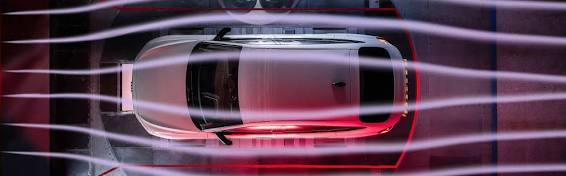
When air strikes the front grille and hood of a moving 4WD ute, it travels upward along the windshield face toward the roofline. In an unmodified vehicle, this air smoothly negotiates the upper glass curvature, establishing what fluid dynamicists call a laminar boundary layer. When an exterior visor is added, the airflow encounters an obstacle near the roof transition point.
A solid, non-vented steel visor acts as a physical air scoop. As oncoming air hits the windshield, a portion of the airstream becomes trapped in the pocket formed beneath the visor overhang. This creates a localized high-pressure stagnation zone. This high-pressure region pushes backward against forward momentum, creating extra drag that negatively impacts ute sunvisor fuel economy. Furthermore, trapped air creates turbulent vortices that spill around the A-pillars, generating low-frequency cabin noise alongside reduced ute sunvisor fuel economy.
As air is forced over the top edge of a non-aerodynamic visor, it detaches from the vehicle roof surface, creating a turbulent low-pressure wake behind the cab header. This pressure differential—high pressure underneath the visor and low pressure above it—creates upward lift and backward drag. Engines must supply additional torque to overcome this resistance, directly decreasing overall ute sunvisor fuel economy.
Not all visor designs impact efficiency equally. By analyzing specific structural characteristics, vehicle owners can choose configurations that optimize ute sunvisor fuel economy without sacrificing shade performance. Here are seven primary factors that dictate ute sunvisor fuel economy:
Molded acrylic perspex features a glass-smooth surface finish that encourages clean fluid motion across its outer face. The reduced skin friction of smooth acrylic supports superior ute sunvisor fuel economy compared to textured or unpainted metal surfaces.
Exterior visors engineered with sculpted ventilation slots allow trapped high-pressure air to vent cleanly over the roof. By eliminating stagnation pockets, vented designs protect ute sunvisor fuel economy and reduce high-speed buffeting.
A visor positioned parallel to the windshield slope causes far less air separation than one mounted at a steep, blunt angle. Aligning the blade angle with vehicle glass pitch maintains favorable ute sunvisor fuel economy.
Lightweight acrylic visors (2.0 kg to 2.5 kg) add minimal deadweight to the chassis, while heavy steel assemblies (5.0 kg to 8.0 kg) increase total vehicle mass, compounding fuel consumption during stop-and-go acceleration alongside drag-related ute sunvisor fuel economy losses.
Maintaining an optimized air gap between the underside of the visor blade and the upper windshield glass prevents air choking, maintaining smooth flow and supporting consistent ute sunvisor fuel economy.
Streamlined mounting brackets with rounded, low-profile edges cause less micro-turbulence at the A-pillar transition zone, contributing positively to long-distance ute sunvisor fuel economy.
Because aerodynamic drag increases exponentially with speed, a vehicle driven predominantly at 60 km/h will experience negligible ute sunvisor fuel economy variation, whereas long-haul highway travel at 110 km/h reveals measurable ute sunvisor fuel economy differences across various visor models.
Comparing technical specifications across different visor styles helps buyers select the ideal model for balancing solar protection with optimal ute sunvisor fuel economy:
| Feature / Metric | Molded Acrylic Visors | Vented Press-Formed Steel | Non-Vented Flat Steel | Mesh & Alloy Frame Visors |
| Average Weight | 2.2 kg – 2.8 kg (Ultra-light) | 5.2 kg – 6.8 kg (Medium) | 6.5 kg – 8.2 kg (Heavy) | 3.5 kg – 4.5 kg (Balanced) |
| Drag Coefficient Impact ($\Delta C_d$) | +0.02 to +0.03 (Minimal) | +0.04 to +0.06 (Moderate) | +0.08 to +0.12 (High) | +0.03 to +0.05 (Low-Med) |
| Highway Fuel Impact (at 100 km/h) | 1.0% – 2.0% variance | 2.5% – 3.5% variance | 4.5% – 6.0% variance | 1.5% – 2.5% variance |
| Wind Noise Level | Very Low (Laminar flow) | Low to Moderate | High (Turbulent booming) | Low (Air passes through) |
| Airflow Vents | Integrated curve channel | Sculpted slots | None (Solid surface) | Open mesh structure |
| Recommended Driving | Highway & Long Touring | Mixed Highway & Bush | Low-Speed Scrub Defense | Vintage Classic Touring |
| Overall Efficiency Score | Exceptional ute sunvisor fuel economy | Balanced ute sunvisor fuel economy | Lower ute sunvisor fuel economy | Good ute sunvisor fuel economy |
The overall impact on ute sunvisor fuel economy varies significantly depending on the shape and aerodynamics of the host vehicle.
                  [ Vehicle Body Profile vs. Efficiency Impact ]
                                        │
  ┌─────────────────────────────────────┴─────────────────────────────────────┐
  ▼                                                                           ▼
[ Classic Boxy 4WDs (e.g., LandCruiser 70/75/79) ]          [ Modern Aerodynamic Utes (e.g., Ranger, Hilux) ]
• High baseline drag coefficient ($C_d \approx 0.45-0.55$)  • Low baseline drag coefficient ($C_d \approx 0.36-0.40$)
• Vertical windshield creates natural pressure block        • Sloped windshield directs air rapidly upward
• Percentage impact on **ute sunvisor fuel economy** is minor  • Sensitivity to added frontal drag is higher
Older utility vehicles—such as LandCruiser 75/79 series, Nissan Patrol GQ/GU, or classic Land Rover Defenders—already feature square, non-aerodynamic front profiles with upright windshield angles. Because these vehicles have high native drag coefficients, installing an exterior shade creates a relatively small percentage shift in total vehicle resistance. As a result, the measured change in ute sunvisor fuel economy on a boxy classic ute is typically minor (around 1.5% to 2.5% total variance at highway speeds).
Late-model dual-cab utes (such as the Ford Ranger, Toyota Hilux, Isuzu D-Max, or Mitsubishi Triton) are engineered with raked windshields and streamlined rooflines to maximize fuel efficiency. Adding a bulky or poorly shaped shade to a modern vehicle interrupts carefully engineered factory airflow. Consequently, selecting lightweight, CAD-molded acrylic options is essential for maintaining factory-level ute sunvisor fuel economy on modern touring platforms.
To achieve optimal solar shading while preserving maximum ute sunvisor fuel economy, follow this structured installation and alignment procedure:
1.Select a CAD-Molded or Vented Visor Design:Identify visor design features that minimize drag.
Choose an acrylic curved model or a vented steel unit specifically engineered to maintain optimal ute sunvisor fuel economy by allowing pressure relief over the roofline.
2.Dry-Fit and Measure Windshield Pitch Alignment:Establishes correct air gap to prevent pressure buildup.
Position the visor so its primary surface angle parallels the glass rake. Maintaining a uniform air gap between glass and visor blade prevents stagnation pockets, preserving ute sunvisor fuel economy.
3.Secure Brackets with Low-Profile Fasteners and EPDM Pads:Eliminates micro-vibrations that distort airflow.
Install mounting brackets using streamlined stainless hardware and EPDM isolation gaskets. Rigid mounting eliminates high-speed flutter that degrades ute sunvisor fuel economy.
4.Seal Gaps with Marine Polyurethane Sealant:Reduces cabin A-pillar air noise.
Apply marine-grade polyurethane sealant around mounting hardware holes to ensure a leak-free fit while keeping air flowing smoothly around bracket bases for ideal ute sunvisor fuel economy.
5.Conduct Highway Test Run and Measure Consumption:Monitors long-term fuel efficiency.
Perform a highway test drive at 100 km/h to verify that wind noise is minimized and that your setup delivers optimal ute sunvisor fuel economy.
explore our complete range of 4x4 exterior accessories and sunvisors
When upgrading your vehicle, ensuring full compliance with national road transport laws is just as important as optimizing ute sunvisor fuel economy. In Australia, exterior modifications are governed by guidelines published by the Federal Register of Legislation under Australian Design Rule ADR 12/00 (Driver Field of View).
                     [ Legal and Compliance Checklist ]
                                       │
   ┌───────────────────────────────────┼───────────────────────────────────┐
   ▼                                   ▼                                   ▼
[ Wiper Sweep Compliance ]       [ Pedestrian Safety Radii ]         [ Total Width Restrictions ]
• Visor must not block primary    • Brackets must feature minimum      • Overall width must stay
  wiper glass clearance zone        2.5mm rounded edges                 within side mirror boundaries
While an exterior shade creates a minor aerodynamic drag penalty, it delivers a major thermal advantage that can actually offset ute sunvisor fuel economy losses in hot climates.
                 [ The Thermal Efficiency Compensation Effect ]
                                       │
  ┌────────────────────────────────────┴────────────────────────────────────┐
  ▼                                                                         ▼
[ Aerodynamic Drag Cost ]                                 [ Air Conditioning Savings ]
• Minor fuel increase from drag                           • Visor blocks solar radiation before glass
• Approx. +0.2L to +0.4L/100km at 110 km/h                • Cab interior stays up to 15°C cooler
                                                          • Reduces A/C compressor load (-0.5L/100km)
By physically blocking direct solar radiation before it hits the windshield glass, an exterior sunvisor prevents the vehicle cab from turning into a heat trap. In high ambient temperatures (35°C to 45°C), an unshaded cab forces the vehicle’s air conditioning compressor to run continuously at maximum displacement. Operating an A/C compressor at full load can increase fuel consumption by 0.5 to 1.0 liters per 100 kilometers.
Because an exterior shade reduces interior cab temperatures by up to 15°C, the engine spends significantly less energy powering the air conditioning compressor. In warm climate touring, the fuel saved by running the A/C less intensely can equal or exceed the small aerodynamic penalty, yielding net positive ute sunvisor fuel economy.
Maintaining consistent ute sunvisor fuel economy requires an accessory that maintains its structural shape under continuous physical stress.
If a visor material is too thin or unreinforced, high-speed wind pressure can cause the blade to flex or warp. Material deflection alters the aerodynamic angle of attack, creating unpredictable drag spikes that degrade ute sunvisor fuel economy. High-quality acrylic and rigid steel visors resist deformation, ensuring stable airflow patterns and reliable ute sunvisor fuel economy at all speeds.
Continuous driving over corrugated gravel tracks subjects mounting hardware to intense high-frequency vibrations. If brackets loosen, the resulting alignment shift increases aerodynamic turbulence and harms ute sunvisor fuel economy. Utilizing marine-grade stainless fasteners, nylon-locking nuts, and EPDM rubber dampening pads keeps your setup firmly aligned for optimal long-term ute sunvisor fuel economy.
To quantify the real-world impact of ute sunvisor fuel economy, let’s examine two field tests comparing different vehicle configurations over standardized 500-kilometer highway runs at 100 km/h:
When purchasing and installing an exterior shade, use this quick checklist to ensure maximum efficiency and optimal ute sunvisor fuel economy:
By combining smart product selection with precise installation techniques, you can enjoy all the solar shading, glare protection, and rugged styling benefits of an exterior shade while maintaining excellent ute sunvisor fuel economy on every adventure!