Outfitting your four-wheel-drive workhorse, dual-cab tourer, or commercial expedition rig with a heavy-duty front-end protection system is one of the single most important investments you can make for remote-area travel. When pushing through remote outback tracks, forestry trails, or high-speed regional highways, protecting your engine bay from catastrophic animal strikes and impact damage is non-negotiable. Installing a premium commercial deluxe steel bull bar delivers unmatched structural defense, ensuring your vital cooling systems, intercoolers, and engine components remain fully operational when you are hundreds of kilometers from the nearest service station. Because standard factory plastic bumpers offer zero structural resistance against heavy wildlife or scrub impacts, upgrading to a commercial deluxe steel bull bar is essential for safeguarding your vehicle investment.
For touring enthusiasts, fleet operators, and professional trade contractors, understanding the engineering advantages of a commercial deluxe steel bull bar guarantees that your vehicle’s chassis rails remain completely reinforced without hindering suspension articulation or engine cooling airflow. By utilizing high-tensile structural steel plates, chassis-mounted winch cradles, polyurethane isolation bushings, and anti-corrosion zinc primers, you eliminate both galvanic corrosion and structural bolt shear under heavy impact loads. Whether you are outfitting a Toyota LandCruiser, Nissan Patrol, Ford Ranger, or Isuzu D-Max, following a rigorous engineering and installation protocol ensures your commercial deluxe steel bull bar stands up to the harshest tracks without failing.
In this comprehensive technical guide, we break down the 8 proven reasons a commercial deluxe steel bull bar saves your 4×4 engine from destruction. From absorbing high-energy animal impacts and protecting cooling radiators to providing winch recovery platforms and mounting auxiliary lighting arrays, this extended engineering blueprint provides everything you need for a lifelong, heavy-duty front-end build.
Understanding the chassis load distribution, crash-pulse compatibility, and mechanical forces involved in a commercial deluxe steel bull bar setup is essential to preventing frame twisting, airbag deployment interference, and cooling airflow restrictions.
       [ Structural Architecture of Commercial Deluxe Steel Bull Bar ]
                                             │
  ┌──────────────────────────────────────────┴──────────────────────────────────────────┐
  ▼                                                                                     ▼
[ Heavy-Duty Chassis Mounting Rails ]                                   [ Integrated Winch Cradle & Protection Wings ]
• High-tensile 5mm to 6mm steel chassis-extending chassis arms          • Independent 6mm winch deck welded directly to main chassis spines
• Grade 8.8/10.9 high-tensile bolts torqued to precise factory specs    • Heavy-duty multi-fold wings shield headlights and front guards
• Precision shimming aligns bar gap evenly across front guards          • High-current solenoid pack securely mounted behind grille
• Coated with anti-corrosion zinc primer and durable powder coat        • Auxiliary LED fog lights and indicator wiring connected cleanly
When operating in remote regions or absorbing an off-road impact, a deluxe steel bar transfers immense kinetic energy directly into the vehicle’s chassis rails rather than crushing the fragile engine bay core support panels. A successful commercial deluxe steel bull bar design relies on extending heavy steel mounting arms deep into the chassis box sections rather than bolting solely to thin factory bumper tabs. Distributing these clamping forces evenly across multiple high-tensile fastener points during your commercial deluxe steel bull bar procedure prevents localized chassis tearing or frame bending during dynamic impacts.
Furthermore, maintaining unhindered cooling airflow to your engine radiator, transmission oil cooler, and intercooler is a critical design phase of any commercial deluxe steel bull bar. Modern turbo-diesel engines generate significant heat loads under heavy towing and slow-speed 4×4 crawling; deluxe commercial bars feature engineered louvered panels and high-flow mesh inserts that guarantee optimal thermal exchange while shielding the engine bay from flying debris.
Discover the 8 fundamental engineering reasons why installing a commercial deluxe steel bull bar is vital for protecting your 4×4 engine and ensuring trip survival:
A robust commercial deluxe steel bull bar features high-tensile steel uprights and multi-fold wings designed to absorb and deflect high-energy animal strikes (such as kangaroos, emus, or livestock) away from your vehicle’s fragile front grille and radiator.
By creating a rigid steel barrier several inches forward of your engine bay, a commercial deluxe steel bull bar prevents branch punctures, rocks, and debris from penetrating your radiator, ensuring your engine never suffers coolant loss in remote terrain.
Stuck in deep mud or sand? A commercial deluxe steel bull bar incorporates a heavy-duty, chassis-mounted winch deck capable of housing 9,500 lb to 12,000 lb electric winches, allowing you to extricate your engine and vehicle without outside assistance.
Unlike flimsy cosmetic nudge bars, a commercial deluxe steel bull bar utilizes extended chassis brackets that tie directly into the vehicle’s primary frame rails, providing exceptional structural rigidity during heavy impacts.
Night driving in regional areas presents immense wildlife hazards. A commercial deluxe steel bull bar provides secure, vibration-free mounting tabs for high-output LED driving lights and light bars, illuminating hazards long before they reach your engine path.
Equipped with reinforced recovery tow points and jacking slots, a commercial deluxe steel bull bar allows you to lift or pull the front end securely during challenging recovery scenarios.
The lower splash pans and wing extensions of a commercial deluxe steel bull bar protect sensitive steering linkages, sway bars, and front differential actuators from direct rock impacts.
Protecting your cab bodywork and engine cooling matrix from front-end damage ensures your vehicle maintains its structural integrity and higher market resale value over years of rugged use.
Follow this structured step-by-step engineering protocol to install your commercial deluxe steel bull bar safely, efficiently, and with structural perfection:
Carefully remove the factory plastic bumper, lower splash guards, factory fog lights, and grille assembly, taking note of all wiring clips and push pins to prepare for your commercial deluxe steel bull bar installation.
Inspect the exposed front chassis rails for factory paint flaws or transit damage. Clean mounting faces thoroughly with a wire brush and isopropyl alcohol to ensure clean metal-to-metal contact during your commercial deluxe steel bull bar setup.
Trim factory inner guard liners and plastic lower valence panels using a pneumatic cutting wheel or sharp utility knife to ensure adequate clearance around the new heavy-duty mounting arms.
Slide the heavy-duty steel mounting droppers and chassis brackets into the factory frame box sections. Insert high-tensile bolts hand-tight to allow for precise alignment during the next phase of your commercial deluxe steel bull bar installation.
Bolt the electric winch and hawse or roller fairlead directly into the central chassis winch cradle before hanging the outer shell, ensuring proper cable spooling alignment and electrical terminal clearance.
With the assistance of a helper or hydraulic workshop crane, lift the main commercial deluxe steel bull bar shell onto the chassis mounting arms. Insert alignment bolts and adjust gaps evenly between the bar wings and vehicle guards.
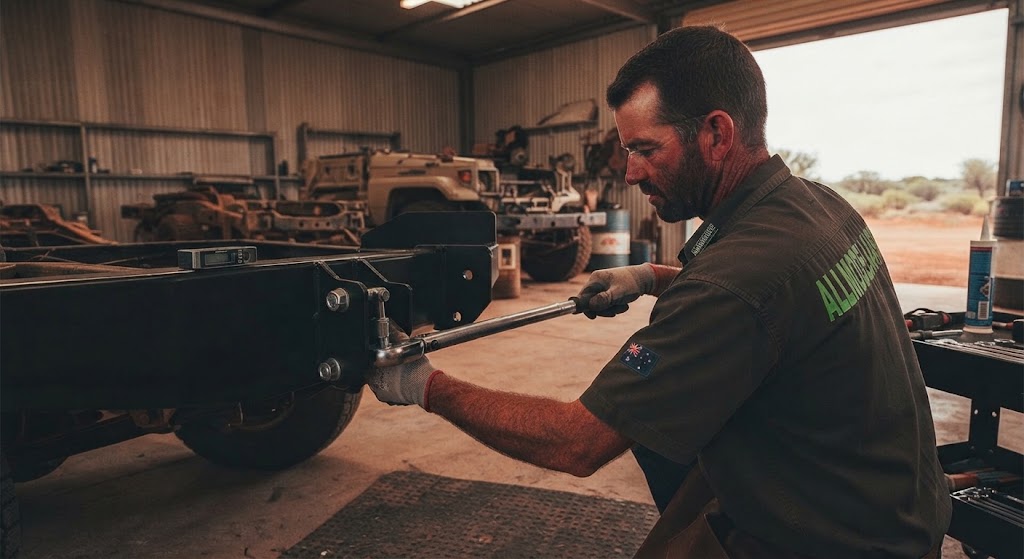
Using a calibrated torque wrench, tighten all grade 8.8 and 10.9 chassis mounting bolts and nuts to manufacturer-specified torque ratings to prevent loosening from engine vibration and corrugated tracks.
Connect integrated LED indicator lights, parking lamps, and fog lights into the vehicle’s factory wiring harness using solderless waterproof connectors. Mount the heavy-duty winch solenoid box and run thick battery leads directly to the main battery terminals with an inline fuse or isolator switch.
Bolt up under-vehicle bash plates and sump guards, ensuring seamless integration between the bottom of the commercial deluxe steel bull bar and the vehicle’s chassis protection matrix.
Verify that all lights function correctly, check that the winch spool operates smoothly under no load, and conduct a road test to verify zero rattles or steering interference, concluding your commercial deluxe steel bull bar installation.

Evaluating physical properties helps builders select the correct front protection design when choosing a commercial deluxe steel bull bar:
| Specification / Feature | Commercial Deluxe Steel Bar | Standard 3mm Steel Winch Bar | Alloy / Aluminium Bull Bar | Lightweight Poly Composite Bar |
|---|---|---|---|---|
| Material Construction | 4mm – 5mm Structural Steel Plate | 3mm Sheet Steel with 4mm Wing | High-Tensile Extruded Aluminium | Rotomolded Polyethylene Plastic |
| Average Assembly Weight | 65 kg – 85 kg fully equipped | 45 kg – 60 kg unwinched | 30 kg – 45 kg unwinched | 20 kg – 30 kg unwinched |
| Winch Compatibility | Heavy-Duty Winch Rated (12k+ lb) | Rated Winch Compatible (9.5k lb) | Moderate Winch Capability | Non-Winch or Light Winch Only |
| Impact Resistance | Exceptional (Maximum Rigidity) | High (Absorbs Major Animal Strikes) | Moderate (Prone to Cracking/Bending) | High Flexibility (Bounces Back) |
| Corrosion Susceptibility | Moderate (Requires Powdercoat Care) | Moderate (Requires Powdercoat Care) | Low (Aluminium Oxide Layer) | Impervious to Rust/Corrosion |
| Front Suspension Sag | Requires Heavy-Duty Coil Upgrade | Requires Heavy-Duty Coil Upgrade | Minimal Suspension Impact | Zero Suspension Impact |
| Offroad Recovery Rating | Dual Rated Recovery Points | Dual Rated Recovery Points | Single Rated Recovery Points | Tow Strap Attachment Only |
Selecting high-quality material components determines how your commercial deluxe steel bull bar performs under extreme physical stress, environmental exposure, and heavy recovery loads.
       [ Material Engineering for Commercial Deluxe Steel Bull Bar Assemblies ]
                                     │
  ┌──────────────────────────────────┴──────────────────────────────────┐
  ▼                                                                     ▼
[ High-Tensile Structural Steel Plate ]                 [ Grade 8.8 & 10.9 Fastener Hardware ]
• 4mm to 5mm laser-cut steel plates absorb high-impact kinetic force    • High tensile yield strength prevents bolt shear during recovery
• Multi-fold wing design distributes stress across chassis rails         • Zinc-plated or yellow chromate finish resists galvanic corrosion
• Durable textured black powder coat resists stone chips and scrub      • Nylon-insert locknuts prevent hardware loosening from engine vibration
• Integrated recovery point eyes tied directly into chassis mounts      • Torqued to exact engineering specifications for maximum clamping preload
Choosing heavy-gauge laser-cut steel plates for a commercial deluxe steel bull bar ensures exceptional structural strength. Unlike lightweight alloy bars that can crack under severe impact or plastic bumpers that offer zero protection, a structural steel bull bar absorbs high-energy collisions and shields engine bays, allowing your vehicle to remain operable in remote areas.
Pairing your steel bar structure with grade 8.8 or 10.9 high-tensile fasteners is essential for a secure commercial deluxe steel bull bar installation. Using substandard hardware during a heavy winch bar fitment is a dangerous mistake; high-tension recovery pulls require fasteners capable of withstanding tens of thousands of pounds of shear force without stretching or snapping.
explore our complete range of 4x4 armor,deluxe steel bull bar
Every completed commercial deluxe steel bull bar installation must satisfy national transport regulations. In Australia, exterior vehicle body attachments and front protection systems are regulated by standards published by the Federal Register of Legislation under Australian Design Rules ADR 69/00 (Full Frontal Impact Occupant Protection) and ADR 42/00 (General Safety Requirements).
                  [ ADR Safety Compliance Criteria ]
                                    │
   ┌────────────────────────────────┼────────────────────────────────┐
   ▼                                ▼                                ▼
[ Airbag Compatibility Standards ]  [ Maximum Projecting Width ]     [ Edge Radius & Safety Rules ]
• Must not interfere with SRS crash • Must not exceed outer vehicle    • All exposed bar edges must
  sensor deceleration thresholds    body or flare width boundaries   feature safe rounded radii
To ensure your commercial deluxe steel bull bar remains in peak structural condition over years of rugged touring, establishing a disciplined maintenance routine is essential.