
Long hours behind the wheel of a dual-cab or single-cab ute on rural Australian highways can turn the front cabin into an oven. When driving into low-angle morning or late-afternoon sun, factory internal sun flaps do little to block radiant heat once ultraviolet and infrared rays have already penetrated the glass. Installing a heavy-duty Toyota Hilux sun visor on the outside of your cab creates a physical roof overhang that intercepts sunlight before it ever reaches your windscreen.
However, selecting the correct Toyota Hilux sun visor requires an understanding of how Hilux cab architecture has evolved over the past thirty years. An exterior visor built for the classic rain gutters of an LN106 will not fit the smooth, curved pillars of an N70 or the steeply raked roofline of an N80.
This technical guide breaks down exterior visor options across the LN106, N70, and N80 Hilux generations, covering mounting methods, snorkel clearance, heat reduction dynamics, and Australian road regulations.
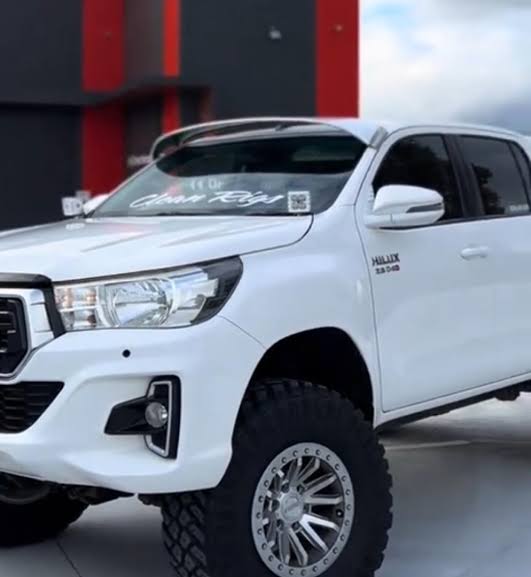
The Physics of External Shading: Why External Visors Beat Internal Flaps
Internal sun flaps shade your eyes, but they do nothing to stop thermal heat soak. By the time sunlight touches an internal shade, solar radiation has already passed through the laminated glass, heating the dark dashboard vinyl to temperatures exceeding 80°C.
An exterior Toyota Hilux sun visor functions like an architectural veranda:
Direct Solar Heat & UV Radiation
       \   \   \
        v   v   v
    [=================]  <-- Exterior Toyota Hilux Sun Visor (Blocks Top 30% of Sun)
            |
            v
     (Natural Air Flow)  <-- Dissipates heat before it touches the glass
            |
     [  Windscreen  ]
            |
     [  Dashboard   ]    <-- Remains cool, eliminating thermal heat soak
- Pre-Glass Radiation Interception: By stopping direct rays above the windscreen, the visor prevents the cabin greenhouse effect before it starts.
- Reduced Air Conditioning Load: Lowering dashboard surface temperatures can drop interior cab temperatures by up to 10°C to 12°C, reducing air-con compressor drag and saving fuel on long desert runs.
- Dashboard Preservation: Shielding the vinyl dashboard prevents the premature cracking, warping, and fading common to older utes exposed to extreme Australian UV levels.
- Anti-Glare Underside: Premium exterior visors feature an anti-reflective satin green or flat black underside coating that absorbs scattered light rays, eliminating the glare that bounces off white bonnets.
Model-by-Model Breakdown: LN106, N70 & N80 Hilux Compared
Each era of the Toyota Hilux features distinct roof widths, A-pillar contours, and windscreen rake angles.
| Hilux Generation | Model Years | Cab & Windscreen Profile | Primary Mounting Style | Snorkel Clearance Consideration |
| LN106 / RN105 | 1988–1997 | Boxy, vertical glass, external rain gutters | Gutter clamps & A-pillar screws | Straight A-pillar snorkel clearance |
| N70 Generation | 2005–2015 | Rounded aerodynamic cab, gutterless roof | A-pillar flange rivets / rubber jack-nuts | Scalloped cutaway required for factory/safari snorkels |
| N80 Generation | 2015–2026+ | Large raked windscreen, wide body contours | Precision A-pillar door-jamb brackets | Must clear snorkel & top TSS camera line of sight |
Classic Solid-Axle Legend: LN106 Hilux (1988–1997)
The fifth-generation Hilux—celebrated for its leaf-sprung solid front axle and indestructible diesel powerplants—features traditional pressed-steel roof drip gutters.
Fitting a dedicated Solid LN106 Hilux Sunvisor gives the vehicle a tough, period-correct outback appearance while drastically cutting glare across flat country.
- Mounting Setup: The presence of structural rain gutters allows the visor’s outer support legs to clamp securely into the channel, supported by stainless steel self-tapping screws or pop-rivets along the outer A-pillar face.
- Snorkel Positioning: Most LN106 raised air intakes run vertically alongside the right-hand A-pillar. Purpose-built LN106 visors are engineered with a recessed outer wing that leaves ample clearance for standard intake bodies.
The Workhorse Era: N70 Hilux (2005–2015)
In 2005, Toyota introduced the N70 generation, replacing boxy sheet metal with curved panels, integrated headlights, and a gutterless roof profile.
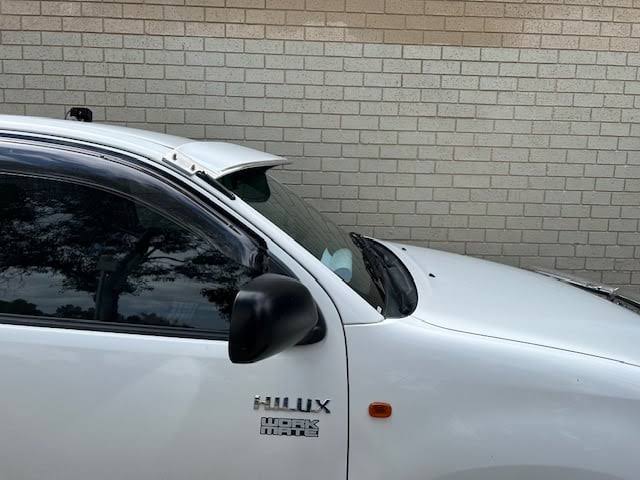
Because the N70 lacks exterior roof gutters, a modern Toyota Hilux sun visor on this chassis uses engineered A-pillar return brackets that mount inside the door-jamb line.
For this generation, options like the heavy-duty Solid N70 Hilux Sunvisor or the N70 Hilux Sunvisor Touring Shield deliver maximum shade across large glass areas.
Key considerations for the N70 include:
- Curved Cab Interface: The N70 roofline curves noticeably toward the outer edges. A quality visor must feature precision-formed end caps that follow this curve without leaving wide panel gaps.
- Snorkel Cutout: The N70 factory Toyota snorkel and aftermarket 4-inch stainless steel snorkels sit tight against the driver’s side A-pillar. Ensure your Toyota Hilux sun visor includes a pre-formed snorkel cutaway to prevent bracket fouling.
- Cab Structural Stability: Installing high-strength brackets using blind rivets or threaded rubber jack-nuts provides a rigid anchor that resists vibration over rough corrugations.
Modern Aerodynamics: N80 Hilux (2015–2026+)
The eighth-generation (N80) Hilux features a wide body with a steeply raked windscreen that invites substantial solar heat into the cabin.
Fitting a vehicle-specific Solid Toyota Hilux N80 Sunvisor provides a structural sun shade that integrates cleanly with modern styling.
          [ Toyota Safety Sense (TSS) Optical Camera ]
                    (Inside Top Centre of Windscreen)
                                  |
                                  v
    =============================================================== (Roof Line)
      [ Sun Visor Outer Wing ]               [ Sun Visor Outer Wing ]
    ===============================================================
              \                                       /
         (Maintain Open Center Horizon for Forward Camera View)
For late-model N80 owners, two major technical factors demand attention:
- Toyota Safety Sense (TSS) Integration: Mid-2019 and newer N80 models feature forward-facing optical cameras and sensors mounted at the top center of the windscreen behind the rear-view mirror. An N80-compatible Toyota Hilux sun visor must be designed so that its central trailing edge remains above the camera’s forward viewing angle, preventing system fault codes on the dash.
- Highway Aerodynamics and Pressure Relief: With cruising speeds of 110 km/h on open highways, poorly designed visors can trap air underneath, leading to wind roar and bonnet flutter. The Solid Toyota Hilux 2015-On Mesh Sunvisor solves this by utilizing an expanded aluminium mesh screen that diffuses harsh glare while allowing air to pass through freely.
Solid Steel vs Alloy Mesh: Selecting Your Construction
When buying an exterior Toyota Hilux sun visor, choosing between solid steel and alloy mesh comes down to where and how you drive:
[ Solid Steel Sun Visor ]
• Blocks 100% of direct overhead sunlight and radiant heat
• Maximum resistance against tree branches and scrub on overgrown bush tracks
• Primed finish ready to colour-match directly to Toyota factory paint codes
• Classic polished alloy front highlight strip for a clean finish

[ Alloy Mesh Sun Visor ]
• Partial light diffusion with high-level glare reduction
• Air passes through the mesh, reducing aerodynamic drag and wind noise
• Ultra-lightweight construction reduces front-axle dead weight
• Practical, heavy-duty commercial utility appearance
For rigorous outback touring and severe scrub driving, a heavy-duty option like the Solid 4×4 Sun Visor delivers unmatched durability. If highway fuel efficiency and minimal wind resistance are your priorities, a Heavy Duty Alloy Sun Visor provides excellent glare protection while allowing air to flow freely.
Australian Road Regulations and Compliance Standards
Any accessory mounted forward of the cabin must comply with national safety standards and state transport modification guidelines. Installing a non-compliant Toyota Hilux sun visor risks roadside defect notices from highway patrol officers or could void vehicle insurance coverage.
Key compliance frameworks include:
- Forward Field of View (11-Metre Rule): Under Australian Design Rule guidelines and state modification codes—including Transport Victoria VSI 8 Vehicle Modification Standards and Transport for NSW Light Vehicle Safety Check Rules—an external sun visor must not obscure the driver’s forward field of vision. The driver, seated in a normal driving position, must have an unobstructed view of the road surface 11 metres ahead of the vehicle.
- Edge Radii and Pedestrian Safety: Under Australian Standard AS 4876.1 and local regulations, external fittings must feature rounded, deburred edges with a minimum 5mm radius to minimise injury risks. Sharp metal corners or protruding brackets are strictly illegal on public roads.
- Lighting and Vision Sweeps: The visor must not obscure clearance lights, forward-facing cameras on modern driver-assist systems, or the sweep arc of the windscreen wipers. National standards are administered under the Department of Infrastructure Australian Design Rules.
Step-by-Step Installation and Waterproof Sealing
Fitting a Toyota Hilux sun visor is a straightforward workshop job, provided you follow proper weatherproofing procedures to protect against roof leaks and cab rust:
[Dry Test-Fit & Align Visor Symmetrically]
                   │
                   ▼
[Check Snorkel & Windscreen Wiper Clearances]
                   │
                   ▼
[Mark A-Pillar Mounting Holes & Center-Punch]
                   │
                   ▼
[Drill Pilot Holes & Apply Cold-Gal Zinc Primer]
                   │
                   ▼
[Inject Polyurethane Waterproof Sealant into Holes]
                   │
                   ▼
[Secure Fasteners, Wipe Excess Sealant & Cure 24h]
- Dry Fit and Verify Alignment: With a helper, set the Toyota Hilux sun visor onto the roof and A-pillars. Check that the visor sits symmetrical across the glass, does not pinch the door rubber seals, and clears your snorkel body before marking hole locations.
- Treat Bare Metal Immediately: Drill pilot holes using high-speed drill bits. Clean away all metal swarf and immediately apply a cold-galvanising zinc primer or automotive rust inhibitor to raw steel edges to prevent hidden corrosion inside the A-pillars.
- Use Neutral-Cure Polyurethane Sealant: Never use household acetic silicone, as it releases acetic acid that corrodes automotive sheet metal. Always use an automotive-grade polyurethane adhesive sealant (such as Sikaflex 221). Inject sealant directly into every drilled hole before driving in the screws or blind rivets.
- Torque and Settle: Tighten all fasteners evenly. Confirm that front doors open and close freely without touching the brackets, and allow the polyurethane adhesive sealant to cure for a full 24 hours before driving at highway speeds.
Summary: Equipping Your Hilux for the Long Haul
Fitting a high-grade Toyota Hilux sun visor provides essential relief from intense outback glare, preserves interior dashboard plastics, and keeps cabin temperatures comfortable on long tours. Whether you are restoring an iconic LN106 farm rig, setting up an N70 touring workhorse, or accessorising a late-model N80 dual-cab, choosing a visor engineered for your specific cab contours ensures a quiet, rattle-free fitment built to withstand the harshest Australian conditions.
Explore the complete range of external 4WD sun visors to find the right match for your vehicle, or browse compatible 4WD bull bars and front accessories to build a fully protected touring setup.
FAQ Section
Will an N70 Hilux sun visor fit an N80 model?
No. The N70 (2005–2015) and N80 (2015–2026+) feature completely different cab dimensions, windscreen angles, and roof contours. An N70 visor has different bracket spacing and will not seat flush on the wider, more raked N80 A-pillars. Always choose a visor engineered specifically for your generation.
Does an exterior sun visor interfere with a 4WD snorkel?
Purpose-built visors for the Hilux are engineered with pre-formed scallops or bracket offsets to clear factory Toyota and popular aftermarket snorkels. However, if your ute is fitted with an oversized custom 4-inch or 5-inch stainless steel snorkel, you should dry-fit the visor first to confirm there is adequate clearance between the snorkel pipe and the outer visor wing.
How do I prevent water leaks and roof rust when installing a sun visor?
Never use household acetic-cure silicone, which causes bare steel to rust. Always use an automotive-grade polyurethane adhesive sealant (such as Sikaflex 221). Treat all drilled pilot holes with a cold-galvanising zinc primer before injecting sealant directly into the hole prior to securing fasteners. This forms a 100% watertight, corrosion-proof seal.
Does an exterior visor interfere with Toyota Safety Sense (TSS) cameras on late N80s?
Quality N80-specific visors are designed so that the trailing edge sits above the optical field of view of the forward-facing camera mounted at the top center of the windscreen. Always verify that your visor leaves an open forward horizon to prevent false error codes on your multi-information display.
Are exterior sun visors street legal in Australia?
Yes. Exterior sun visors are recognised as compliant accessories under state vehicle standards (such as Transport Victoria VSI 8) provided they satisfy visibility criteria. The visor must not project into the driver’s primary line of sight—the driver must maintain a clear view of the road surface 11 metres forward of the vehicle—and the visor must feature smooth, rounded edges.