
Driving westward across regional Australian highways into a searing afternoon sun turns any 4WD windscreen into a wall of blinding light and radiant heat. Factory interior sun flaps help shade your eyes, but they do nothing to prevent solar radiation from penetrating the glass and superheating the dashboard vinyl. Equipping your vehicle with an exterior visor solves this problem by intercepting solar rays before they reach the windscreen.
When upgrading your setup, the central debate comes down to choosing a mesh vs solid sun visor. Both configurations serve distinct operating environments, offering clear trade-offs across aerodynamic drag, thermal heat rejection, scrub protection, and visual styling.
This guide breaks down the engineering differences, real-world highway performance, bush durability, and compliance standards to help you select the ideal sun visor for your build.
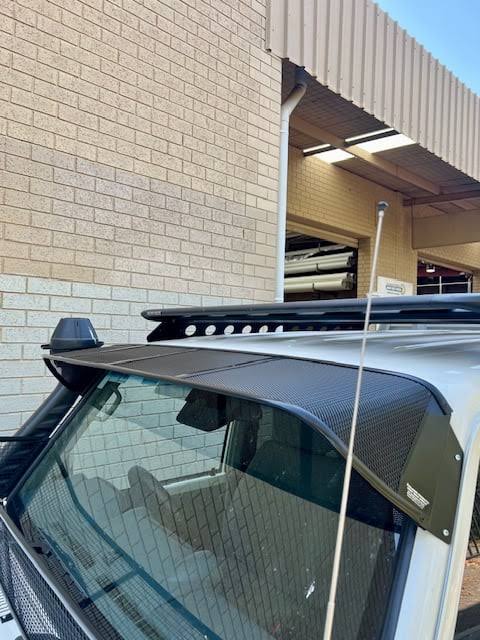
Core Differences: Engineering and Construction Compared
At a glance, both visor styles bolt above the windscreen, but their physical construction creates entirely different airflow and shading characteristics.
| Feature Category | Alloy Mesh Sun Visor | Solid Steel Sun Visor |
| Primary Material | Heavy-duty expanded aluminium mesh in an alloy frame | Zinc-coated pressed steel or composite with alloy trim |
| Solar Heat Rejection | Partial barrier (filters 70%–80% of direct light) | Total barrier (blocks 100% of direct overhead sunlight) |
| Aerodynamic Airflow | Air flows freely through mesh apertures | Air must divert over and around the solid wing |
| Wind Drag & Buffeting | Minimal drag; near-zero wind roar at 110 km/h | Higher frontal resistance; requires rigid mounting |
| Scrub & Branch Resistance | High (branches slide over mesh without denting) | Maximum (heavy steel deflects thick scrub branches) |
| Paint & Finish Options | Durable satin black or powder-coated finishes | Primed ready for automotive factory paint-matching |
| A-Pillar Mounting Stress | Low dynamic loading on door pillars and gutters | Moderate to high dynamic load at highway speeds |
Aerodynamic Performance and Highway Wind Noise
One of the most significant factors when comparing a mesh vs solid sun visor is aerodynamic behavior at open-road cruising speeds.
[ High-Speed Airflow Profile ]

Alloy Mesh Visor:
Air Stream ======> [  Mesh Apertures  ] ======> Low Pressure / Zero Buffeting
                   (Air passes through screen)

Solid Steel Visor:
Air Stream ======> [  Solid Steel Blade  ] ---> Air forced over cab & down glass
                   (Requires stiffeners to prevent high-speed flutter)
At 100 to 110 km/h on outback highways, air rushing over a modern utility cab creates a high-pressure zone forward of the windscreen.
- The Mesh Advantage: An alloy mesh sun visor features hundreds of precision-cut louvers. Air flows directly through the screen, preventing turbulent air pockets from forming beneath the visor pan. This eliminates high-speed bonnet flutter, keeps wind whistle to a minimum, and reduces aerodynamic drag.
- Solid Visor Airflow Dynamics: A solid steel sun visor acts as a complete air dam. Because air cannot pass through the body of the visor, it must divert over the roofline and down across the glass. If a solid visor is poorly fitted or lacks rigidity, this airflow dynamic can cause cab buffeting or resonant humming. High-end solid visors counteract this with rolled stiffening lips and rigid A-pillar brackets.
Thermal Rejection: Cabin Heat and Dashboard Preservation
Controlling cabin temperatures during an Australian summer requires understanding the physics of solar radiation:
Direct Infrared & UV Radiation
       \   \   \
        v   v   v
    [=================]  <-- Solid Visor (100% Direct Block) vs Mesh (Diffused Filter)
            |
            v
     (Natural Air Flow)  <-- Dissipates heat before it touches the glass
            |
     [  Windscreen  ]
            |
     [  Dashboard   ]    <-- Remains significantly cooler, saving interior vinyl
When evaluating a mesh vs solid sun visor purely on cabin cooling:
- Solid Sun Visors Win on Heat Blockout: A solid steel visor casts an unbroken, opaque shadow across the upper third of the glass. By completely eliminating direct infrared (IR) and ultraviolet (UV) penetration across the upper glass, a solid visor stops your dashboard from turning into a heat sponge. Cab temperatures can drop by up to 12°C, taking significant load off your air conditioning compressor.
- Mesh Sun Visors Diffuse Glare: An expanded aluminium mesh screen works like heavy architectural shade cloth. It breaks up direct sunlight, reduces eye strain, and eliminates blinding bonnet glare without creating a total blackout zone. While it cuts radiant heat noticeably, some solar warmth still passes through the mesh perforations.
Bush Durability: Heavy Scrub, Tree Branches, and Flying Debris
For pastoralists, forestry contractors, and hardcore bush tourers, overhead tree strikes are an everyday reality.
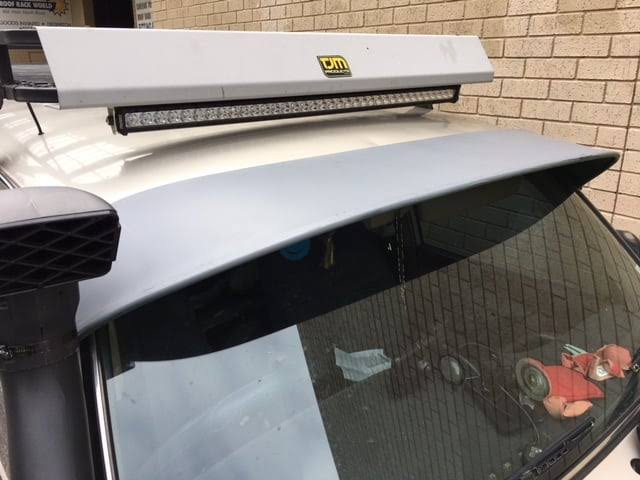
Both visor styles handle off-road abuse differently:
- Solid Steel Strength: A heavy-gauge, zinc-coated steel visor—such as the Solid 4×4 Sun Visor—acts as an exterior roll shield for the top of your windscreen. When pushing through overgrown scrub, heavy tree branches slide up and over the smooth steel skin without cracking the upper windscreen seal.
- Alloy Mesh Flexibility: Modern options like the Solid Heavy Duty Alloy Sun Visor utilise tough aluminium mesh welded into a rigid tubular frame. While alloy mesh resists stone chips and light branches easily, extremely heavy, pointed limbs on tight single-tracks can occasionally snag on the mesh apertures if struck at high speed.
Visual Aesthetics: Paint Matching vs Outback Utility
Aesthetic appeal is often the deciding factor when choosing between a mesh vs solid sun visor:
- The Outback Utility Style (Mesh): An all-black alloy mesh visor gives dual-cab utes and work wagons a purposeful, rugged commercial look. It pairs naturally with matte black bull bars, black rock sliders, and dark powder-coated roof trays.
- The Factory-Matched Cruiser Look (Solid): Solid steel visors—such as the Solid Toyota Landcruiser Sun Visor—typically come pre-treated in an automotive primer. This allows you to paint-match the visor directly to your vehicle’s factory paint code (e.g., Sandy Taupe, French Vanilla, or Graphite). Paired with an anti-glare green underside and a polished aluminium front edge strip, a painted solid visor preserves classic, premium outback lines.
For ute owners running classic models, a dedicated Solid LN106 Hilux Sunvisor or a model-specific Solid N70 Hilux Sunvisor delivers clean, period-correct lines that flow seamlessly with the vehicle’s bodywork.
Australian Road Regulations and Compliance Standards
Any accessory mounted forward of the cabin must comply with national safety standards and state transport modification guidelines. Installing a non-compliant mesh vs solid sun visor risks roadside defect notices from highway patrol officers or could void vehicle insurance coverage.
Key compliance frameworks include:
- Forward Field of View (11-Metre Rule): Under Australian Design Rule guidelines and state modification codes—including Transport Victoria VSI 8 Vehicle Modification Standards and Transport for NSW Light Vehicle Safety Check Rules—an external sun visor must not obscure the driver’s forward field of vision. The driver, seated in a normal driving position, must have an unobstructed view of the road surface 11 metres ahead of the vehicle.
- Edge Radii and Pedestrian Safety: Under Australian Standard AS 4876.1 and local regulations, external fittings must feature rounded, deburred edges with a minimum 5mm radius to minimise injury risks. Sharp metal corners or protruding brackets are strictly illegal on public roads.
- Lighting and Vision Sweeps: The visor must not obscure clearance lights, forward-facing cameras on modern driver-assist systems, or the sweep arc of the windscreen wipers. National standards are administered under the Department of Infrastructure Australian Design Rules.
Which One Should You Choose?
Choose an Alloy Mesh Sun Visor if:
✔ You spend significant time cruising at 100–110 km/h on open highways.
✔ You want minimal wind roar and zero cab buffeting.
✔ You prefer a lightweight setup that places minimal stress on A-pillars.
✔ You like a rugged, dark outback utility look that matches black accessories.

Choose a Solid Steel Sun Visor if:
✔ You want 100% sunlight blockout to keep cabin temperatures as cool as possible.
✔ You want to colour-match the visor directly to your vehicle's factory paint.
✔ You regularly drive overgrown bush tracks where heavy branches strike the cab.
✔ You want a classic, heavy-duty outback touring aesthetic.
If you are outfitting a LandCruiser workhorse, options like the Solid 79 Series Sun Visor or the Solid 80 Series LandCruiser Sun Visor offer proven long-term durability against extreme outback heat.
For late-model ute platforms running higher cruising speeds, modern mesh alternatives such as the Solid Toyota Hilux 2015-On Mesh Sunvisor provide the perfect balance between highway aerodynamics and low-angle glare diffusion.
Summary: Equipping Your Rig for Outback Touring
Deciding between a mesh vs solid sun visor comes down to balancing aerodynamic efficiency with maximum thermal heat rejection. If you prioritize effortless highway cruising, reduced drag, and low wind noise, an alloy mesh visor is the ideal choice. If your goal is total solar blockout, maximum cabin cooling, and heavy scrub defence, a paint-matched solid steel visor remains the gold standard.
Explore the complete range of external 4WD sun visors to find the right profile for your 4×4, or pair your cab shade with heavy-duty 4WD bull bars and front accessories to build a touring rig engineered for the toughest Australian conditions.
FAQ Section
Does a solid sun visor cause noticeable wind noise at 110 km/h?
A properly engineered and correctly mounted solid visor will not create excessive noise, but it does produce more wind resistance than a mesh visor. Solid visors require rigid A-pillar brackets and rolled stiffening edges to prevent high-speed flutter. If your build prioritizes near-silent highway cruising, an alloy mesh visor offers significantly lower wind resistance and quieter performance.
Can I paint-match an alloy mesh sun visor?
While it is technically possible, alloy mesh visors are almost always supplied in durable satin black or textured powder-coated finishes. Trying to colour-match the hundreds of tiny mesh louvers with automotive two-pack paint can clog the apertures and lead to uneven coverage. If you want a smooth, factory paint-matched finish that mirrors your vehicle’s body color, a solid steel or composite visor is the best choice.
Which visor keeps the cab cooler: mesh or solid?
A solid sun visor provides superior heat reduction. Because it is completely opaque, it blocks 100% of direct overhead sunlight from striking the glass and dashboard, which can lower interior temperatures by up to 12°C. An alloy mesh visor diffuses harsh glare and reduces eye strain significantly, but some solar radiant heat still passes through the mesh openings.
Will branches snag on an alloy mesh sun visor?
Standard expanded aluminium mesh visors are built from heavy-gauge alloy with smoothly pressed diamond apertures, allowing everyday scrub and light branches to slide across without catching. However, on extremely tight, overgrown tracks with thick, pointed hardwood limbs, a solid steel visor provides better deflection because there are no perforations for branches to hook onto.
Are both mesh and solid sun visors street legal in Australia?
Yes, both styles are street legal across all Australian states and territories, provided they comply with the 11-metre forward vision rule outlined in state guidelines like Transport Victoria VSI 8 and Transport for NSW standards. The visor must not drop into the driver’s primary line of sight, must leave an unobstructed view of the road 11 metres ahead, and must feature smooth, rounded outer edges.