
Long highway touring across regional Australia places intense demands on driver vision and cabin thermal comfort. When heading into blinding low-angle morning or late-afternoon sun, internal sun flaps fail to stop infrared rays from heating the windscreen and dashboard vinyl. Installing an external shade intercepts solar energy before it penetrates the glass, reducing interior cab temperatures by up to 12°C.
When choosing an exterior shade, the central decision comes down to evaluating an alloy vs steel sun visor. Both materials offer distinct metallurgical strengths, mass trade-offs, corrosion profiles, and cost considerations for different driving environments.
This technical guide breaks down everything you need to know when comparing an alloy vs steel sun visor—evaluating weight distribution, coastal rust resistance, bush durability, purchase pricing, and Australian road regulations.
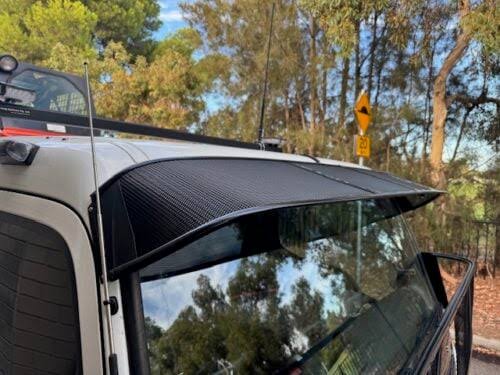
Metallurgical Overview: Aluminium Alloy vs Pressed Mild Steel
Before assessing on-road performance, understanding the physical properties of each material is essential:
[ Aluminium Alloy Construction ]
• Base Metal: Marine-grade 5052 / 6061 aluminium alloy sheet or expanded mesh
• Density: ~2.7 g/cm³ (roughly one-third the weight of steel)
• Natural Oxide Layer: Passivates naturally to resist atmospheric rust
• Standard Finishes: Satin black powder-coat or textured architectural coating

[ Pressed Mild Steel Construction ]
• Base Metal: Cold-rolled, electro-galvanised mild steel sheet
• Density: ~7.85 g/cm³ (high tensile rigidity and physical mass)
• Protective Coating: Sacrificial zinc plating under an automotive primer
• Standard Finishes: Primed ready for OEM automotive paint-matching
These structural differences explain why an alloy vs steel sun visor selection directly impacts how your vehicle carries weight, handles scrub, and weathers coastal environments.
Weight Comparison: Front Axle Loads and Cab Stress
Weight forward of the front axle centerline acts as a dynamic lever over the front suspension. In an alloy vs steel sun visor comparison, mass difference is immediately noticeable:
| Structural Specification | Aluminium Alloy Sun Visor | Solid Pressed Steel Sun Visor |
| Average Unfitted Weight | 2.5kg to 4.2kg | 5.5kg to 8.5kg |
| Front Overhang Dynamic Load | Extremely low dynamic lever force | Moderate forward mass over A-pillars |
| A-Pillar Fastener Stress | Minimal shear load on rivets or clamps | Higher shear load requiring rigid anchoring |
| Corrugation Vibration | High-frequency damping; near-zero rattle | Lower frequency; demands stiffening beads |
Dynamic Overhang Stress at 110 km/h:
Alloy Sun Visor:     [== 3.2kg ==]  --> Low dynamic load on A-pillar seams
Steel Sun Visor:     [===== 7.2kg =====]  --> Higher mass requiring rigid anchors
Choosing a lightweight option like the Solid Heavy Duty Alloy Sun Visor or the Solid Heavy Duty Alloy sunvisor cuts total assembly weight by over 50%. For 4WDs carrying heavy front-end accessories (steel bull bars, 12,000lb winches, and dual batteries), selecting an alloy shade avoids adding unnecessary mass over the front axle.
Conversely, a steel shade—such as the Solid 4×4 Sun Visor—carries higher mass, but provides the structural rigidity needed to span broad windscreens without intermediate supports.
Rust and Corrosion Resistance: Coastal Salt vs Red Dirt
Corrosion resistance is a major factor when evaluating an alloy vs steel sun visor, particularly for vehicles operating in coastal regions, beach runs, or tropical northern Australia.
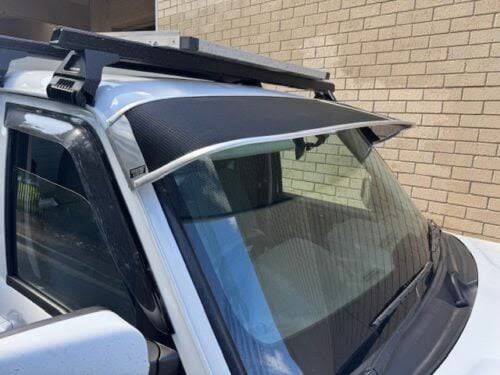
Aluminium Alloy: Immune to Red Rust
Aluminium naturally reacts with atmospheric oxygen to form a thin, microscopic film of aluminium oxide. This passivation layer prevents moisture and oxygen from reaching the underlying metal.
- Salt Spray Resilience: Even if kicked-up gravel or low-hanging branches chip the powder-coat on an alloy shade, the exposed aluminium will never develop red iron oxide rust.
- Galvanic Isolation Warning: Because aluminium has a different galvanic potential than the steel A-pillar sheet metal, you must install nylon, rubber, or polyurethane isolator pads between the alloy brackets and the cab to prevent galvanic corrosion.
Pressed Mild Steel: Zinc-Plated Protection
Quality steel units—like the Solid Toyota Landcruiser Sun Visor—are fabricated from zinc-treated electro-galvanised steel sheet.
- Sacrificial Barrier: The zinc coating acts as a sacrificial barrier that corrodes before the base steel can oxidize.
- Gravel Chipping Vulnerability: If severe stone chips penetrate both the clear coat, basecoat, and zinc primer, bare steel is exposed. In humid coastal environments, untreated stone chips can develop surface rust stains unless touched up with automotive paint.
Durability and Impact Resistance: Scrub Tracks vs Highway Touring
How does an alloy vs steel sun visor handle real-world off-road abuse?
[ Scrub Impact: Solid Steel ]
Thick Hardwood Branch ======> [ Heavy-Gauge Steel Blade ] ======> Deflects up & over cab
                              (Resists denting; high puncture resistance)

[ Scrub Impact: Aluminium Alloy ]
Thick Hardwood Branch ======> [ Lightweight Alloy Blade ] ======> Absorbs impact
                              (Softer metal; heavy strikes can crease or gouge)
- Heavy Scrub and Branch Strikes: For station work, forestry duties, and tight overgrown tracks, steel is superior. The higher tensile strength of a solid steel visor allows heavy eucalyptus branches to slide over the cab without tearing or permanently creasing the panel.
- Highway Debris and Sand Blasting: On open highway runs, an alloy mesh screen diffuses stone strikes and insect impacts effortlessly, allowing air to pass through without chipping glossy painted surfaces.
Cost Analysis: Upfront Purchase vs Long-Term Ownership
Assessing an alloy vs steel sun visor requires looking at both upfront purchase price and the total cost of finishing the product:
| Expense Category | Aluminium Alloy Sun Visor | Solid Pressed Steel Sun Visor |
| Base Purchase Price | Moderate to High (alloy materials cost more) | Low to Moderate (cost-effective fabrication) |
| Initial Finish | Pre-finished in satin black or dark powder-coat | Supplied in protective grey primer |
| Additional Painting Costs | $0 (Ready to install out of the box) | $150 to $350 (Professional colour-matching) |
| Maintenance Over Time | Zero rust maintenance required | Periodic stone-chip touch-ups required |
| Total Turnkey Expense | Cost-effective turnkey installation | Higher total cost if professionally painted |
A solid steel unit—such as the Solid N70 Hilux Sunvisor or Solid LN106 Hilux Sunvisor—offers a lower initial purchase price, but requires professional 2K colour-matching to match your vehicle’s factory paint code.
Conversely, an alloy visor arrives fully powder-coated and ready to bolt onto the cab, making it a faster, more cost-effective choice for owners who prefer a satin black finish that matches dark bull bars and roof racks.
Head-to-Head Comparison: Finding the Right Fit
Choose an Aluminium Alloy Sun Visor if:
✔ You live near the coast or regularly drive on salt-spray beaches.
✔ You want to minimise weight forward of the front axle.
✔ You want a ready-to-mount satin black finish without extra paint costs.
✔ You prefer high-speed aerodynamic airflow with minimal drag.

Choose a Solid Steel Sun Visor if:
✔ You want 100% total sunlight and heat blockout over the glass.
✔ You want to colour-match the visor directly to your factory body paint.
✔ You drive overgrown bush tracks where heavy branches strike the cab.
✔ You want an authentic outback touring look with a polished alloy front edge.
For LandCruiser owners seeking heavy-duty protection, specialized options like the Solid 79 Series Sun Visor or the Elite Toyota Land Cruiser 70-79 Series Sunvisor deliver rock-solid performance across remote corrugated tracks.
Australian Road Regulations and Compliance Standards
Any external frontal accessory must comply with state and national road transport rules. When installing an alloy vs steel sun visor, you must satisfy roadworthy guidelines:
- The 11-Metre Forward Field of View Rule: Under state vehicle standards—including Transport Victoria VSI 8 Vehicle Modification Standards and Transport for NSW Light Vehicle Safety Check Rules—an external sun visor must not drop into the driver’s primary sightline. The driver, seated in a standard driving posture, must maintain an unobstructed view of the road surface 11 metres forward of the vehicle.
- Protrusion Limits and Radiused Edges: In accordance with Australian Standard AS 4876.1 and local regulations, external fittings must feature rounded, deburred edges with a minimum 5mm radius. Sharp brackets or un-radiused corners are strictly illegal on public roads.
- Lighting and Wiper Clearances: A compliant sun visor must not obscure factory clearance lights or obstruct the sweeping motion of the windscreen wiper arms, complying with standards administered by the Department of Infrastructure ADR Vehicle Standards.
Frequently Asked Questions
Which is lighter: an alloy vs steel sun visor?
An alloy sun visor is significantly lighter than a steel equivalent. High-grade aluminium alloy has roughly one-third the density of steel, resulting in an average total weight of 2.5kg to 4.2kg, compared to 5.5kg to 8.5kg for a solid steel visor. This weight savings reduces dynamic strain on your A-pillars and keeps front axle loads to a minimum.
Will an alloy vs steel sun visor rust over time?
An alloy visor will never produce red rust. Aluminium passivates naturally by creating an oxide barrier that halts environmental corrosion, making it ideal for coastal areas and beach driving. A steel visor relies on sacrificial zinc electro-plating and automotive paint coats; if severe stone chips penetrate down to bare steel, minor surface rust can develop if left untreated.
Can an alloy vs steel sun visor be colour-matched to my vehicle?
Yes, both materials can be painted. However, solid steel visors are typically supplied in a pre-scuffed automotive primer designed specifically for easy basecoat and 2K clear coat application. While an alloy visor can be painted, it usually arrives in a pre-finished satin black powder-coat, requiring an acid-etch primer if you choose to repaint it in factory body colours.
Which option handles heavy scrub better: an alloy vs steel sun visor?
A solid steel visor handles heavy scrub and thick branch strikes better. Mild steel has a higher tensile strength and greater surface hardness than aluminium, allowing thick hardwood branches to slide up and over the cab roof without creasing the metal. Heavy branch strikes that leave minor scratches on steel can potentially dent or gouge softer aluminium panels.
Does an alloy vs steel sun visor cost more overall?
The initial purchase price of an alloy visor is often slightly higher due to raw material costs. However, because alloy visors arrive pre-powdercoated and ready to bolt on, they can be more cost-effective overall. A steel visor costs less upfront, but if you choose to have it professionally spray-painted to match your vehicle’s factory paint code, the total finished investment is roughly comparable.
Summary: Equipping Your 4×4 with the Right Shield
Deciding on an alloy vs steel sun visor comes down to your operating environment, styling preferences, and budget. If you frequent coastal beaches, want to minimise front axle weight, and prefer a ready-to-fit satin black powder-coat finish, aluminium alloy is the logical choice. If you want maximum physical protection against heavy bush scrub, total thermal sunlight blockout, and a colour-matched factory appearance with polished trim, a solid steel visor remains the gold standard for Australian touring.
Explore the complete range of external 4WD sun visors to find precision-engineered protection for your rig, or pair your cab shade with heavy-duty 4WD bull bars and front accessories to complete an off-road touring build engineered for the toughest Australian conditions.