
Driving through regional Australia and remote outback transport corridors at dawn, dusk, or night carries an ever-present risk of high-speed animal strikes. Colliding with a feral camel, large kangaroo, or stray bovine in an unprotected vehicle will instantly write off your cooling pack, trigger radiator collapse, and leave you stranded hundreds of kilometres from help. When severe-duty rural operators prepare their vehicles for remote highways, a heavy-duty 5 post bull bar represents the ultimate benchmark in vehicle frontal protection.
While standard commercial and touring bars rely on single or triple-hoop configurations, a 5 post bull bar utilizes an integrated structural grid engineered for maximum impact deflection. The extra vertical posts transform the front end of your 4WD into a rigid defensive barrier, preventing heavy livestock from crushing headlights, radiator assemblies, and front steering linkages.
This comprehensive guide breaks down the engineering behind a 5 post bull bar—evaluating structural post spacing, multi-tier cross-pipe geometry, chassis mounting loads, cooling airflow dynamics, and Australian road regulations.
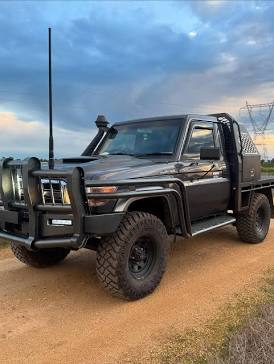
The Structural Anatomy of a 5 Post Frontal System
What separates a purpose-built 5 post bull bar from a standard touring hoop bar? The difference lies in the spacing of the vertical uprights and how they distribute collision energy:
======================================================================== (Top Pipe Horizon)
    |          |                 |                 |          |
 [Post 1]   [Post 2]          [Post 3]          [Post 4]   [Post 5]
 Outer Wing Inner Wing     Centre Upright      Inner Wing Outer Wing
    |          |                 |                 |          |
======================================================================== (Mid Cross-Pipe)
    |          |                 |                 |          |
    +----------+-----------------+-----------------+----------+
                                 |
                  [ Heavy-Duty Steel Channel Pan ]
                                 |
               [ Chassis Horn Mounting Subframe ]
- Centre Upright (Post 3): Positioned along the vehicle’s centerline directly in front of the radiator core, this post takes primary head-on collision forces.
- Inner Intermediate Posts (Posts 2 & 4): Straddling the vehicle’s chassis horn centerline, these posts brace the main impact zone and support high-output driving lights, UHF aerial tabs, and winch access hatches.
- Outer Wing Posts (Posts 1 & 5): Located at the outer edges in front of the headlight clusters, these vital uprights brace the outer wings, preventing them from bending backward into the front tyres during off-centre strikes.
- Multi-Tier Cross-Pipes: Heavy-gauge 63mm to 76mm tubular cross-pipes pass continuously through all five vertical uprights, creating an interlocking structural lattice.
When selecting a dedicated rural cattle bar—such as the Toyota LandCruiser 79 Series BULLBAR Solid—this interlocking geometry ensures that dynamic collision loads disperse across the entire subframe rather than buckling a single sheet-metal wing.
Why the Extra Posts Matter: Preventing Wing Deflection
The primary structural failure of standard 3-hoop bull bars during cattle or camel strikes is wing deflection. On a standard bar, the outer hoop spanning the headlight is an unsupported loop of pipe welded to the lower sheet-metal pan:
[ Impact Failure on Standard 3-Hoop Bar ]
Heavy Animal Strike ======> [ Long Unsupported Wing Hoop ]
                                          |
                                          v
                (Outer Hoop Folds Backward into Guard & Tyre)
                                          |
                                          v
                 Immobilised Front Steering & Crushed Radiator Core

[ Impact Dispersion on a 5 Post Bull Bar ]
Heavy Animal Strike ======> [ Interlocked Post 1 & 2 Grid ]
                                          |
                                          v
                (Load Distributed Across 5 Heavy-Duty Uprights)
                                          |
                                          v
                 Vehicle Remains Driveable / Zero Tyre Contact
On a heavy-duty 5 post bull bar, the distance between vertical supports is cut in half. If an animal strikes the outer quarter of the vehicle, Post 1 and Post 2 act as a rigid, boxed truss. The impact force is transferred downward into the heavy steel channel and across into the vehicle’s main chassis rails.
By preventing the outer bar wing from crushing backward into the front wheel arch, a 5 post bull bar keeps the vehicle fully steerable, allowing the driver to maintain control and safely brake to a stop.
For a detailed structural comparison of front-end options, explore our in-depth analysis on the 5 post vs 3 post bull bar comparison to evaluate which layout matches your operating territory.
Front Axle Weight, GVM, and Suspension Compensation
Because a 5 post bull bar utilizes full-height vertical posts, continuous heavy-wall cross-pipes, and heavy internal gusseting, it carries significant physical mass.
| Bull Bar Configuration | Average Dry Weight | Winch & Cradle Addition | Total Front Overhang Mass |
| Single Hoop Commercial Bar | 38kg to 48kg | +30kg to 40kg | ~68kg to 88kg |
| Deluxe 3-Hoop Touring Bar | 50kg to 65kg | +35kg to 45kg | ~85kg to 110kg |
| Heavy-Duty 5 Post Bull Bar | 68kg to 92kg | +35kg to 45kg | ~103kg to 137kg |
Placing over 100kg of steel forward of the front axle centerline exerts a substantial dynamic lever effect on front suspension components:
        Front Overhang Load (~105-135kg)
        [ 5 Post Bull Bar + 12,000lb Winch ]
                       \
                        v
                 [O===========O] ---------------------- [O===========O]
                Front Axle Assembly                     Rear Axle Assembly
               (GAWR Limits: 1,480kg+)
On factory standard springs, installing a 5 post bull bar leads to:
- Front suspension sag of 25mm to 40mm, sharply reducing upward travel.
- Frequent, violent bottoming-out against the rubber bump stops across corrugated outback roads.
- Altered wheel alignment geometry, causing excessive inside tyre edge scrubbing.
- Potential breach of the front Gross Axle Weight Rating (GAWR).
To run a 5 post bull bar safely, always upgrade your front coil springs to heavy-duty constant-load units rated for a 100kg+ permanent frontal load. For commercial fleet vehicles and heavily loaded station tourers, pairing this setup with an integrated winch-ready cradle system and a certified second-stage-of-manufacture (SSM) Gross Vehicle Mass (GVM) upgrade ensures full legal compliance.
Cooling Airflow Dynamics and Radiator Performance
A frequent concern among drivers considering a 5 post bull bar is engine cooling. Does placing five vertical posts and horizontal cross-pipes in front of the vehicle choke the radiator?
On high-output turbo-diesel powerplants (such as Toyota’s 4.5L 1VD-FTV V8 or 2.8L 1GD-FTV), maintaining steady airflow through the radiator, intercooler, and air conditioning condenser is critical during extreme summer towing:
- Strategic Post Spacing: A properly engineered 5 post bull bar aligns its vertical uprights with the natural structural pillars of the vehicle’s radiator support structure. This leaves large, open ventilation windows directly in front of the cooling fans.
- Perforated Lower Pans: High-performance designs incorporate wide, louvered air dams punched into the lower center pan, channeling high-velocity airflow into the lower third of the radiator core.
- Driving Light Placement: Avoid mounting massive solid spotlights directly against the radiator face. When setting up a 5 post bull bar, mount driving lights on the intermediate upright tabs, leaving the center core window clear for unobstructed airflow.
Active Safety Tech: TSS Radar and Camera Integration
Modern utes and 4WD wagons built from 2020 onward come standard with active safety technology, including Autonomous Emergency Braking (AEB), Adaptive Cruise Control, and Forward Collision Warning.
Installing a 5 post bull bar on a modern vehicle requires precise engineering to maintain safety tech functionality:
- Millimeter-Wave Radar Clearances: On platforms like the late-model Hilux and post-2023 70 Series LandCruiser, the forward radar sensor sits directly behind the central grille emblem. A compliant 5 post bull bar positions its horizontal cross-pipes and center upright below the radar’s active 20-degree downward and horizontal beam cone, preventing false system malfunctions.
- Rigid Chassis Bracing: Because the 70 Series ladder frame vibrates over rough outback corrugations, a 5 post bull bar must utilize high-tensile mounting brackets to prevent bar oscillation. If the bar flexes in front of the radar, the vehicle’s computer can interpret the moving steel pipe as an obstacle, triggering sudden phantom emergency braking.
- Ultrasonic Sensor Housings: Higher-spec vehicles feature ultrasonic parking sensors. When fitted to a 5 post bull bar, these sensors must be seated in precision-machined, vibration-damping silicone isolator rings to stop engine resonance from triggering constant false alarms.
For touring drivers who want maximum wrap-around protection without the extreme weight profile of a five-post grid, an engineered triple-hoop alternative like the Ultimate Deluxe Bull Bar for 4WD Protection offers an outstanding balance of headlight protection and front-axle weight distribution.
Australian Road Regulations and Compliance Standards
Because of its prominent profile, a 5 post bull bar must satisfy strict federal and state transport standards to remain street legal across Australia:
- ADR 69/00 & ADR 73/00 (Occupant Crash Protection): The subframe must incorporate engineered impact crumple zones. In a high-speed highway collision with another vehicle, the mounting brackets must decelerate at a calibrated rate to ensure the vehicle’s supplemental restraint system (SRS airbags) deploys accurately.
- Australian Standard AS 4876.1-2002: Dictates that a vehicle frontal protection system must conform generally to the front contour of the vehicle. All forward-facing surfaces, upright posts, and brackets must feature rolled, deburred edges with a minimum 5mm radius to minimise injury risks to vulnerable road users.
- State Protrusion and Forward Vision Limits: As enforced by state transport authorities—including Transport Victoria VSI 1 Bull Bar Standards and Transport for NSW Vehicle Frontal Protection System Guidelines—a bull bar cannot project upward into the driver’s 11-metre forward road viewing plane or obscure front indicators, headlights, or licence plates. Furthermore, the overall installation must adhere to national frameworks under the Department of Infrastructure ADR Vehicle Standards to maintain ongoing roadworthiness.
Protruding fishing rod holders, exposed sharp bracketry, and non-radiused aerial brackets attached to a 5 post bull bar violate these state standards.
Workshop Installation: Best Practices for Heavy Front Bars
Installing a heavy-duty frontal system requires precision workshop handling to ensure structural alignment:
[Strip OEM Front Bumper & Tow Plates]
                  │
                  ▼
[Clean & Prep Chassis Horn Face Plates]
                  │
                  ▼
[Install High-Tensile 5mm Winch Cradle Subframe]
                  │
                  ▼
[Mount Winch & Route Heavy-Duty Power Cables]
                  │
                  ▼
[Lift 5 Post Bull Bar Shell & Establish 20mm Guard Gap]
                  │
                  ▼
[Torque High-Tensile Bolts & Drill Shear-Pin Locking Holes]
- Use Mechanical Lifting Equipment: A fully dressed 5 post bull bar with an integrated winch weighs in excess of 100kg. Never attempt to lift the bar by hand; use a workshop crane or hydraulic lift table to position the shell safely without scratching vehicle paint.
- Establish the Body-to-Chassis Clearance Gap: The cab of a 4WD floats on flexible rubber body mounts, while the bar mounts directly to the rigid ladder chassis. Always maintain a minimum clearance gap of 18mm to 20mm between the upper wings of the 5 post bull bar and the bottom of the front vehicle mudguards. If fitted flush, normal off-road chassis twist will force the steel bar into the front panels, denting your guards.
- Pin the Mounting Brackets: Once the bar is aligned symmetrically, drill and install high-tensile shear pins or roll pins through the mounting bracket plates. This locks the 5 post bull bar permanently in place, preventing the assembly from pivoting backward into the radiator support panel during a major livestock collision.
Frequently Asked Questions
Is a 5 post bull bar legal in all Australian states?
Yes, a 5 post bull bar is street legal across all Australian states and territories, provided it complies with Australian Standard AS 4876.1-2002 and Australian Design Rules (ADR 69/73). The bar must follow the general contour of the vehicle, feature smooth, rolled edges with a minimum 5mm radius, avoid obscuring primary lighting, and sit below the driver’s 11-metre forward vision line.
How much heavier is a 5 post bull bar compared to a standard 3-hoop bar?
On average, a 5 post bull bar weighs approximately 20kg to 35kg more than a standard 3-hoop touring bar, with bare weights ranging between 68kg and 92kg. When paired with a 12,000lb low-mount winch, the total front overhang mass can reach 115kg to 135kg, making heavy-duty constant-load front coil spring upgrades essential.
Can I fit a 5 post bull bar to a vehicle with airbags?
Yes, provided the bar is certified ADR 69/00 and ADR 73/00 compliant. Airbag-compatible bars are engineered with vehicle-specific mounting brackets featuring calculated crumple accordions. These brackets absorb dynamic crash energy and transfer deceleration pulses to the chassis crash sensors at the exact factory rate, ensuring SRS airbags deploy without delay.
Does a 5 post bull bar cause engine overheating?
No, provided the bar is engineered with proper airflow ports. While five vertical posts look dense from the front, quality designs align the posts with the structural frame of the vehicle, leaving large, open ventilation windows in front of the radiator core. Unless you mount solid light bars or driving lights directly against the radiator apertures, engine temperatures remain completely stable.
Can I mount a 12,000lb winch inside a 5 post bull bar?
Yes. Heavy-duty frontal systems feature standard 254mm x 114.3mm (10″ x 4.5″) low-mount winch footprints. However, the winch must mount into an independent 5mm steel chassis cradle rather than bolting to the outer bar shell. This ensures high-load angled recovery forces feed directly into the chassis rails rather than twisting the front bar wings.
Summary: Maximum Defense for Remote Australia
Investing in a 5 post bull bar transforms your vehicle into an unshakeable outback workhorse capable of surviving catastrophic livestock and wildlife strikes. By replacing wide, unsupported pipe hoops with an interlocked lattice of five vertical posts and continuous cross-tubing, this frontal system protects your radiator, headlights, and steering assembly from total failure. Pair your bar with heavy-duty front coil springs, set your body clearances correctly, and ensure full ADR compliance to conquer Australia’s most remote tracks with complete confidence.
Explore the complete range of 4WD bull bars and front accessories to find heavy-duty frontal protection engineered for your rig, or speak with our technical team to verify chassis bracket fitment, winch cradle options, and freight delivery across Australia.