
Whether tackling rough tracks in a classic live-axle rig or outfitting a dual-cab touring ute, front-end protection is essential for Australian regional travel. High-speed animal strikes across outback highways can crush a radiator core in seconds, leaving you stranded. Installing a heavy-duty Nissan Patrol bull bar provides an indispensable shield that defends your cooling assembly, headlights, and steering linkages against heavy impact forces.
However, selecting frontal protection across the Nissan 4WD family is rarely straightforward. Sourcing an aftermarket front bar requires navigating distinct chassis geometries across the legendary GQ (Y60), the refined GU (Y61), and the popular Navara D40 platform. A front bar built for a square GQ will not bolt onto a curved GU, while the Navara D40 carries hidden chassis differences depending on whether it was manufactured in Spain or Thailand.
This comprehensive guide details the mechanical fitment factors, chassis bracket alignments, winch packaging requirements, suspension changes, and Australian compliance standards needed to configure a Nissan Patrol bull bar on your build.
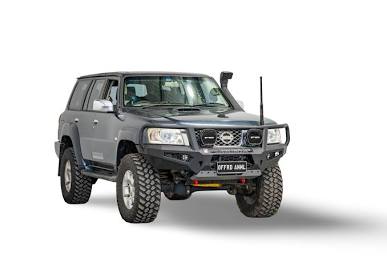
Chassis Architecture: GQ (Y60) vs GU (Y61) Platform Differences
A widespread misconception among 4WD owners is that because the GQ and GU share similar live-axle foundations, their front bars are interchangeable. In reality, their front chassis ends and body lines differ substantially:
[ Nissan GQ Patrol / Y60 (1987–1997) ]
• Narrow, square ladder chassis horns
• Flat, rectangular front sheet metal and indicator pockets
• Minimal factory crumple zone accordion plates

[ Nissan GU Patrol / Y61 (1997–2016) ]
• Wider front chassis rails with heavy welded subframe plates
• Curving front guards requiring rounded bar wing profiles
• Integrated SRS airbag crash sensor deceleration zones (Series 1-9)
Attempting to mount a classic GQ bar onto a GU leaves large gaps beneath the headlights and fails to align with the wider subframe bolt holes. For Y61 owners, fitting a dedicated Cm fab Nissan Patrol Bullbar solid or stepping up to the Raid Bull Bar: Stealth Protection ensures the mounting brackets mate cleanly with the vehicle’s factory chassis horn plates without dangerous structural modifications.
Furthermore, within the GU generation, you must account for the major Series 4 facelift in late 2004:
- GU Series 1 to 3 (1997–2004): Features rounded teardrop headlights and a shallower grille aperture.
- GU Series 4 to 9 (Late 2004–2016): Received squared headlights, wider front guard profiles, and a deeper central grille.
A high-grade Nissan Patrol bull bar engineered for Series 4+ builds incorporates a deeper centre pan to clear the lower grille without rubbing.
Navara D40 Fitment Trap: Spanish (VSK) vs Thai (MNT) Cabs
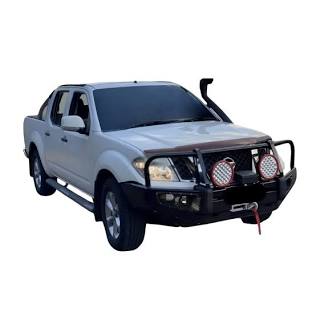
If you are modifying a Navara D40 alongside your Patrol fleet, you must avoid the most common fitment mistake in the Australian 4WD scene: confusing Spanish and Thai builds.
From 2005 to 2015, Nissan sold two structurally distinct versions of the D40 Navara in Australia:
| Chassis Feature | Spanish Built D40 (VIN starts with VSK) | Thai Built D40 (VIN starts with MNT) |
| Primary Models | Dual Cab ST-X, Ti, 550 V6 diesel | King Cab, Single Cab, late RX Dual Cab |
| Chassis Horn Length | Longer chassis horns extending forward | Shorter front chassis rail projection |
| Front Bumper Profile | Deeper bumper shell with wide flare integration | Shallower bumper with distinct wing cut lines |
| Front Bar Bracketry | Standard deep-reach mounting brackets | Short-reach brackets with altered bolt centres |
If you buy a bar designed for a Spanish VSK model and try to bolt it to a Thai MNT chassis, the bar will sit too far forward, leaving an unsightly 40mm gap between the bar wings and your front wheel arches.
When sourcing parts for your ute, look for dedicated options like the 2005 to 2011 Navara bullbar d40 Spanish built Solid to guarantee that your chassis horns, bumper cut line, and guard flares match perfectly. If you are upgrading a late-model Navara, purpose-engineered options like the NP300 15+ NO LOOP BULL BAR Solid provide modern styling suited to newer platforms.
Winch Compatibility, Footprint, and Recovery Load Paths
Whether pulling a bogged Patrol out of deep coastal sand or recovering a touring rig on muddy mountain tracks, pairing your Nissan Patrol bull bar with a dependable electric winch is vital.
       [ Nissan Patrol Chassis Rails ]
             |               |
             v               v
     [===============================]  <-- Independent 5mm Steel Winch Cradle
     [   12,000lb Low-Mount Winch    ]      (Recovers straight off chassis horns)
     [===============================]
                     |
     [  Nissan Patrol Bull Bar Skin  ]  <-- Outer shell bolts over recovery cradle
- Winch Capacity: A fully loaded GU Patrol touring wagon regularly tips the scales between 3,200kg and 3,500kg GVM. Always choose a 9,500lb to 12,000lb low-mount recovery winch to maintain adequate recovery safety margins.
- Mounting Footprint: A quality Nissan Patrol bull bar utilizes the universal 254mm x 114.3mm (10″ x 4.5″) bolt pattern.
- Independent Chassis-Mounted Cradle: Recovery loads must never bear solely on the outer sheet-metal skin of the bar. As explained in our guide on the best bull bars for winches, heavy pulling forces must feed directly into a separate 5mm steel cradle bolted across the vehicle chassis horns.
- Gearbox Clocking: When installing a winch into a Nissan Patrol bull bar, rotate (clock) the clutch gearbox housing so the free-spool lever points forward into the bar’s access port. This prevents the clutch handle from striking the radiator support panel or lower grille.
Engine Cooling Dynamics: TD42, ZD30 & YD25 Airflow
Managing engine temperatures is critical on diesel Nissan powerplants. The 4.2L TD42, 3.0L ZD30 common-rail, and Navara 2.5L YD25 run hot when towing heavy trailers through hot outback conditions.
Fitting a Nissan Patrol bull bar must never starve your cooling stack:
- Air Dam Ventilation: Ensure the lower center pan incorporates wide ventilation slots to feed air into the radiator and transmission oil cooler.
- Spotlight Spacing: Avoid mounting large driving lights directly in front of the main grille opening on your Nissan Patrol bull bar. Mount driving lights on outer wing tabs or fit slimline LED light bars in the center channel to preserve direct airflow across the intercooler and radiator core.
- Airflow Guidance Plates: Quality front bar kits include lower stone guards that seal against the front crossmember, creating a low-pressure draft that pulls hot air out of the engine bay.
Front Suspension Weight and Axle Compensation
Adding a heavy-duty frontal protection system shifts significant mass forward of the front axle centerline. An all-steel Nissan Patrol bull bar weighs roughly 50kg to 68kg, while a 12,000lb winch, steel cradle, and driving lights add another 35kg to 45kg.
       Front Overhang Load (~85-115kg)
       [ Bull Bar + Winch + Spotlights ]
                     \
                      v
               [O===========O] ---------------------- [O===========O]
             Front Axle Assembly                     Rear Axle Assembly
            (Patrol Live Axle / D40 IFS)
Placing 85kg to 115kg over the front bumper impacts front suspension dynamics:
- Patrol Live Axle (GQ/GU): On standard factory coil springs, this added mass causes 20mm to 35mm of front suspension sag. Upgrading to heavy-duty constant-load front coils rated for 50kg to 100kg of accessories restores factory ride height, improves approach angles, and prevents premature bump-stop contact on corrugations.
- Navara D40 IFS Struts: The independent front suspension (IFS) on the D40 is especially sensitive to front overhang mass. A heavy front bar on factory struts causes front-end nose-dive, harsh bottoming-out, and inner-edge tyre wear. Upgrading to uprated front strut coils is strongly recommended when running a winch bar.
Australian Road Regulations and Compliance Standards
Front protection accessories fitted to road-registered Australian vehicles must satisfy strict safety standards:
- ADR 69/00 & ADR 73/00 (Airbag Safety): A compliant Nissan Patrol bull bar features engineered subframe brackets with calculated crumple accordions. These brackets absorb dynamic collision energy and transmit crash deceleration pulses to the chassis sensors at the exact factory rate, ensuring SRS airbags deploy without delay.
- Australian Standard AS 4876.1-2002: Dictates that the bar profile must follow the vehicle’s contour, all forward-facing corners must feature rolled edges with a minimum 5mm radius, and open tube ends must be capped or returned to the guard profile to minimise pedestrian risk.
- State Field of View and Lighting Guidelines: As detailed in Transport Victoria VSI 1 Bull Bar Standards and Transport for NSW Vehicle Frontal Protection System Guidelines, a front bar must not obscure primary forward lighting, indicators, or number plates, and cannot project upward into the driver’s forward 11-metre road vision plane. Furthermore, the overall installation must satisfy national modification frameworks under the Department of Infrastructure ADR Vehicle Standards to ensure ongoing roadworthiness.
Workshop Fitment Procedures: Step-by-Step
Installing a Nissan Patrol bull bar requires a methodical approach to ensure proper chassis alignment:
[Strip OEM Bumper & Tow Brackets]
                 │
                 ▼
[Clean & Inspect Chassis Horn Mounting Faces]
                 │
                 ▼
[Install Chassis Support Brackets & Torque Bolts]
                 │
                 ▼
[Bolt In Winch Cradle & Route Heavy-Duty Cabling]
                 │
                 ▼
[Hang Bull Bar Outer Shell & Set 18-20mm Guard Gap]
                 │
                 ▼
[Torque High-Tensile Fasteners & Pin Shear Bolts]
- Protect Surrounding Panels: Apply broad masking tape along the front guard edges and under the headlights before lifting tools. Dropping a steel bar corner against exposed paint will gouge down to bare metal.
- Set the Body-to-Chassis Clearance Gap: Because the vehicle cab floats on flexible rubber body mounts, the body flexes independently from the rigid ladder chassis over rough terrain. Always maintain a 18mm to 20mm clearance gap between the upper wings of your Nissan Patrol bull bar and the bottom of your front mudguards. A bar fitted flush against the guards will rub, rattle, and dent panels off-road.
- Torque and Mark Fasteners: Torque all high-tensile mounting hardware to the manufacturer’s specification using a calibrated torque wrench. Mark each bolt head with white torque sealant so you can complete quick visual inspections during pre-trip safety checks.
Frequently Asked Questions
Will a GQ Patrol bull bar fit directly onto a GU Patrol?
No. A GQ (Y60) and GU (Y61) have completely different front chassis rail widths, chassis horn heights, and front body lines. A GQ bar will not line up with the GU subframe bolt holes and will leave large, uneven gaps under the headlights. You must choose a Nissan Patrol bull bar engineered specifically for the GU platform.
What is the difference between a Spanish and Thai D40 bull bar?
Spanish-built (VIN starts with VSK) and Thai-built (VIN starts with MNT) D40 Navaras have different chassis rail horn projections and front bumper profiles. A Nissan Patrol bull bar or Navara bar built for a Spanish chassis will sit too far forward on a Thai model, leaving a 40mm gap under the guards. Always check your VIN plate before ordering front bars for a D40.
Can I fit a 12,000lb winch into my Nissan Patrol bull bar?
Yes. Quality front bars feature an integrated 254mm x 114.3mm winch mounting footprint designed to house standard 9,500lb to 12,000lb low-mount winches. Ensure your Nissan Patrol bull bar utilizes an independent 5mm steel winch cradle that mounts directly across the chassis horns so that recovery loads feed straight into the vehicle frame.
Do I need to upgrade my front suspension after installing a bull bar?
Yes. A steel front bar and a 12,000lb winch add approximately 85kg to 115kg over the front axle. On factory springs, this causes 20mm to 35mm of suspension sag, diminishes bump-stop clearance, and accelerates tyre wear. Fitting constant-load front coils rated for 50kg–100kg of accessories restores factory ride height and preserves handling stability.
Does a Nissan Patrol bull bar affect airbag deployment?
No, provided the bar is certified ADR 69/00 and ADR 73/00 compliant. Certified bars incorporate vehicle-specific subframe mounting brackets with engineered crumple accordions. These brackets absorb dynamic collision energy and transmit crash deceleration pulses to the chassis sensors at the exact factory rate, triggering SRS airbags without delay.
Summary: Building a Capable Nissan Touring Rig
Selecting and installing the right Nissan Patrol bull bar comes down to matching your chassis generation, verifying vehicle build codes, and supporting frontal weight with proper suspension upgrades. Whether maintaining a classic GQ rock crawler, setting up a GU touring wagon, or outfitting a D40 trade ute, choosing an ADR-compliant bar engineered for your specific platform ensures dependable impact protection across remote outback tracks.
Explore the complete range of 4WD bull bars and front accessories to find precision-engineered protection for your vehicle, check out heavy-duty exterior 4WD sun visors to block cabin heat soak, or speak with our technical team to verify exact chassis bracket fitment and accessory compatibility for your setup.