
Driving an eighth-generation Toyota Hilux across regional Australian highways into a searing morning or late-afternoon sun places severe strain on driver endurance. Because the N80 platform features an expansive, steeply raked windscreen, factory internal flip-down flaps do very little to control thermal heat soak. Once intense ultraviolet (UV) and infrared (IR) solar radiation penetrates the glass, it superheats the dark vinyl dashboard, driving interior cabin temperatures past 70°C and forcing your air conditioning compressor to work overtime. Equipping your ute with an exterior n80 sun visor creates an architectural roof awning that intercepts harsh sunlight before it ever reaches the glass.
Beyond providing vital glare relief and preserving dashboard plastics from premature cracking, a well-engineered n80 sun visor transforms the exterior profile of your dual-cab or extra-cab ute, adding rugged outback touring character. However, completing a clean installation on a post-2015 Hilux involves far more than simply bolting metal to the roof. The modern N80 features a smooth, gutterless cab, integrated A-pillar wiring channels, and advanced windscreen-mounted driver-assist cameras.
This comprehensive technical guide breaks down everything you need to know about selecting, finishing, and mounting an n80 sun visor on your ute—covering cab contours across all model years, TSS camera integration, factory paint matching, waterproof workshop installation, and Australian Design Rules compliance.
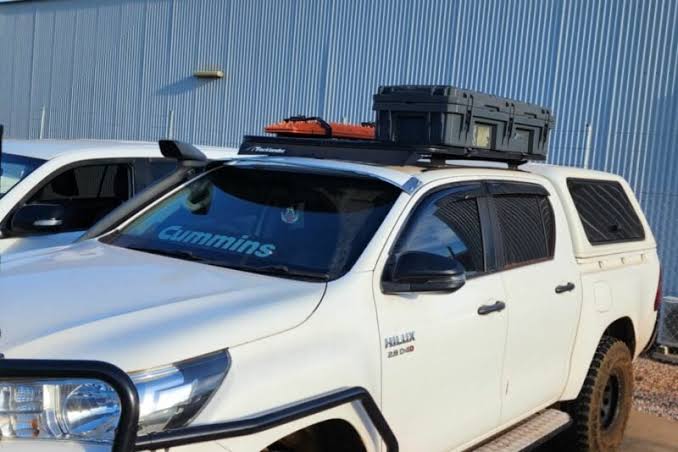
Understanding N80 Cab Architecture: 2015 to 2026+ Platforms
The eighth-generation Hilux platform spans multiple model-year facelifts, engine updates, and trim levels. Before purchasing an n80 sun visor, understanding how your cab interacts with exterior accessories is essential:
- Pre-Facelift (2015–mid 2018): Early N80 models (WorkMate, SR, SR5) introduced the gutterless aerodynamic roofline. The upper windscreen transition is smooth and rounded, requiring precision-formed mounting brackets that wrap into the A-pillar door-jamb seam.
- First Facelift & Rogue Introduction (mid 2018–mid 2020): While the front bumper and hexagonal grille changed significantly, the upper windscreen header and A-pillar profiles remained structurally identical, allowing the same n80 sun visor shell to fit seamlessly.
- Second Facelift & Wide-Track Updates (late 2020–2026+): Introduced updated styling, wide-track suspension on Rogue and GR Sport variants, and standard Toyota Safety Sense electronics across the range. The structural sheet metal around the windscreen header maintained identical dimensions, ensuring cross-compatibility for external cab shields.
[ 2015–2018 Early N80 ] ----> Smooth gutterless roofline | Standard analogue cab electronics
[ 2018–2020 Mid N80 ]   ----> Hexagonal front styling   | Shared A-pillar door-jamb contours
[ 2020–2026+ Late N80 ] ----> Wide-track body options    | Standard windscreen-mounted TSS camera
Whether you drive a single-cab chassis workhorse, an extra-cab tradie rig, or a family dual-cab tourer, the upper windscreen curvature and door-jamb pinch-weld seams are identical. When choosing an exterior shield, purpose-built options such as the Solid Toyota Hilux N80 Sunvisor provide vehicle-specific pressed brackets that match the N80’s exact roof curvature without unsightly panel gaps.
Active Safety Integration: Clearing the Toyota Safety Sense (TSS) Camera
The single most critical technical consideration when choosing and installing an n80 sun visor on a mid-2019 or newer Hilux is preserving the field of view for Toyota Safety Sense (TSS).
Unlike older utilities that relied solely on bumper sensors, late-model N80 Hilux variants carry a sophisticated forward-facing monocular optical camera module mounted internally against the top-centre of the windscreen, directly behind the rear-view mirror. This camera works in tandem with the front grille radar to govern:
- Autonomous Emergency Braking (AEB) with pedestrian and daytime cyclist detection
- Lane Departure Alert (LDA) with steering assist
- Road Sign Assist (RSA)
- Dynamic Radar Cruise Control (DRCC) optical tracking
                    [ TSS Optical Forward Camera Module ]
                      (Top-Centre of Windscreen Glass)
                                     |
                                     v
   ===================================================================== (Roof Header)
     [ Sun Visor Outer Wing ]                         [ Sun Visor Outer Wing ]
   =====================================================================
                 \                                     /
           (Maintain Unobstructed 20° Downward & Forward Optical Horizon)
A poorly engineered n80 sun visor that drops down too far in the middle of the windscreen will partially block the camera’s optical horizon. If the camera’s downward vision is clipped by an overhanging steel lip, the vehicle’s ECU will log an optical obstruction fault, flashing a “Front Camera Blinded” warning on the multi-information display and disabling safety features.
A high-grade n80 sun visor is CAD-modelled with an arched central trailing edge. This design positions the center of the visor blade above the camera’s forward viewing cone, allowing the safety systems to operate with complete reliability.
Snorkel Clearances: Factory Toyota vs Aftermarket 4-Inch Intakes
Most touring and commercial Hilux utes carry a raised air intake on the driver-side A-pillar to supply clean air to the 2.8L 1GD-FTV or 2.4L 2GD-FTV turbo-diesel engine. Ensuring adequate clearance between your snorkel and your n80 sun visor is a mandatory pre-fitment check.
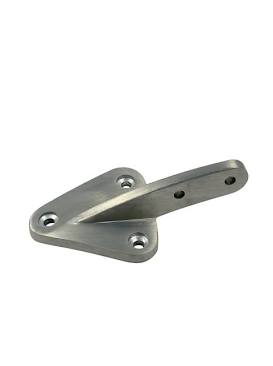
- Factory Toyota Snorkel: The genuine plastic Toyota snorkel hugs the driver-side A-pillar closely, secured by brackets riveted into the door-jamb seam. A vehicle-specific n80 sun visor incorporates a pre-formed scallop on its outer right-hand wing that clears the snorkel body, allowing both accessories to share the A-pillar without physical contact.
- Aftermarket 4-Inch and 5-Inch Stainless Snorkels: Custom large-diameter stainless steel or alloy snorkels sit wider off the vehicle guard and pillar. When running an oversized intake, always dry-fit your n80 sun visor before marking pilot holes. In some custom setups, slightly adjusting the snorkel’s upper pillar bracket provides the 10mm clearance needed to prevent trail vibrations from causing annoying rattles.
The Thermal Physics of External Shading
Why does fitting an n80 sun visor deliver superior thermal comfort compared to internal sunshades or dark window tint? The answer lies in the physics of solar radiation transfer:
Direct High-Angle Solar Radiation (UV & IR)
       \   \   \
        v   v   v
    [=================]  <-- Solid n80 sun visor (Blocks 100% of Direct Overhead Sunlight)
            |
            v
     (Natural Air Flow)  <-- Dissipates heat before it touches the glass
            |
     [ Windscreen Glass ]
            |
     [ Vinyl Dashboard ] <-- Stays significantly cooler, preventing cracking & warping
- Pre-Glass Radiation Interception: Standard interior shades only work after solar energy has already passed through the laminated windscreen glass. Once inside, light energy converts into thermal heat, turning the cabin into a greenhouse. An n80 sun visor stops solar rays externally, dissipating heat into ambient airflow before it ever reaches the windscreen.
- Dashboard Vinyl Preservation: The dark dashboard of an N80 acts as a massive thermal heat sink. By casting a permanent shadow across the upper 30% of the glass, an n80 sun visor lowers dashboard surface temperatures by up to 25°C, permanently preventing the thermal fatigue that causes warping and dashboard rattles.
- Lower Air Conditioning Load: Shielding the cabin lowers interior ambient temperatures by 10°C to 12°C. This allows your air conditioning system to reach comfortable cabin temperatures faster, reducing fuel consumption on long highway journeys.
Material Comparison: Solid Steel vs Expanded Alloy Mesh
When selecting an n80 sun visor, buyers generally choose between solid zinc-coated pressed steel and expanded aluminium alloy mesh. Both materials offer distinct functional strengths:
| Feature Specification | Solid Steel n80 sun visor | Alloy Mesh n80 sun visor |
| Base Material | Zinc-coated electro-galvanised pressed steel | Marine-grade expanded aluminium alloy in a tubular frame |
| Solar Heat Rejection | 100% total direct sunlight blockout over upper glass | Diffuses 70% to 80% of direct glare while maintaining airflow |
| Aerodynamic Behaviour | Diverts air over the roofline; requires rigid mounts | Air flows freely through hundreds of louvered apertures |
| Scrub & Branch Resistance | Maximum deflection; slides heavy tree branches over cab | High resistance; branches slide easily across louvered screen |
| Finish Options | Supplied in grey transit primer ready for OEM paint matching | Pre-finished in durable satin black powder-coat |
| Aesthetic Stance | Classic, muscular outback touring look with polished trim | Sporty, modern utilitarian commercial appearance |
[ Solid Steel n80 sun visor ]
• Provides 100% total shade over the glass, stopping dashboard heat soak
• Heavy-gauge steel skin deflects heavy tree branches on tight bush tracks
• Arrives in protective primer, ready for vehicle colour-matching
• Accented by an iconic polished aluminium front edge highlight strip

[ Alloy Mesh n80 sun visor ]
• Perforated aluminium louvers allow high-speed air to pass through cleanly
• Eliminates high-speed wind buffeting, bonnet drumming, and whistling
• Ultra-lightweight construction places minimal dynamic load on A-pillars
• Satin black powder-coat finish complements dark accessories and tinted windows
If your build prioritizes complete cabin heat rejection, scrub protection, and an authentic factory colour-matched finish, an option like the Solid Toyota Hilux N80 Sunvisor remains the premier choice.
If you spend thousands of kilometres cruising at 110 km/h on open highways and want near-zero wind drag, an aerodynamic alternative like the Solid Toyota Hilux 2015-On Mesh Sunvisor delivers the ideal balance of glare diffusion and airflow efficiency.
How to Colour-Match Your N80 Visor to Factory Paint Codes
High-grade solid steel visors are supplied in an automotive-grade grey primer, ready for custom paint finishing. When you colour-match an n80 sun visor to your Hilux’s body paint, the shield integrates cleanly into the roofline, looking like an original factory component.
Step 1: Retrieve Your OEM Paint Code
Locate your vehicle’s build plate (VIN tag) on the passenger-side firewall or driver-side B-pillar door striker. Look for the “C/TR” (Colour/Trim) stamp:
- Glacier White: Code 040 (Standard solid white on WorkMate and SR)
- Crystal Pearl: Code 070 (Premium multi-stage pearl white on high-spec trims)
- Silver Sky: Code 1D6 (Classic metallic silver)
- Graphite Grey: Code 1G3 (Deep charcoal metallic)
- Eclipse Black: Code 218 (Mica black finish)
- Nebula Blue: Code 8X2 (Vibrant metallic blue)
- Olympia Red: Code 3T6 (Rich solid red)
[ Retrieve Paint Code from Firewall Build Plate (e.g., 040 Glacier White) ]
                                  │
                                  ▼
[ Wet-Sand Top Grey Primer with P400 to P600 Grit Sandpaper ]
                                  │
                                  ▼
[ Mask Off Polished Aluminium Front Strip & Bottom Face ]
                                  │
                                  ▼
[ Apply Satin Anti-Glare Green or Matte Black Enamel to Underside ]
                                  │
                                  ▼
[ Apply 2 to 3 Coats of Automotive Basecoat to Top Surface ]
                                  │
                                  ▼
[ Finish with High-Gloss 2K Polyurethane UV Clear Coat & Cure 48h ]
Step 2: Mask the Underside Anti-Glare Finish
A common mistake when painting an n80 sun visor is spraying high-gloss body colour across the entire unit. In accordance with long-haul transport and aviation standards, the underside of an external visor must be finished in a non-reflective satin green or matte black enamel.
If you spray high-gloss white or metallic silver on the underside, sunlight reflecting off your bonnet will bounce off the bottom of the visor straight into your eyes. Mask the bottom rolled edge cleanly before laying down your topcoat colour.
Step 3: Basecoat and 2K Clear Application
Wipe the scuffed primer thoroughly with wax and grease remover. Apply an initial mist coat (tack coat) of your basecoat colour, followed by two full-coverage wet coats, allowing 10 to 15 minutes of flash time between passes. Finish with two coats of high-solid 2K polyurethane clear coat, which provides a hard, chemically cross-linked barrier that resists stone chips, tree scratches, and UV degradation.
Step-by-Step Installation: Workshop Procedures and Waterproofing
Because the N80 Hilux features a gutterless cab, your n80 sun visor secures via precision-engineered mounting brackets that fasten into the outer A-pillar door-jamb seam. When executed with proper workshop techniques, this installation will never leak, whistle, or cause body rust.
[Dry Test-Fit & Align Visor Symmetrically Over Windscreen]
                            │
                            ▼
[Check TSS Camera Sightlines & Snorkel Clearance Gaps]
                            │
                            ▼
[Mark Pilot Holes in A-Pillar Door Seam (10mm Stop-Collar)]
                            │
                            ▼
[Drill Pilot Holes & Vacuum Away All Metal Swarf]
                            │
                            ▼
[Treat Bare Steel Edges with Cold-Galvanising Zinc Primer]
                            │
                            ▼
[Inject Automotive Polyurethane Sealant (Sikaflex 221)]
                            │
                            ▼
[Fasten Brackets, Torque Evenly & Allow 24h Full Cure]
Required Tools and Consumables
- High-speed drill with sharp 3mm and 5mm drill bits
- Mechanical drill stop-collar set to 10mm depth
- High-tack automotive masking tape and grease pencil
- Shop vacuum and clean microfibre cloths
- Cold-galvanising zinc-rich primer or automotive etch primer
- Automotive-grade polyurethane adhesive sealant (Sikaflex 221 or equivalent)
- Stainless steel self-tapping screws or high-strength blind rivets
1. Dry Fitting and Alignment
With an assistant, place the n80 sun visor over the cab. Align the unit symmetrically across the windscreen header. Check that the door-jamb mounting brackets seat completely flush against the outer A-pillar pinch-weld seam and confirm that both front doors open and close freely without touching the bracket uprights.
2. Marking and Safety-Drilling
Apply two layers of masking tape over the A-pillar mounting zones and mark your drill hole centers with a grease pencil.
Critical Safety Note: Never drill through the outer roof skin. The brackets fasten into the secondary outer door-jamb cavity. Fit a 10mm mechanical stop-collar to your drill bit. This prevents the bit from punching too deeply into the pillar cavity, protecting the vehicle’s internal side-curtain airbag harness and wiring looms.
3. Rust-Proofing Bare Metal
Drill your pilot holes with steady, moderate speed to prevent heat distortion. Vacuum away every speck of metal swarf immediately—loose steel filings left on your paint will rust overnight. Coat the raw steel edges of every hole with a cold-galvanising zinc-rich primer to establish lifetime corrosion resistance.
4. Polyurethane Sealing and Hardware Torquing
Never use household acetic-cure silicone, which releases acetic acid and corrodes automotive sheet metal. Always use an automotive polyurethane sealant (such as Sikaflex 221).
Inject a generous bead of polyurethane directly into every drilled pilot hole, and apply a thin layer behind each mounting bracket base. Drive in the stainless steel fasteners, drawing the brackets tight against the pillar. The polyurethane will extrude slightly around the washer heads, forming a vulcanised, 100% waterproof rubber seal that dampens highway vibrations.
Wipe away any excess sealant with a solvent-dampened cloth, and allow the installation to cure for 24 hours before highway driving.
Aerodynamic Performance and Wind Noise Management
A common concern among dual-cab owners is whether fitting an n80 sun visor will generate annoying cabin whistling or wind buffeting at 110 km/h:
[ Correctly Fitted & Sealed n80 sun visor ]
Highway Air Stream ======> [ Curved Visor Blade ] ======> Diverts Smoothly Over Cab
                           (Zero turbulence pocket; no cabin vibration or whistle)

[ Improperly Fitted / Unsealed Visor ]
Highway Air Stream ======> [ Unsealed Bracket Gap ] ======> High-Frequency Whistle
                           [ Loose Fasteners ]      ======> Sheet Metal Flutter
- Eliminating High-Speed Whistles: High-pitched wind noise is almost always caused by turbulent air squeezing through tiny gaps between the mounting bracket foot and the A-pillar sheet metal. Sealing these bracket seams with polyurethane creates an airtight barrier that completely silences whistling.
- Preventing High-Speed Flutter: Highway wind pressure can exert 30kg to 50kg of dynamic downforce across the visor blade. The Solid Toyota Hilux N80 Sunvisor utilizes rolled stiffening beads along its leading and trailing edges, ensuring the steel blade remains completely rigid without drumming against the cab roof.
For comprehensive front-end protection, many owners pair their cab shade with complementary hardware like the Toyota Hilux Muzz bar N70 or browse our extensive range of 4WD bull bars and front accessories to build an outback-ready touring platform.
Australian Road Regulations and Compliance Standards
Any accessory mounted forward of the cabin must comply with national vehicle standards and state transport modification codes. When installing an n80 sun visor, your setup must satisfy the following safety rules:
- The 11-Metre Forward Field of View Rule: Under Australian Design Rule guidelines and state modification codes—including Transport Victoria VSI 8 Vehicle Modification Standards and Transport for NSW Light Vehicle Safety Check Rules—an external sun visor must not encroach into the driver’s primary line of sight. From a standard driving seating position, the driver must maintain an unobstructed view of the road surface 11 metres forward of the vehicle.
- Protrusion Limits and Radiused Edges: In accordance with Australian Standard AS 4876.1 and local regulations, external fittings must feature rounded, deburred edges with a minimum 5mm radius. Sharp brackets or un-radiused corners are strictly illegal on public roads.
- Lighting and Wiper Clearances: A compliant n80 sun visor must not obscure factory clearance lights or obstruct the sweeping motion of the windscreen wiper arms, complying with standards administered by the Department of Infrastructure ADR Vehicle Standards.
Frequently Asked Questions
Does an n80 sun visor interfere with Toyota Safety Sense (TSS) cameras?
No, provided you select an n80 sun visor specifically engineered for the eighth-generation Hilux platform. Late-model N80s feature a monocular camera mounted at the top-centre of the windscreen. A quality visor features an arched central trailing edge that remains above the camera’s 20-degree downward optical viewing cone, ensuring AEB, Lane Departure Alert, and Adaptive Cruise Control operate without triggering fault codes.
Will an n80 sun visor fit an older N70 Hilux?
No. The N70 (2005–2015) and N80 (2015–2026+) feature completely different cab dimensions, windscreen angles, and A-pillar profiles. An n80 sun visor is wider and has different bracket geometry that will not seat flush on an N70 cab. For older models, you must choose a dedicated Solid N70 Hilux Sunvisor or Solid LN106 Hilux Sunvisor designed for that specific chassis.
Can I install an n80 sun visor without drilling holes?
No. Because the N80 Hilux features a gutterless cab, an n80 sun visor requires mechanical fasteners secured into the outer A-pillar door-jamb seam. Attempting to attach an exterior visor with double-sided adhesive tape is extremely dangerous, as aerodynamic uplift forces at 110 km/h will tear adhesive loose. When pilot holes are treated with cold-galvanising zinc primer and injected with automotive polyurethane sealant (such as Sikaflex 221), the installation remains 100% waterproof and rust-free.
Why does a solid n80 sun visor have a green or black underside?
Quality visors feature a non-reflective satin green or matte black enamel finish on the underside. Borrowed from aviation and commercial road freight standards, this anti-glare finish absorbs scattered light rays reflecting off the bonnet. Painting the underside in a high-gloss body colour (especially bright white or silver) causes sunlight to bounce off the bottom of the visor straight into the driver’s eyes.
How much fuel does an n80 sun visor add at highway speeds?
On an N80 Hilux, adding an exterior sun visor creates a negligible fuel consumption difference of roughly 0.1L to 0.3L per 100km at 110 km/h highway speeds. Furthermore, because the visor shades the top third of the glass and drops interior dashboard temperatures by up to 25°C, your air conditioning compressor runs far less aggressively, helping balance out any minor aerodynamic drag during summer touring.
Summary: Building a Capable, Sun-Protected N80 Hilux
Fitting a purpose-built n80 sun visor is one of the most effective comfort and preservation upgrades you can make to your eighth-generation Toyota Hilux. It eliminates blinding outback glare, saves your dashboard vinyl from expensive UV warping, drops cabin temperatures by up to 12°C, and gives your ute a muscular touring stance. By selecting a visor that clears factory TSS optical cameras, colour-matching the top skin with 2K clear coat, and sealing the A-pillar brackets with automotive polyurethane, your Hilux will be ready to tackle Australia’s toughest highways with complete confidence.
Explore the complete range of external 4WD sun visors to find precision-engineered protection for your vehicle, check out heavy-duty options like the Solid 79 Series Sun Visor or Solid Heavy Duty Alloy sunvisor, or browse our 4WD bull bars and front accessories to complete an off-road touring build engineered for harsh Australian conditions.