
Driving westward across regional Australian highways into a blistering afternoon sun turns any four-wheel drive cabin into a high-temperature greenhouse. Standard interior flip-down sun flaps only shade the driver’s eyes, doing nothing to stop radiant solar energy from passing through the laminated glass and superheating the dashboard vinyl. Fitting an exterior sunvisor 4×4 creates an architectural roof awning that intercepts harsh ultraviolet (UV) and infrared (IR) solar rays before they ever strike your windscreen.
Beyond cutting down on dangerous highway glare and saving dashboard plastics from thermal cracking, choosing the right sunvisor 4×4 requires understanding the distinct engineering trade-offs between construction materials. Depending on whether you drive dense high-country scrub, cruise outback highways at 110 km/h, or tackle coastal sand dunes, your vehicle demands a specific balance of airflow, structural rigidity, corrosion resistance, and physical impact strength.
This comprehensive technical guide breaks down everything you need to know about selecting a sunvisor 4×4—comparing expanded alloy mesh, solid pressed steel, and marine-grade alloy plate across thermal heat rejection, aerodynamics, rust resistance, and Australian road regulations.
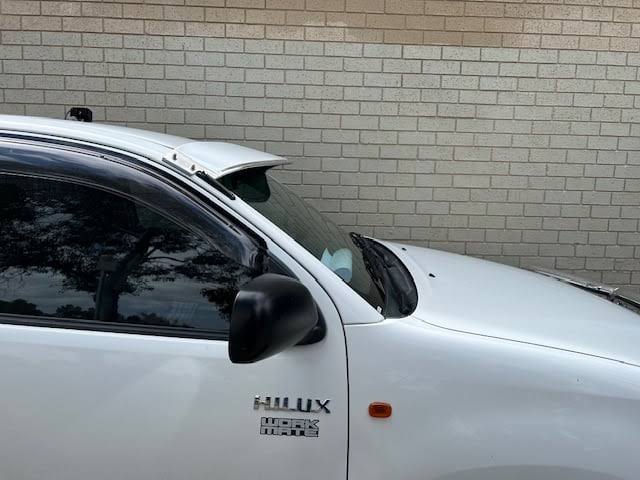
The Three Core Designs: Mesh, Solid Steel & Alloy Plate
Before evaluating performance on the road, it is essential to understand how the three primary visor configurations are constructed:
[ 1. Expanded Alloy Mesh Sunvisor 4x4 ]
• Frame: Heavy-duty tubular aluminium perimeter frame
• Screen: Perforated, expanded diamond-louvered aluminium mesh
• Airflow: High-volume airflow passes directly through the screen
• Primary Goal: Glare diffusion with near-zero aerodynamic resistance

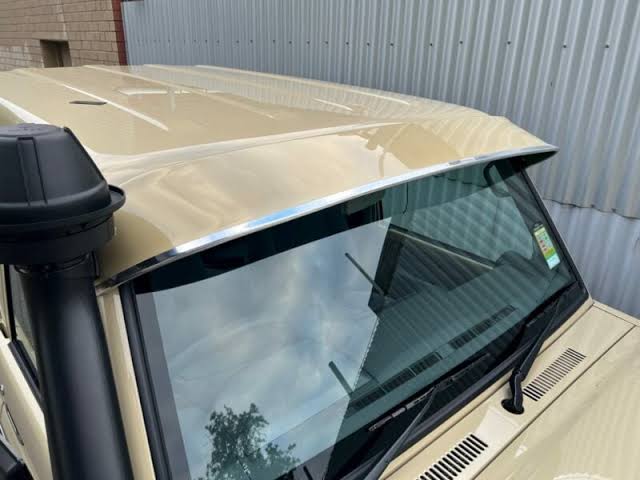
[ 2. Solid Pressed Steel Sunvisor 4x4 ]
• Body: Cold-rolled, electro-galvanised mild steel with rolled stiffening beads
• Trim: Accentuated with an iconic polished aluminium front edge strip
• Finish: Supplied in protective grey primer, ready for vehicle colour-matching
• Primary Goal: 100% total solar blockout and maximum scrub branch deflection

[ 3. Solid Aluminium Alloy Sunvisor 4x4 ]
• Body: Marine-grade 5052/6061 pressed aluminium alloy plate
• Weight: Roughly one-third the density of mild steel
• Finish: Durable satin black or architectural textured powder-coat
• Primary Goal: Lightweight construction with total immunity to red rust
Each sunvisor 4×4 architecture serves a specific operating environment. Sourcing a dedicated shield like the universal-fit Solid 4×4 Sun Visor delivers heavy-duty outback protection, while purpose-built alloy designs focus on open-road efficiency.
Thermal Rejection: Pre-Glass Solar Physics
Why does installing a sunvisor 4×4 deliver far superior cabin cooling compared to dark window tint or internal reflective shields? The answer comes down to thermal radiation dynamics:
Direct High-Angle Solar Radiation (UV & IR Rays)
       \   \   \
        v   v   v
    [=================]  <-- Exterior Sunvisor 4x4 (Blocks or Diffuses Radiation)
            |
            v
     (Natural Air Flow)  <-- Dissipates thermal energy before glass contact
            |
     [ Windscreen Glass ]
            |
     [  Dashboard Pad   ] <-- Remains significantly cooler, preventing thermal soak
- Pre-Glass Radiation Interception: Standard interior shades only work after radiant energy has already passed through the windscreen. Once inside the cabin, light converts into thermal heat, turning the vehicle interior into an oven. A quality sunvisor 4×4 blocks solar energy on the outside of the cab, dissipating heat into ambient airflow.
- Solid Steel & Alloy Total Blockout: Solid visors cast an unbroken, opaque shadow across the upper 30% of the glass. By completely blocking overhead infrared penetration, a solid sunvisor 4×4 lowers dashboard surface temperatures by up to 25°C, dropping ambient cabin temperatures by 10°C to 12°C and taking immense strain off your air conditioning compressor.
- Mesh Glare Diffusion: An expanded alloy mesh screen acts like heavy architectural shade cloth. It breaks up direct sunlight and eliminates low-angle glare without casting a solid shadow. While a mesh sunvisor 4×4 cuts radiant heat noticeably, some solar warmth still passes through the open perforations.
Head-to-Head Comparison: Mesh vs Solid Steel vs Alloy
To evaluate which sunvisor 4×4 best matches your vehicle and driving style, examine how each material performs across key touring metrics:
| Performance Metric | Expanded Alloy Mesh | Solid Pressed Steel | Solid Aluminium Alloy |
| Solar Heat Rejection | 70% to 80% (Diffused filter) | 100% (Complete blockout) | 100% (Complete blockout) |
| High-Speed Wind Drag | Lowest (Air passes through) | Moderate (Requires stiffeners) | Moderate (Diverts over cab) |
| Cabin Wind Whistle | Near-zero wind turbulence | Low (When properly sealed) | Low (When properly sealed) |
| Scrub & Branch Resistance | Moderate (Small limbs slide over) | Maximum (Heavy branch armor) | Moderate to High (Can gouge) |
| Average Component Weight | 2.2kg to 3.5kg | 5.5kg to 8.5kg | 2.8kg to 4.2kg |
| Coastal Rust Resistance | 100% immune to red rust | Sacrificial zinc plating | 100% immune to red rust |
| Paint Customisation | Pre-finished satin black | Primed ready for OEM paint | Pre-powdercoated satin black |
Aerodynamic Performance: Airflow, Wind Noise and Fuel Consumption
A major consideration when shopping for a sunvisor 4×4 is how the accessory behaves at 100 to 110 km/h on open highways:
[ High-Speed Airflow Profile ]

Alloy Mesh Sunvisor 4x4:
Highway Air Stream ======> [ Louvered Mesh Screen ] ======> Air flows through with zero buffeting

Solid Steel / Alloy Sunvisor 4x4:
Highway Air Stream ======> [ Curved Solid Blade ]   ======> Diverts smoothly over roof skin
- The Mesh Airflow Advantage: Because an expanded mesh sunvisor 4×4 features hundreds of angled louvers, air flows directly through the screen. This eliminates the high-pressure stagnation pocket that forms beneath solid blades, keeping wind drag to an absolute minimum and preventing cab buffeting.
- Solid Blade Air Dynamics: Solid steel and alloy visors act as aerodynamic air deflectors. High-speed air rushing up the windscreen hits the underside of the visor and diverts over the roofline. If a solid sunvisor 4×4 lacks structural rigidity, this pressure differential can induce high-speed sheet metal flutter. High-grade solid visors feature rolled stiffening ribs and heavy-duty A-pillar brackets to ensure rock-solid stability at highway speeds.
- Fuel Consumption Impact: On boxy utilities (such as the 70 Series LandCruiser), the flat windscreen is already a blunt aerodynamic shape; fitting any sunvisor 4×4 adds a negligible 0.1L to 0.2L/100km. On sleeker, raked cabs (like the N80 Hilux or Ford Ranger), an alloy mesh profile delivers the lowest aerodynamic drag.
If open-road cruising and minimal wind resistance are your priorities, an engineered option like the Solid Heavy Duty Alloy Sun Visor or the Solid Heavy Duty Alloy sunvisor provides exceptional glare control without highway drag.
Bush Durability: Heavy Scrub, Tree Strikes and Flying Stones
For pastoralists, forestry contractors, and remote outback tourers, overgrown bush tracks are an everyday reality. How does each sunvisor 4×4 handle physical punishment?
- Solid Steel Strength: A heavy-gauge, zinc-coated steel sunvisor 4×4 acts as external armor for the upper windscreen frame. When pushing through dense mallee scrub or overgrown eucalyptus tracks, heavy tree limbs slide up and over the smooth steel blade without denting the metal or puncturing your windscreen seal.
- Alloy Plate Toughness: Solid aluminium alloy offers great overall strength, but aluminium is softer than steel. A severe strike from a thick hardwood branch that would merely scuff the paint on a steel sunvisor 4×4 can potentially gouge or crease an alloy blade.
- Mesh Screen Resilience: Modern mesh visors utilize heavy-duty expanded aluminium welded securely into a rigid tubular frame. While everyday scrub and gravel slide harmlessly over the louvers, extremely sharp, pointed tree branches on tight single-tracks can occasionally snag in the mesh apertures if struck at speed.
For dedicated bush tourers needing heavy-duty steel protection, options like the Solid 79 Series Sun Visor or the Elite Toyota Land Cruiser 70-79 Series Sunvisor deliver proven durability across corrugated outback tracks.
Coastal Rust and Corrosion: Salt Spray vs Red Dirt
When operating in coastal areas, beach driving, or tropical northern Australia, corrosion resistance is a major factor:
[ Atmospheric Corrosion Mechanisms ]
Aluminium Alloy:   Aluminium + Oxygen ======> Microscopic Oxide Layer (Passivates naturally; zero red rust)
Mild Steel:        Steel + Moisture   ======> Iron Oxide (Requires sacrificial zinc plating & paint coats)
- Aluminium Alloy Immunity: Both mesh and solid alloy visors are 100% immune to red rust. Even if highway gravel chips the powder-coat on an alloy sunvisor 4×4, the underlying metal passivates naturally, making alloy the premier choice for coastal beach tourers.
- Mild Steel Zinc Protection: Quality steel visors are fabricated from electro-galvanised steel sheet. The zinc coating acts as a sacrificial barrier that corrodes before the base steel can oxidize. However, if deep stone chips penetrate both the paint and zinc layers, bare steel is exposed, requiring periodic touch-ups with automotive paint to prevent surface corrosion.
- Galvanic Isolation: Regardless of material, when mounting an alloy bracket to a steel vehicle A-pillar, always install high-density rubber or polyurethane gaskets. Isolating dissimilar metals prevents galvanic corrosion from developing around the mounting fasteners.
Vehicle Styling and Paint Customisation
How your sunvisor 4×4 integrates with your vehicle’s overall aesthetics is often a deciding factor:
[ Factory-Matched OEM Stance: Solid Steel ]
• Arrives in automotive grey transit primer, ready for vehicle colour-matching
• Can be sprayed to match exact factory paint codes (e.g., Sandy Taupe 4E9, French Vanilla 058)
• Finished with an iconic polished aluminium front edge highlight strip
• Features an anti-glare satin green or matte black underside to absorb bonnet reflection

[ Modern Commercial Utility Stance: Alloy Mesh & Solid Alloy ]
• Pre-finished in durable satin black or textured powder-coat
• Installs directly out of the box without additional paint expenses
• Pairs naturally with matte black bull bars, black rock sliders, and dark roof racks
• Delivers an aggressive, purposeful commercial aesthetic
For classic utility builds, fitting a dedicated Solid LN106 Hilux Sunvisor or Solid N70 Hilux Sunvisor in colour-matched paint preserves period-correct lines.
For late-model ute platforms running dark styling themes, modern mesh alternatives such as the Solid Toyota Hilux 2015-On Mesh Sunvisor integrate seamlessly with dark accessories.
Australian Road Regulations and Compliance Standards
Any external accessory mounted forward of the cabin must comply with national safety standards and state transport modification codes. When installing a sunvisor 4×4, your setup must satisfy the following safety rules:
- The 11-Metre Forward Field of View Rule: Under Australian Design Rule guidelines and state modification codes—including Transport Victoria VSI 8 Vehicle Modification Standards and Transport for NSW Light Vehicle Safety Check Rules—an external sunvisor 4×4 must not encroach into the driver’s primary line of sight. From a standard driving seating position, the driver must maintain an unobstructed view of the road surface 11 metres forward of the vehicle.
- Protrusion Limits and Radiused Edges: In accordance with Australian Standard AS 4876.1 and local regulations, external fittings must feature rounded, deburred edges with a minimum 5mm radius. Sharp brackets or un-radiused corners are strictly illegal on public roads.
- Lighting and Wiper Clearances: A compliant sunvisor 4×4 must not obscure factory clearance lights or obstruct the sweeping motion of the windscreen wiper arms, complying with standards administered by the Department of Infrastructure ADR Vehicle Standards.
Frequently Asked Questions
Which sunvisor 4×4 provides the best cabin heat reduction?
A solid steel or solid alloy sunvisor 4×4 delivers the greatest heat reduction. Because solid visors are 100% opaque, they completely block direct ultraviolet and infrared solar rays from penetrating the upper glass and heating the dashboard vinyl. This drops interior surface temperatures by up to 25°C, compared to expanded mesh visors which diffuse roughly 70% to 80% of direct glare.
Does an expanded alloy mesh sunvisor 4×4 whistle on the highway?
No. An expanded alloy mesh sunvisor 4×4 is specifically engineered to eliminate wind whistling and cab buffeting. Because high-speed air flows directly through hundreds of angled louvers, there is no high-pressure air pocket trapped beneath the blade, resulting in quiet highway cruising at 110 km/h.
Can an alloy sunvisor 4×4 rust over time?
No. High-grade aluminium alloy contains no iron, making an alloy sunvisor 4×4 completely immune to red rust. When exposed to coastal salt air or rain, aluminium naturally forms a microscopic oxide layer that halts environmental corrosion. However, you must install rubber or polyurethane isolators between alloy brackets and steel vehicle A-pillars to prevent galvanic corrosion between dissimilar metals.
Is a sunvisor 4×4 street legal in all Australian states?
Yes, a sunvisor 4×4 is street legal across all Australian states and territories, provided it complies with state transport standards (such as Transport Victoria VSI 8) and Australian Design Rules. The visor must not drop into the driver’s primary line of sight—leaving an unobstructed view of the road 11 metres ahead of the vehicle—and must feature smooth, rounded outer edges with a minimum 5mm radius.
Can I paint-match an alloy mesh sunvisor 4×4?
While technically possible, expanded mesh visors are supplied in durable satin black powder-coat. Attempting to paint-match the tiny louvers with automotive two-pack paint can clog the perforations and lead to uneven coverage. If you want a smooth, factory paint-matched finish that mirrors your vehicle’s body colour, a solid steel or solid alloy sunvisor 4×4 is the recommended choice.
Summary: Choosing the Right Shield for Your 4WD
Selecting the ideal sunvisor 4×4 comes down to your operating environment, styling preferences, and budget:
[ Choose an Expanded Alloy Mesh Sunvisor 4x4 if: ]
✔ You do extensive high-speed highway cruising at 110 km/h.
✔ You want near-zero wind roar, no cab drumming, and minimal aerodynamic drag.
✔ You live near coastal beaches and require total immunity to red rust.
✔ You prefer a ready-to-mount satin black commercial utility aesthetic.

[ Choose a Solid Steel Sunvisor 4x4 if: ]
✔ You want 100% total sunlight and heat blockout over the upper glass.
✔ You want to colour-match the visor directly to your vehicle's factory body paint.
✔ You regularly drive overgrown bush tracks where heavy branches strike the cab.
✔ You want classic outback touring styling with a polished alloy front edge strip.

[ Choose a Solid Aluminium Alloy Sunvisor 4x4 if: ]
✔ You want 100% heat blockout while cutting front-axle dead weight in half.
✔ You require a rust-proof solid blade for coastal and beach driving.
✔ You want a ready-to-fit satin black powder-coat finish without extra painting costs.
Explore the complete range of external 4WD sun visors to find precision-engineered cab shading for your vehicle, or pair your setup with heavy-duty 4WD bull bars and front accessories to complete an off-road touring build engineered for the toughest Australian conditions.