Choosing an airbag compatible bull bar is the single most vital safety decision you can make when fitting out a modern 4WD ute or SUV for Australian touring. On modern vehicles equipped with Supplementary Restraint Systems (SRS), fitting a rigid or non-compliant front bar can alter crash impulse timings, delay airbag deployment, or trigger false deployments during offroad driving.
An engineered airbag compatible bull bar works seamlessly with factory accelerometer sensors and chassis crumple zones. This ensures that your vehicle retains its original crash safety rating while delivering heavy-duty protection against animal strikes in remote areas.
This comprehensive buyer guide covers crash-pulse dynamics, Australian Design Rule (ADR) testing, Advanced Driver Assistance System (ADAS) integration, and chassis mounting to help you select the ideal front protection system.
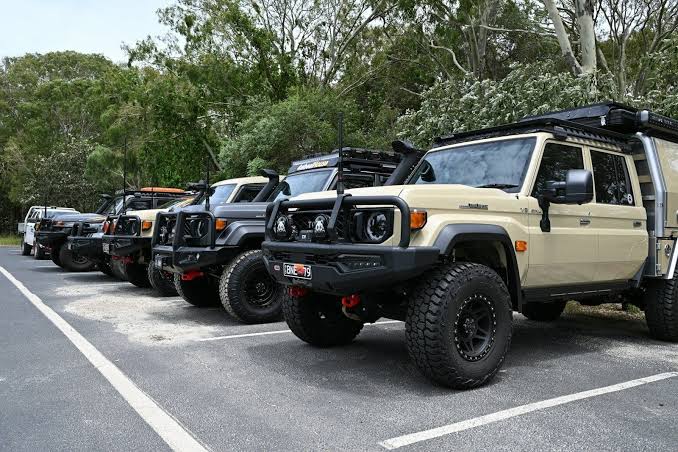
Before investing in a front protection bar, understanding how an airbag compatible bull bar differs from a rigid legacy bar helps highlight why precision engineering matters:
| Engineering Parameter | Non-Compliant Rigid Bull Bar | Airbag Compatible Bull Bar |
| Chassis Mounting System | Solid steel brackets with zero flex | Precision-engineered crumple mounts / accordion brackets |
| Crash Energy Transfer | Transfers impact force directly into vehicle frame | Absorbs initial kinetic energy to replicate factory deceleration |
| Airbag Trigger Timing | Can delay airbag firing or trigger unexpected deployment | Preserves factory SRS timing within milliseconds |
| ADR & Safety Compliance | Fails ADR 69/00 and ADR 73/00 standards | Full barrier crash-tested and ADR certified |
| ADAS Radar Integration | Blocks radar sensors or causes system errors | Laser-cut ports and brackets maintain factory calibration |
| Insurance Roadworthiness | Can void vehicle insurance and roadworthy status | Fully road-legal across all Australian states |
To select a true airbag compatible bull bar, you need to understand how modern vehicles detect collisions.
Airbags are not triggered by physical pressure switches on the plastic bumper. Instead, central SRS control modules rely on precision accelerometers that measure sudden rates of vehicle deceleration (g-force over time).
                      [ Vehicle Impact Dynamics ]
                                   │
         ┌─────────────────────────┴─────────────────────────┐
         ▼                                                   ▼
[ Rigid Non-Compliant Bar ]                      [ Airbag Compatible Bar ]
• Rigid mounting blocks crash wave              • Engineered mounts deform controllably
• Alters deceleration curve (g-force)            • Replicates factory bumper crash pulse
• Airbag fires LATE or NOT AT ALL                • Airbag fires at EXACT millisecond intended
When an impact occurs, a properly designed airbag compatible bull bar utilizes sacrificial accordion crumple mounts. These brackets deform at calculated kinetic loads, transferring deceleration forces to the vehicle’s chassis sensors in exact alignment with factory crash-pulse algorithms.
In Australia, fitting a front bar to an airbag-equipped 4WD requires strict adherence to national safety standards.
Under federal regulations governed by the Department of Infrastructure Third Edition ADRs, any airbag compatible bull bar fitted to a modern passenger car or light commercial vehicle must maintain compliance with:
Manufacturers prove compliance by conducting full-scale barrier crash testing. During these tests, instrumented crash test dummies measure head injury criteria (HIC) and chest compression to verify that the bar does not increase occupant risk.
Front protection bars must also align with specifications from Standards Australia AS 4876.1. This standard mandates rounded outer radii (minimum 5mm radius on forward-facing edges) to reduce pedestrian severity during low-speed impacts.
Modern 4WDs rely on complex Advanced Driver Assistance Systems (ADAS). A high-quality airbag compatible bull bar must accommodate these electronic safety systems without causing recalibration errors:
              [ Modern ADAS Hardware Integration ]
                               │
     ┌─────────────────────────┼─────────────────────────┐
     ▼                         ▼                         ▼
[ Radar / Sonar Ports ]   [ Front Camera Mounts ]   [ Parking Sensor Rings ]
Laser-cut window aligns    Relocation housing for    Flush-fit rubber grommets
with Autonomous Emergency  360-degree panoramic      prevent false proximity
Braking (AEB) modules      parking cameras           chimes while driving
Selecting the right material for your airbag compatible bull bar impacts vehicle payload, fuel economy, and front axle loading:
Even the highest quality airbag compatible bull bar will fail to protect your vehicle if installed incorrectly.
               [ 4-Step Installation Workflow ]
                               │
   ┌───────────────────────────┼───────────────────────────┐
   ▼                           ▼                           ▼
[ 1. Frame Prep ]       [ 2. Torque Specs ]      [ 3. Wiring Looms ]
Clean chassis rails     Tighten high-tensile     Extend sensor looms
and install rated       bolts to exact factory   without creating
crumple brackets        ft-lb specifications     tension or rub points
Investing in a genuine airbag compatible bull bar ensures that your vehicle retains its engineered crash safety features while providing essential front-end protection. By choosing a bar with proven ADR certification, precision ADAS mounts, and vehicle-specific crumple brackets, you protect your passengers, maintain vehicle roadworthiness, and preserve insurance coverage on Australian roads.
Contact our technical specialists at All Model 4×4 Spares for expert advice on selecting, purchasing, and fitting the correct ADR-compliant front protection bar for your 4WD!