Equipping you7 Best Exterior Sunvisor Accessories 4WD for Vintage and Modern Rigs Easily
Equipping your touring vehicle with high-quality exterior sunvisor accessories 4wd setups is one of the most effective ways to enhance driving comfort, safety, and overall vehicle aesthetics. Driving directly into blinding morning sun rays or low afternoon solar glare across vast open outback highways creates severe eye strain and driver fatigue. Installing a well-designed exterior solar shield across your windshield header blocks harsh overhead light long before it ever penetrates your cab glass. Whether you are restoring a classic 40 Series LandCruiser, outfitting a retro Nissan Patrol, or upgrading a late-model dual-cab ute, choosing the right solar shade setup is vital for long-distance expedition comfort and safety.
Modern off-road enthusiasts must evaluate a wide variety of exterior sunvisor accessories 4wd configurations, ranging from traditional press-formed steel visors and molded dark smoke acrylic perspex shields to heavy-duty stainless mounting brackets and aerodynamic wind deflector vents. Understanding how different visor materials and mounting designs perform when subjected to continuous highway wind resistance, violent outback corrugation chatter, and tight forest branch strikes ensures you invest in an accessory built to last.
This comprehensive guide explores the best exterior sunvisor accessories 4wd options available for vintage and modern four-wheel drives, analyzing every technical specification, installation procedure, and regulatory standard required for an optimal touring build.
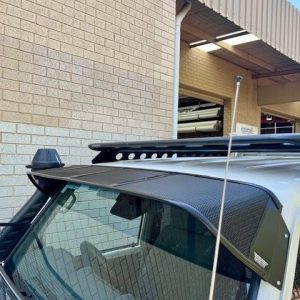
Understanding the historical development of off-road solar shading offers valuable insight into why specific design styles exist today for classic and modern off-road vehicles.
                   [ Evolution of Off-Road Exterior Solar Visors ]
                                           │
  ┌────────────────────────────────────────┴────────────────────────────────────────┐
  ▼                                                                                 ▼
[ Classic Vintage Era (1950s–1980s) ]                            [ Modern Performance Era (1990s–Present) ]
• Press-formed heavy steel & mesh panels                         • Molded high-impact acrylic perspex
• Fixed gutter-clamp bracket systems                             • Aerodynamic pressure-relief airflow vents
• Full opaque solar blackout shade                               • Flush A-pillar rivnut & adhesive mounts
• Heavy weight (Requires rigid steel pillars)                    • Ultra-lightweight (Reduces upper cab mass)
In the early decades of cross-country touring, exterior shades were constructed almost exclusively from heavy sheet steel or wire mesh mounted directly to exterior drip gutters. These early designs were engineered primarily to handle direct timber strikes in dense bushland. As vehicle aerodynamics advanced through the 1990s and 2000s, manufacturers introduced acrylic options utilizing high-grade polymers. Today, off-roaders can choose between classic steel designs and modern acrylic exterior sunvisor accessories 4wd tailored precisely to their vehicle’s roofline architecture and touring demands.
When shopping for high-performance exterior sunvisor accessories 4wd packages, paying attention to key structural and functional features ensures maximum reliability on the trail. Here are seven critical features that define top-tier solar shading systems for off-road rigs:
Premium acrylic visor kits utilize optical-grade perspex treated with specialized UV stabilizers. This prevents the material from becoming brittle, yellowing, or crazing under intense outback sun exposure. Quality acrylic exterior sunvisor accessories 4wd block over 99% of harmful ultraviolet radiation while filtering blinding solar glare without obstructing the driver’s upward field of view.
Off-road driving frequently involves brushing past low-hanging branches, overgrown scrub, and dense forest foliage. Heavy steel visors provide unmatched structural toughness, acting as an armor shield for your upper windshield frame and roofline. Meanwhile, high-grade acrylic exterior sunvisor accessories 4wd incorporate flexible polymer memory that absorbs minor foliage impacts without scratching, denting, or cracking.
High-speed wind turbulence caught beneath an exterior visor can create upward lift forces and annoying cabin noise. Modern exterior sunvisor accessories 4wd incorporate sculpted ventilation slots or aerodynamic contours that allow high-pressure air to escape cleanly over the roofline, reducing drag and stabilizing your vehicle at 110 km/h cruising speeds.
Vibration from corrugated gravel roads can quickly loosen inferior fasteners, leading to paint damage or component loss. Top-rated exterior sunvisor accessories 4wd packages include 316 marine-grade stainless steel bolts, nylon-locking nuts, and anti-vibration washers. Utilizing quality hardware ensures your visor remains firmly anchored across thousands of kilometers of rough terrain.
Direct metal-on-metal or plastic-on-paint contact causes paint chafing, rust formation, and persistent cabin rattling. Superior exterior sunvisor accessories 4wd kits feature pre-cut EPDM rubber isolation pads that fit between bracket feet and your vehicle’s sheet metal, dampening high-frequency road vibration while protecting bodywork.
For owners restoring vintage 4x4s, steel visor components are typically supplied in raw zinc primer, allowing custom color-matching to factory paint codes. Conversely, pre-finished dark smoke acrylic exterior sunvisor accessories 4wd deliver an instant, sleek look straight out of the box without requiring additional body shop preparation or expensive painting.
While low-cost universal visors require extensive heating, trimming, and custom bracket fabrication, vehicle-specific exterior sunvisor accessories 4wd are CAD-molded to follow the exact roofline, A-pillar curve, and windshield sweep of specific 4WD models, ensuring a seamless aesthetic fit and leak-free installation.
Comparing technical metrics across different visor styles helps buyers select the ideal model for their vehicle type and driving demands:
| Feature / Metric | Molded Acrylic Visor Kits | Press-Formed Steel Visor Kits | Mesh & Alloy Frame Visors |
| Target Vehicle Era | Modern & Retro Dual-Cabs / Utes | Vintage 40/60/70/80 Series 4x4s | Classic Vintage Restores & Troopy Builds |
| Material Composition | Optical dark smoke perspex | 1.2mm – 1.6mm Sheet steel | Woven stainless mesh & alloy frame |
| Average Kit Weight | 2.2 kg – 2.8 kg (Ultra-light) | 5.2 kg – 7.5 kg (Heavy-duty) | 3.5 kg – 4.5 kg (Medium-weight) |
| Solar Shade Block | Semi-transparent dark smoke tint | 100% Solid blackout shade | 70% Diffused solar mesh shade |
| Corrosion Resistance | 100% Rustproof polymer | Requires zinc primer & topcoat | High rust resistance (Alloy/Stainless) |
| Mounting Hardware | M5 Stainless bolts & rubber well-nuts | M6 Rivnuts & steel brackets | Heavy drip-gutter clamp brackets |
| Aerodynamic Profile | Smooth molded curvature | Requires sculpted wind vents | Open mesh allows air passage |
| Trail Branch Rating | Light to medium foliage flex | Heavy timber deflection shield | Medium scrub deflection rating |
Choosing the right material for your off-road setup involves balancing structural strength, weight distribution, optical transparency, and long-term weathering resistance.
High-impact optical acrylic is engineered specifically to withstand harsh outdoor conditions without degrading. It is completely immune to rust, making it the ideal choice for vehicles frequently driven along coastal beaches or in high-humidity tropical environments. The primary advantage of acrylic exterior sunvisor accessories 4wd lies in their semi-transparent property: drivers benefit from reduced solar glare while maintaining full upward visibility to monitor overhead traffic signals, track terrain elevation changes, or spot low clearance obstacles ahead. Furthermore, the lightweight nature of acrylic minimizes upper cab mass, preserving your vehicle’s center of gravity during off-camber technical maneuvers.
Press-formed steel visors are built for extreme conditions where physical protection is paramount. Stamped from structural sheet steel (1.2mm to 1.6mm thick) and reinforced along the forward edge, these units serve as a rigid shield against heavy tree branches, falling debris, and dense scrub. However, steel options add noticeable weight to your roof structure, weighing between 5.0 kg and 7.8 kg when fully assembled with steel mounting brackets. Additionally, steel requires diligent surface care: any stone chip or scratch that penetrates the paint layer must be touched up immediately with zinc primer to prevent rust from spreading under the coating into your A-pillars.
Woven stainless steel mesh set within an aluminum alloy frame represents a popular middle ground for classic 4WD restorations and troop carriers. Mesh visors diffuse direct sunlight by approximately 70% while allowing air to pass directly through the screen material. This open-weave design virtually eliminates high-speed wind drag and pressure buildup beneath the shade. While mesh does not provide the 100% solid blackout shade of steel or the sleek tint of acrylic exterior sunvisor accessories 4wd, its period-correct appearance and zero-drag profile make it a favored option for vintage Land Rovers and early Toyota FJ models fitted with traditional roof drip gutters.
Adding any exterior hardware to your vehicle roofline alters its aerodynamic drag coefficient. Analyzing how exterior sunvisor accessories 4wd interact with high-speed airflow is essential for minimizing wind noise, preventing vibration, and preserving fuel economy during long-distance outback touring.
                    [ Aerodynamic Airflow Behavior Breakdown ]
                                        │
  ┌─────────────────────────────────────┴─────────────────────────────────────┐
  ▼                                                                           ▼
[ Curved Acrylic Aerodynamic Flow ]                        [ Vented Steel Pressure Balance ]
• Air glides smoothly over molded radius                   • High-pressure air enters underside bowl
• Eliminates high-speed wind buffeting                     • Sculpted slots vent trapped air pressure
• Minimizes drag on A-pillar mountings                     • Prevents upward lift on roof brackets
When evaluating exterior solar shades, airflow dynamics vary based on design structure:
Proper installation of your chosen visor setup prevents water leaks, sheet metal corrosion, and high-speed hardware looseness over thousands of touring kilometers.
1.Evaluate Vehicle Compatibility and Terrain Needs:Select the right visor style for your specific 4WD.
Determine whether your touring style requires lightweight acrylic exterior sunvisor accessories 4wd for highway clarity or heavy steel options for dense bush scrub defense.
2.Dry-Fit Visor and Mark Bracket Alignment:Prevents misaligned pillar mounting holes.
Position your visor assembly across the windshield header with an assistant. Check door opening clearances and mark bracket hole locations accurately using a center punch.
3.Drill Mounting Holes and Apply Cold-Galvanizing Zinc:Protects internal pillar wiring and sheet metal.
Drill pillar sheet metal using mechanical drill stops to protect internal wiring. Remove raw metal burrs and coat drilled hole edges thoroughly with cold-galvanizing zinc primer to prevent future rust.
4.Install Rivnut Anchors and Polyurethane Sealant:Ensures 100% watertight seal around anchor points.
Insert structural steel or aluminum rivnuts into your mounting holes. Inject marine-grade polyurethane sealant (such as Sikaflex 221) directly into each hole cavity to create a watertight barrier.
5.Fit Rubber Isolation Gaskets and Torque Hardware:Prevents paint damage and bolt loosening.
Place custom EPDM rubber gaskets between bracket feet and vehicle paintwork. Fasten 316 marine stainless steel bolts with medium-strength thread locker to secure your exterior sunvisor accessories 4wd.
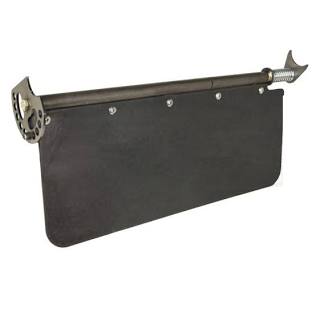
An often overlooked aspect of mounting exterior accessories to a 4WD cab is the dynamic load exerted during off-road travel. When driving across corrugated tracks or negotiating uneven, off-camber obstacles, a 4WD body shell undergoes continuous chassis flex.
If an exterior shade is mounted too rigidly without flexible isolation joints, these twisting forces transfer directly into the A-pillar sheet metal. Heavy steel visors, due to their higher mass and rigidity, place significantly more strain on mounting points than lightweight acrylic exterior sunvisor accessories 4wd. To mitigate structural fatigue over long touring trips, always follow these critical mounting practices:
explore our complete range of 4x4 exterior accessories and sunvisors
Before installing any solar shading hardware, it is essential to ensure your vehicle setup complies with national transport regulations and road safety standards. In Australia, vehicle modifications must adhere to regulations published by the Federal Register of Legislation under Australian Design Rule ADR 12/00 (Driver Field of View).
                    [ Legal Standards for Exterior Visors ]
                                       │
   ┌───────────────────────────────────┼───────────────────────────────────┐
   ▼                                   ▼                                   ▼
[ Wiper Clearance Zone ]         [ Edge Safety Regulations ]         [ Maximum Body Width ]
• Must not block swept glass     • Rounded edges required            • Visor must not extend
• Sightlines must stay clear     • 2.5mm minimum edge radius         • past factory side mirrors
Off-road vehicles operate under some of the most demanding environmental conditions on earth. From the scorching heat of central desert tracks to icy mountain passes and corrosive coastal beaches, every exterior component is subjected to severe physical stress.
Materials expand and contract at different rates when exposed to extreme ambient temperatures. Acrylic perspex exhibits a higher coefficient of thermal expansion than sheet steel. When mounting acrylic exterior sunvisor accessories 4wd, fastener holes should be drilled slightly oversize (typically 1mm to 2mm larger than the bolt shank) to allow the polymer sheet to expand and contract freely between summer heat (up to 45°C ambient) and freezing winter nights without binding or cracking around fastener points.
Driving through salt water estuaries, beach sand, or snow-clearing road salt creates a highly corrosive environment for metal accessories. While high-grade acrylic exterior sunvisor accessories 4wd are entirely immune to salt corrosion, steel visor builds require multi-layer surface protection:
Maintaining your exterior solar shading setup keeps it functioning smoothly, prevents bodywork damage, and preserves your vehicle’s resale value over years of outback exploration:
To illustrate how different visor styles perform in real-world conditions, consider these two distinct 4WD touring builds:
A vintage 1978 Toyota FJ40 LandCruiser undergoing a full ground-up restoration was fitted with a traditional steel mesh visor mounted directly to its factory roof drip gutters. The owner prioritized period-correct styling and heavy branch deflection for forested mountain tracks. Because the FJ40 features a vertical windshield and rigid cab frame, the steel mesh visor effectively reduced solar heat load in the un-airconditioned cab while allowing airflow to pass through freely, eliminating wind drag at country highway speeds.
A late-model Isuzu D-Max dual-cab ute outfitted for remote desert crossing was equipped with molded dark smoke acrylic exterior sunvisor accessories 4wd. The owner required a lightweight solution that would not add overhead weight to the front suspension or strain the vehicle’s thin A-pillar sheet metal. The smooth, aerodynamic curve of the acrylic shield reduced highway cabin noise, filtered blinding desert sun glare, and provided an unrestricted upward view for spotting track markers and overhead obstacles across dunes.
Use this summary checklist when selecting solar shading hardware for your vehicle build:
Selecting top-quality exterior sunvisor accessories 4wd keeps your vehicle cab significantly cooler, protects your vision against dangerous sun glare, and elevates your rig’s touring capability on every off-road adventure!