Executing a precise heavy commercial truck sun visor assembly and installation is one of the most vital mechanical upgrades you can perform when equipping long-haul semi-trailers, rigid body freight trucks, and heavy-duty transport fleets with an exterior glare shade canopy. While mounting a heavy-duty composite or optical acrylic shade peak delivers exceptional protection against blinding horizon sun angles and lowers cabin temperatures for long-distance drivers, ensuring your heavy commercial truck sun visor is 100% stable, vibration-free, and waterproof requires strict adherence to engineering best practices. Because commercial transport vehicles encounter continuous high-speed wind buffeting, heavy highway mileages, and relentless mechanical vibrations, sloppy bracket mounting or omitted sealants can lead to hidden cab pillar corrosion and interior cabin water leaks.
For fleet operators, independent owner-operators, and professional commercial truck builders, mastering every phase of a heavy commercial truck sun visor protocol guarantees that your vehicle’s structural cab roofline remains completely protected against mechanical fatigue. By utilizing marine-grade stainless steel bracketry, neutral-cure polyurethane thread sealants, and high-density EPDM rubber vibration dampening mounts, you eliminate both galvanic corrosion and moisture ingress into internal roof box sections. Whether you are outfitting a Kenworth, Mack, Freightliner, Volvo, or Isuzu heavy transport rig, following a rigorous 10-step installation routine ensures your heavy commercial truck sun visor stands up to millions of punishing highway kilometers.
In this comprehensive technical guide, we break down the 10 essential steps required to complete a professional heavy commercial truck sun visor assembly and maintenance program. From preparing cab roof surfaces and drilling precision pilot holes to injecting waterproof sealants, torquing isolation hardware, and verifying transport regulatory compliance, this extended engineering blueprint provides everything you need for a lifelong, weatherproof commercial build.
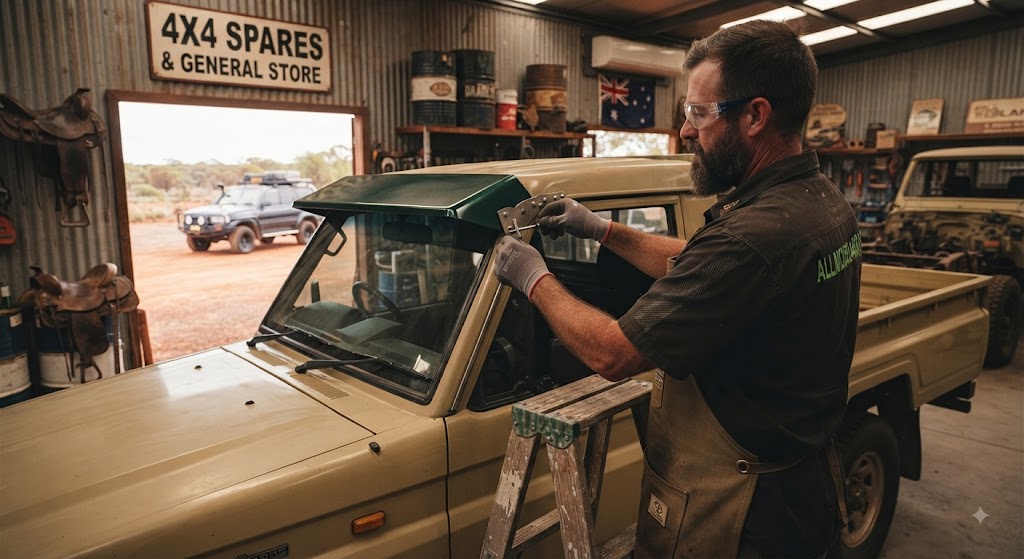
Understanding the aerodynamic loads and roof pillar mechanical forces involved in a heavy commercial truck sun visor project is essential to preventing panel fatigue or cabin water leaks.
       [ Aerodynamic & Mechanical Architecture of Heavy Commercial Truck Sun Visor ]
                                             │
  ┌──────────────────────────────────────────┴──────────────────────────────────────────┐
  ▼                                                                                     ▼
[ Structural Cab Roof Bracket Matrix ]                                  [ Heavy-Duty Composite Visor Shield ]
• 304 or 316 marine-grade stainless steel side support brackets         • Reinforced fiberglass or heavy PMMA shade panel
• Heavy EPDM rubber isolation pads prevent paint chafing                • Exterior air gap continuously flushes thermal solar heat
• Fastened securely with heavy-duty blind nutserts or bolts             • Tapered leading edge channels slipstream smoothly over roof
• Sealed with neutral-cure marine polyurethane compound                 • Stabilized by multiple central windstays to eliminate flutter
When traveling at highway speeds, a commercial truck visor encounters continuous air resistance that exerts uplifting and downward pressure on its mounting hardware. A successful heavy commercial truck sun visor installation relies on rigid stainless steel side brackets fastened securely into the reinforced cab roof channels or door pillars. Distributing these clamping forces evenly across multiple fastener points during your heavy commercial truck sun visor procedure prevents localized sheet metal stretching or fatigue cracks around drill holes.
Furthermore, applying a neutral-cure marine polyurethane sealant (such as Sikaflex-221 or 291) inside every drilled pilot hole before driving fasteners home is a critical phase of any heavy commercial truck sun visor protocol. Because commercial cabs house internal wiring harnesses for clearance lights, radio antennas, and sleeper climate controls, preventing water ingress during heavy downpours guarantees that your heavy commercial truck sun visor work will never cause internal roof rust or headliner dampness.
Professional long-haul truck drivers spend countless hours facing intense solar radiation, which leads to severe eye strain, cognitive fatigue, and diminished road safety. Standard factory interior sun visors are frequently inadequate for blocking low-angle sunlight during early morning and late afternoon driving legs. Fitting a dedicated heavy commercial truck sun visor transforms the upper cabin optics by establishing an extended external shade canopy that intercepts harsh UV rays and blinding light before they ever reach the laminated windscreen glass.
Follow this structured 10-step protocol to complete your heavy commercial truck sun visor installation and maintenance program safely, efficiently, and without risking sheet metal corrosion:
Unpack your heavy commercial transport kit and verify that all stainless steel brackets, bolts, washers, locking nuts, isolation pads, and visor panels match your heavy commercial truck sun visor specification sheet. Lay out every component on a clean workbench to inspect elastomer flexibility and check for missing hardware before touching the truck.
Thoroughly clean the cab roofline, mounting channels, and top windscreen frame with isopropyl alcohol to remove wax, grease, road grime, and silicone residues prior to your heavy commercial truck sun visor execution. A chemically clean surface is mandatory for proper sealant adhesion and gasket seating.
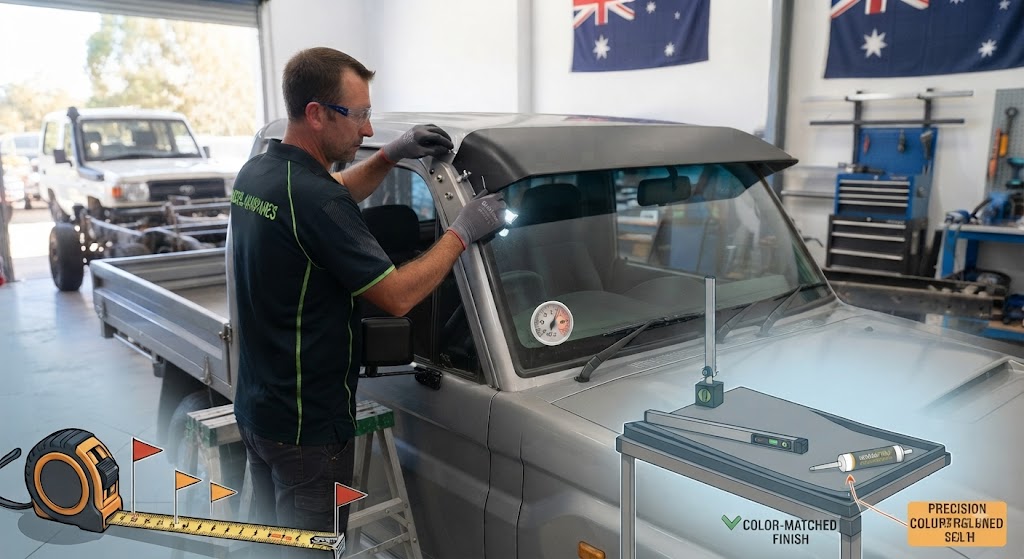
Position the stainless side brackets—complete with their provisional dampening pads—loosely against the cab mounting channels during your heavy commercial truck sun visor alignment phase. Use a soft wax pencil or painter’s tape to mark exact drill coordinates, ensuring symmetric alignment on both the driver and passenger sides.
Drill clean pilot holes into the marked cab locations using a cobalt step bit fitted with an adjustable depth stop. This mechanical safeguard prevents the drill bit from plunging too deep and damaging internal clearance light wiring harnesses or cab insulation during your heavy commercial truck sun visor stage.
Inject neutral-cure polyurethane sealant directly into every open drill hole prior to fastener insertion—a vital waterproofing step in every heavy commercial truck sun visor assembly. Never use acidic silicone bathroom sealants, as acetic acid release causes rapid sheet metal corrosion.
Place heavy EPDM rubber isolation pads and shoulder bushings underneath and around the stainless side mounting brackets during your heavy commercial truck sun visor process to prevent galvanic corrosion, paint chafing, and vibration fatigue across rough highway surfaces.
Insert stainless button-head screws with nylon locknuts into your isolated brackets. Torque them to manufacturer specifications using a calibrated torque wrench, ensuring you do not over-compress the rubber dampening pads.
Install and adjust the central windstay braces included with your heavy commercial truck sun visor package to eliminate high-speed panel vibration and aerodynamic flutter.
If your heavy commercial truck sun visor incorporates integrated marker lights or clearance lamps, carefully test electrical continuity, seal all wire entry points with waterproof heat-shrink tubing, and secure harnesses away from sharp sheet metal edges.
Perform a low-pressure hose test over the mounting zones and conduct a highway test drive to verify zero water ingress and absolute structural silence, concluding your heavy commercial truck sun visor protocol.
Evaluating physical properties helps fleet managers and builders select the correct shield style and bracket layout for their heavy commercial truck sun visor:
| Specification / Feature | Optical Cast Acrylic Visor | High-Impact Polycarbonate Visor | Molded Fibreglass Cab Visor | Stainless Steel Mesh Shade |
| Material Thickness | 4.0mm – 5.0mm Cast Acrylic | 3.5mm – 4.5mm Polycarbonate | 3.0mm Reinforced GRP | 1.5mm Woven Stainless Wire |
| UV Resistance Rating | Exceptional (Will Not Yellow) | Moderate (Requires UV Coating) | High (Painted Gelcoat Finish) | Impervious to UV Rays |
| Average Assembly Weight | 2.5 kg – 4.2 kg complete | 2.2 kg – 3.8 kg complete | 4.5 kg – 7.0 kg complete | 3.0 kg – 5.0 kg complete |
| Wind Drag Coefficient | Low (Tapered Airflow Curve) | Low (Tapered Airflow Curve) | Moderate (Solid Front Lip) | High (Mesh Surface Drag) |
| Glare Reduction Efficiency | 85% – 95% Light Filtered | 80% – 90% Light Filtered | 100% Solid Shade Block | 60% – 75% Light Filtered |
| Waterline Ingress Risk | Zero (When Correctly Sealed) | Zero (When Correctly Sealed) | Zero (When Correctly Sealed) | Zero (When Correctly Sealed) |
| Offroad Vibration Rating | High (With Center Stay) | High (With Center Stay) | Moderate (Heavy Rigid Body) | Moderate (Frame Flexing) |
Selecting high-quality material components determines how your heavy commercial truck sun visor performs under extreme heat, freezing winter conditions, and continuous high-speed wind buffeting.
       [ Material Engineering for Heavy Commercial Truck Sun Visor Assemblies ]
                                     │
  ┌──────────────────────────────────┴──────────────────────────────────┐
  ▼                                                                     ▼
[ Reinforced Composite & Acrylic Panels ]               [ Stainless Steel (304/316 Grade) Bracketry ]
• High-impact resistance absorbs stone chips and debris strikes        • Yield strength resists high-speed wind deflection forces
• UV-stabilized gelcoat or PMMA prevents solar degradation               • Powder-coated or polished finish resists coastal salt spray
• 100% solid or tinted shade block eliminates intense overhead glare    • Rigid mounting geometry keeps visor aligned across million-km lifespans
• Flexible memory retains shape across extreme thermal cycles           • Fitted with EPDM rubber buffers to protect commercial cab paint
Choosing high-impact reinforced composite or 5.0mm optical cast acrylic for a heavy commercial truck sun visor ensures exceptional structural durability. Unlike passenger vehicle accessories, commercial transport visors must endure high-speed turbulence generated by large freight box profiles. A robust heavy commercial truck sun visor panel withstands highway stone impacts while maintaining optical clarity and structural rigidity.
Pairing your visor panel with 304 or 316-grade stainless steel mounting brackets is essential for a long-lasting heavy commercial truck sun visor build. Stainless steel brackets resist rusting from trapped rain moisture and road salt. Furthermore, using stainless steel fasteners equipped with nylon-insert locknuts during your heavy commercial truck sun visor assembly ensures hardware cannot back off due to heavy diesel engine harmonics and road vibrations.
explore our complete range of 4x4 armor, side steps, and rock sliders
Every completed heavy commercial truck sun visor installation must satisfy national transport regulations. In Australia, exterior vehicle body attachments are regulated by standards published by the Federal Register of Legislation under Australian Design Rules ADR 12/00 (Glare Reduction in Field of View) and ADR 42/00 (General Safety Requirements).
                  [ ADR Safety Compliance Criteria ]
                                    │
   ┌────────────────────────────────┼────────────────────────────────┐
   ▼                                ▼                                ▼
[ Forward Field of View Standards ] [ Maximum Vehicle Projection ]   [ Edge Radius & Safety Rules ]
• Must not obscure driver view    • Must not extend beyond the      • All exposed bracket edges
  of traffic control signals        outer width of door mirrors       must have minimum 2.5mm radius
To ensure your heavy commercial truck sun visor remains in peak operating condition over years of demanding commercial service, establishing a disciplined fleet maintenance routine is essential.