
Cruising across Australian highways in a classic or modern-classic Commodore is an enduring Aussie tradition. However, long highway stretches into low-angle morning or late-afternoon sunlight turn expansive front windscreens into thermal heat traps. Interior sun flaps only shade the driver’s eyes, doing nothing to prevent radiant solar energy from superheating the dashboard vinyl. Fitting an external Holden Commodore sun visor provides an indispensable overhead barrier that stops harsh ultraviolet and infrared rays before they reach the glass.
Beyond reducing glare, a properly fitted Holden Commodore sun visor delivers distinctive Australian street-ute and sedan styling. However, selecting the right unit requires an understanding of how General Motors Holden redesigned vehicle architecture between 1988 and 2006. An exterior shield built for the angular lines of a VN, VP, VR, or VS will not seat against the rounded, gutterless roofline of a VT, VX, VY, or VZ.
This technical guide breaks down everything you need to know about choosing and installing a Holden Commodore sun visor—covering second-generation versus third-generation differences, solid steel versus alloy mesh, weatherproofing, and Australian road regulations.
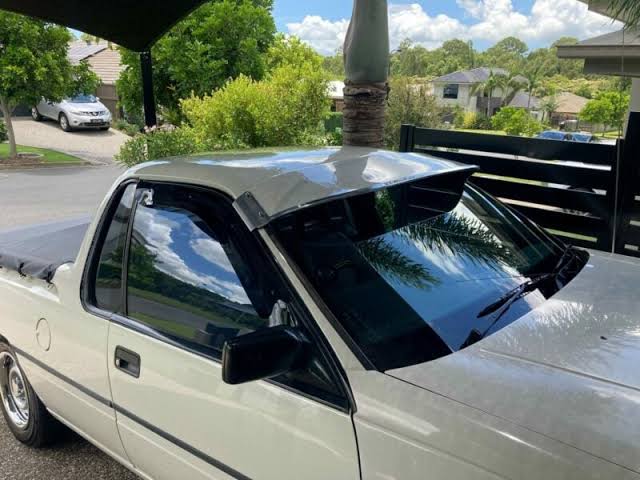
Cab Architecture: Second-Gen (VN–VS) vs Third-Gen (VT–VZ)
Before purchasing an exterior shield, identifying your exact chassis generation is critical. GM Holden completely overhauled windscreen rake angles and pillar sheet metal between generations:
[ Second Generation: VN, VP, VR, VS & VG Ute (1988–2000) ]
• Angular cab architecture based on modified Opel Rekord / Senator floorplans
• Squarer A-pillars with distinct door-frame pinch-weld seams
• Near-flat upper windscreen transition into the roof skin
• Shared cab geometry across sedans, wagons, and VG/VP/VR/VS utility bodies

[ Third Generation: VT, VX, VY, VZ & VU Ute (1997–2007) ]
• Wider, clean-sheet aerodynamic body shell with pronounced curves
• Gutterless, curved A-pillars with steeply raked windscreen glass
• Convex roof crown requiring pre-contoured visor baseplates
• Shared front windscreen architecture across sedans, wagons, and VU/VY/VZ utes
Because of these fundamental structural shifts, a Holden Commodore sun visor is strictly generation-specific. A unit engineered for an angular VN–VS cab cannot adapt to the wider, aerodynamic profile of a VT–VZ without leaving large panel gaps or inducing severe wind buffeting.
Second-Gen Fitment: VN, VP, VR, VS & VG Utes
For second-generation models (spanning 1988 to 1997 sedans/wagons and extending to 2000 for VS utilities), the cab features defined, squarer edges.
Installing a dedicated Solid Holden Commodore VN-VS Sunvisor delivers period-correct street and trade styling.
Key fitment aspects for the second generation include:
- A-Pillar Flange Mounting: Second-gen visors anchor into the outer door-jamb pinch-weld seam using heavy-duty stainless steel fasteners. This mechanical mounting ensures the shield remains rigid under highway buffeting.
- Ute and Sedan Interoperability: Whether you drive an executive sedan, an SS, an Acclaim wagon, or a VG/VR/VS workhorse ute, the upper windscreen header and A-pillar profiles are shared. A second-gen Holden Commodore sun visor bolts up across all body configurations.
- Polished Alloy Trim: Premium solid steel units feature a classic polished aluminium front edge strip, providing an authentic 1990s street appearance that highlights period bodywork.
Third-Gen Aerodynamics: VT, VX, VY, VZ & VU Utes
When Holden launched the VT in late 1997, it introduced a wider body, rounded rooflines, and a steeply swept windscreen.
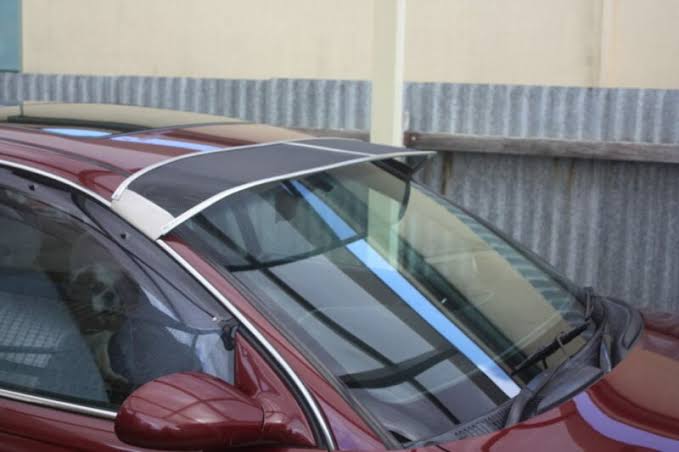
Fitting a Holden Commodore sun visor to a VT, VX, VY, VZ, or VU ute requires close attention to airflow dynamics:
- Curved Bracket Bases: The A-pillar brackets must be precision-pressed to follow the convex curve of the third-generation roof pillar.
- High-Speed Highway Stability: Because the VT–VZ windscreen is raked at a sleek aerodynamic angle, solid visors experience significant upward airflow off the bonnet. A high-grade Holden Commodore sun visor incorporates rolled stiffening beads and high-tensile mounting brackets to prevent high-speed flutter at 110 km/h.
- Ute Utility Popularity: While sedans often opt for mesh designs, VU, VY, and VZ utility owners frequently choose solid steel visors to give their utes a heavy-duty stance, perfectly complementing hard tonneau covers and rear sports bars.
Solid Steel vs Alloy Mesh: Choosing Your Construction
Deciding on the construction material for your Holden Commodore sun visor comes down to balancing period styling against aerodynamic highway flow:
| Feature Category | Solid Steel Holden Commodore Sun Visor | Alloy Mesh Holden Commodore Sun Visor |
| Primary Material | Zinc-coated pressed steel with polished alloy trim | Expanded aluminium mesh in a rigid alloy tubular frame |
| Solar Heat Rejection | 100% total sunlight blockout over upper glass | Filters approximately 70% to 80% of direct glare |
| Aesthetic Appeal | Classic factory-matched appearance with polished strip | Sporty, low-profile commercial look |
| Aerodynamic Airflow | Air diverts over roofline; requires rigid mounts | Air flows freely through open mesh louvers |
| Paint Customisation | Supplied in grey primer ready for OEM paint matching | Durable satin black powder-coated finish |
[ Solid Steel Holden Commodore Sun Visor ]
• Blocks 100% of direct overhead sunlight, lowering cab heat soak
• Shields dashboard vinyl from UV warping and thermal cracking
• Top surface supplied in grey primer, ready for vehicle colour-matching
• Iconic polished aluminium front highlight strip

[ Alloy Mesh Holden Commodore Sun Visor ]
• Louvered aluminium mesh allows air to pass through freely
• Minimises wind drag and eliminates high-speed cabin drumming
• Lightweight profile reduces dynamic mechanical stress on A-pillars
• Non-reflective satin black finish complements dark street trims
For owners restoring an early ute or seeking maximum cabin shade during summer, a heavy-duty solid shield—such as the Solid Heavy Duty Alloy sunvisor or Solid 4×4 Sun Visor—delivers maximum overhead protection. For daily-driven highway commuters looking for minimal wind resistance, an aerodynamic alternative like the Solid Heavy Duty Alloy Sun Visor offers excellent glare diffusion with low drag.
How to Colour-Match Classic Holden Paint Codes
A major advantage of a solid steel Holden Commodore sun visor is that the top surface comes pre-treated in an automotive grey primer, ready for colour-matching to your vehicle’s factory paint code.
[ Locate Holden Paint Code on Radiator Support or Passenger B-Pillar ]
                               │
                               ▼
[ Wet-Sand Top Grey Primer with P400/P600 Sandpaper ]
                               │
                               ▼
[ Mask Polished Front Trim Strip & Satin Green Underside ]
                               │
                               ▼
[ Apply 2 to 3 Coats of Automotive Acrylic or 2K Basecoat ]
                               │
                               ▼
[ Finish with High-Gloss 2K Polyurethane Clear Coat ]
Popular Holden Commodore factory paint codes include:
- Heron White: Code 158A / J073 (Extremely common across VN–VZ commercial utes and sedans)
- Panther Black: Code 854J / 188B (Popular on VR/VS and VT SS models)
- Commodore Blue: Code 1B068 (Classic early second-gen solid blue)
- Tiger Mica: Code 056N (Iconic gold/orange metallic on VT–VY SS variants)
- Sting Red: Code G7C / 198C (Vibrant solid red across VN–VZ lineups)
When colour-matching your Holden Commodore sun visor, ensure the underside retains an anti-glare satin green or matte black finish. Painting the bottom face in a high-gloss body colour (especially bright whites or metallics) causes sunlight reflecting off the bonnet to bounce straight into your eyes.
Step-by-Step Installation: A-Pillar Sealing and Weatherproofing
Because the Commodore cab lacks external rain gutters, installing an exterior Holden Commodore sun visor requires securing the brackets into the outer A-pillar door-jamb seam. Following proper weatherproofing procedures guarantees a lifetime leak-free fit:
[Clean A-Pillars of Road Grime and Wax Residue]
                         │
                         ▼
[Dry Test-Fit Sun Visor Symmetrically Across Windscreen]
                         │
                         ▼
[Check Door Rubber Clearances with Doors Closed]
                         │
                         ▼
[Mark & Drill Pilot Holes in A-Pillar Door Seams (10mm Stop-Collar)]
                         │
                         ▼
[Treat Bare Metal with Cold-Galvanising Zinc Primer]
                         │
                         ▼
[Inject Automotive Polyurethane Sealant (Sikaflex 221)]
                         │
                         ▼
[Torque High-Tensile Stainless Fasteners Evenly & Cure 24h]
- Dry Fit and Symmetrical Alignment: With an assistant, place the Holden Commodore sun visor over the windscreen. Ensure the overhang sits centered across the glass and that both front doors open and close freely without touching the bracket uprights.
- Drill into Door-Jamb Flanges Only: Fastenings secure into the outer A-pillar pinch-weld or door frame cavity—never drill through the main roof panel or interior headliner. Use a drill stop-collar set to 10mm to avoid striking internal pillar harnesses.
- Rust-Proof Drilled Holes: Vacuum away all metal shavings immediately. Coat the exposed edges of every pilot hole with a cold-galvanising zinc-rich primer to prevent corrosion from developing inside the pillar.
- Use Polyurethane Adhesive Sealant: Never use household bathroom silicone, which contains acetic acid that corrodes steel. Always use an automotive-grade polyurethane adhesive sealant (such as Sikaflex 221). Inject the sealant directly into each hole before driving in stainless steel screws or blind rivets, creating an airtight, 100% waterproof seal.
- Torque and Settle: Tighten all fasteners evenly. Allow the polyurethane to cure for 24 hours before driving at open-road highway speeds.
Australian Road Regulations and Compliance Standards
Any external frontal accessory fitted to a road-registered vehicle in Australia must comply with national and state transport safety rules. When installing a Holden Commodore sun visor, your setup must satisfy the following criteria:
- The 11-Metre Forward Field of View Rule: Under state vehicle standards—including Transport Victoria VSI 8 Vehicle Modification Standards and Transport for NSW Light Vehicle Safety Check Rules—an external sun visor must not drop into the driver’s primary sightline. From a normal seating position, the driver must maintain an unobstructed view of the road surface 11 metres forward of the front bumper.
- Protrusion Limits and Radiused Edges: In accordance with Australian Standard AS 4876.1 and local regulations, external fittings must feature rounded, deburred edges with a minimum 5mm radius. Sharp brackets or un-radiused corners are strictly illegal on public roads.
- Lighting and Wiper Clearances: A compliant Holden Commodore sun visor must not obscure clearance lights or obstruct the sweeping motion of the windscreen wiper arms, complying with standards set by the Department of Infrastructure ADR Vehicle Standards.
Frequently Asked Questions
Will a VN–VS sun visor fit onto a VT–VZ Commodore?
No. The VN–VS (second generation) and VT–VZ (third generation) use completely different cab architectures. The VT–VZ body is significantly wider, the windscreen has a steeper aerodynamic rake, and the A-pillars are rounded rather than square. Installing a VN–VS visor onto a VT–VZ will result in misaligned brackets and poor weather sealing. Always select a Holden Commodore sun visor engineered specifically for your chassis code.
Does a sun visor fit both Commodore sedans and utes?
Yes, within the same generation. A second-generation Holden Commodore sun visor fits VN, VP, VR, and VS sedans, wagons, and VG–VS utilities because the upper windscreen frame and A-pillar profiles are identical. Similarly, a third-generation visor fits VT, VX, VY, and VZ sedans, wagons, and VU–VZ utes seamlessly.
How do I stop my sun visor from whistling on the highway?
High-speed whistling occurs if air slips through unsealed gaps between the mounting brackets and the A-pillar sheet metal. When installing a Holden Commodore sun visor, ensure that all mounting seams are injected with automotive polyurethane sealant (such as Sikaflex 221) and that all fasteners are torqued down firmly to prevent high-speed flutter.
Can I install a sun visor without drilling into my Commodore?
No. Because Holden Commodores feature gutterless rooflines, mechanical fastening into the A-pillar door-jamb seam is required. Attempting to attach an exterior visor using double-sided adhesive tape is extremely dangerous, as aerodynamic uplift forces at 110 km/h will cause the adhesive to fail. When drilled, zinc-primed, and polyurethane-sealed, mechanical fasteners will never leak or rust.
Why do solid visors feature a green underside?
Borrowing from aviation and long-haul transport safety standards, the underside of a solid Holden Commodore sun visor is painted in non-reflective satin green or flat black enamel. This absorbs scattered sunlight reflecting off wide bonnets, eliminating distracting glare from entering the cabin.
Summary: Elevating Your Commodore Build
Fitting an exterior Holden Commodore sun visor combines practical glare protection with timeless Australian street-ute and sedan styling. By intercepting direct solar radiation before it hits the glass, an exterior visor prevents dashboard vinyl from warping, drops cabin temperatures by up to 12°C, and eliminates blinding afternoon glare. Whether outfitting a classic VS trade ute, a clean VN street cruiser, or a daily-driven VY sedan, choosing a visor engineered for your specific generation ensures a secure, rattle-free installation built to go the distance.
Explore the complete range of external 4WD sun visors to find precision-engineered protection for your vehicle, or pair your cab shade with heavy-duty 4WD bull bars and front accessories to complete a dependable touring or street setup.