
The Next-Gen Ford Ranger (MY22 onward) has set a new benchmark for dual-cab utilities across Australia. Whether powered by the punchy 2.0L Bi-Turbo or the roaring 3.0L V6 turbo-diesel, it delivers car-like luxury, massive towing power, and a sharp C-clamp headlight design. But taking a modern Ranger out along regional highways or remote bush tracks without heavy-duty frontal protection is a massive gamble. Hitting a stray kangaroo or feral pig at 100 km/h will punch straight through that factory plastic front bumper, crushing the radiator, intercooler, and air conditioning condenser, and leaving you stranded on the side of the road with thousands of dollars in mechanical repair bills. That is why fitting an authentic steel next gen ranger bull bar is one of the most practical investments you can make for your rig.
However, bolting a steel bar onto a modern MY22+ Ranger requires far more precision than working on an older 4WD. The Next-Gen platform is packed with advanced driver-assist systems (ADAS), including millimeter-wave radar behind the front grille, ultrasonic parking sensors, and a forward-facing 360-degree camera. If you install an uncertified or poorly designed next gen ranger bull bar, you risk blocking critical safety cameras, triggering false autonomous emergency braking faults, or throwing airbag warning lights. Understanding sensor relocation, bumper cutting, chassis mounting, and front coil spring upgrades is critical before you pick up a spanner in the shed.
This plain English buyer’s guide breaks down everything you need to know about getting the right next gen ranger bull bar—from checking sensor clear zones and bumper trim templates to winch cradles, front suspension loads, and Aussie road rules.
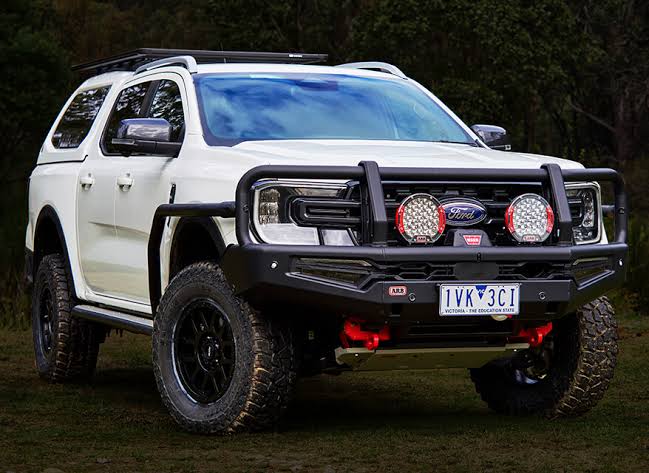
Modern Vehicle Tech: Navigating Ford’s Safety Systems
The single biggest engineering challenge when choosing a next gen ranger bull bar is integrating seamlessly with Ford’s factory electronics:
[ Next-Gen Ranger Front-End Technology Matrix ]
+-------------------------------------------------------------------------+
|  [ Next Gen Ranger Bull Bar - Lowered Center Cross-Pipes ]              |
|  [===================================================================]  |
|       \                                                         /       |
|        \--- Active 20° Clear Viewing Cone (Radar & Forward Camera) ----/ |
|                                                                         |
|                [ Factory Grille Millimeter-Wave Radar ]                 |
|                [ Forward 360-Degree Camera Relocation ]                 |
|                [ Four Ultrasonic Front Parking Sensors ]                |
+-------------------------------------------------------------------------+
- Millimeter-Wave Radar Sensor: The radar unit that controls Autonomous Emergency Braking (AEB) and Adaptive Cruise Control is mounted behind the lower section of the front grille. A certified next gen ranger bull bar features dropped central horizontal cross-tubes and open wire mesh windows that keep this 20-degree sensor cone completely unobstructed. If an unverified bar blocks this sightline, your dashboard will light up with warning chimes and disable cruise control.
- Forward 360-Degree Camera Relocation: On Wildtrak, Sport, and Platinum models fitted with surround-view cameras, the front camera lives directly under the Ford badge. A quality next gen ranger bull bar includes a dedicated forward camera relocation bracket that positions the lens slightly forward through the center pan, preserving your split-screen parking view.
- Ultrasonic Parking Sensors: The factory bumper houses four parking sensors. When installing a next gen ranger bull bar, these sensors must be transferred into dedicated laser-cut outer wing housings using silicone isolator grommets. If mounted at the wrong angle, the sensors will bounce waves off the road surface and beep incessantly.
If you are looking for an authentic, fully certified steel bumper replacement designed specifically for the MY22+ platform, the ARB Ranger Bull Bar Suit Next Gen MY 22 onward Solid delivers full ADR compliance, winch compatibility, and precision sensor integration.
To explore our full catalog of frontal protection across different 4WD platforms, browse our live Bull Bars category to find the ideal match for your touring setup.
Heavy-Duty Steel Construction: What Makes It Tough?
When outback animal strikes are an everyday reality, an authentic next gen ranger bull bar delivers physical protection that lightweight plastic bumpers simply cannot offer:
[ Anatomy of an Authentic Next Gen Ranger Bull Bar ]
• Channel Base: Precision-folded 3.5mm to 4.5mm cold-rolled high-tensile steel
• Upper Tubular Hoops: Heavy-gauge 60.3mm steel tubing guarding headlights & grille
• Independent Winch Cradle: 5mm thick steel subframe bolted across the chassis horns
• Splash Skid Plates: Steel underbody plates protecting steering lines & intercooler
• Recovery & Jacking: Dual hi-lift jack slots and reinforced recovery tow eyes
- Three-Piece Channel Design: An authentic next gen ranger bull bar uses a heavy central channel tied into upswept outer wings that follow the signature C-clamp headlight design. These wings shield your radiator and front quarter panels from stray animals or thick scrub on bush tracks.
- Continuous Structural Uprights: High-strength horizontal tubes are threaded through vertical steel uprights. This structural lattice stops the outer wings from folding backward into your front wheels during an off-center roo strike.
- Winch-Ready Subframe: A quality next gen ranger bull bar includes an independent internal winch cradle. When winching your ute out of deep mud or sand, all pulling force acts straight on the vehicle’s ladder chassis rather than flexing the outer bar shell.
If you are setting up other commercial vehicles alongside your Ranger, models like our 2020-2025 Mazda bt50 bullbar Solid or 2005 to 2011 Navara bullbar d40 Spanish built Solid show how precision-engineered chassis brackets protect modern dual-cab front ends.
For flagship outback builds requiring extreme multi-post cattle protection, explore the Solid Stainless 5 Post Mesh Bullbar to see how heavy-duty livestock grids handle severe animal collisions.
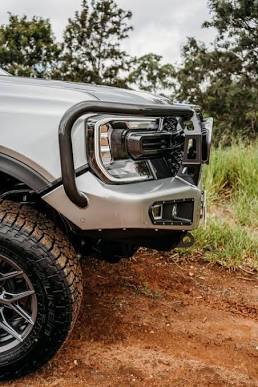
Front Suspension Loading: Managing the Overhang Mass
The Next-Gen Ford Ranger features an independent front suspension (IFS) with double wishbones and coil-over strut assemblies. Managing front overhang mass when installing a next gen ranger bull bar is essential for vehicle stability:
        Front Overhang Load (~95kg to 135kg)
        [ Next Gen Ranger Bull Bar + Winch + Spotlights ]
                       \
                        v
                 [O===========O] ---------------------- [O===========O]
                 Front IFS Axle                         Rear Leaf Axle
             (Factory GAWR: 1,490kg)
| Setup Configuration | Front Overhang Mass | Impact on Factory Springs | Recommended Suspension Fix |
| Bare Next Gen Ranger Bull Bar | 65kg to 80kg dry mass | 20mm to 30mm front-end sag | Upgraded front coils (+50kg rating) |
| Bar + 9,500lb–12,000lb Winch | 95kg to 125kg total mass | 35mm to 45mm sag; hits bump stops | Constant-load coils (+100kg rating) |
| Bar + Winch + Steel Bash Plates | 115kg to 140kg total mass | Severe nose dive; tyre scrubbing | Matched heavy-duty struts / GVM upgrade |
[ Why Factory Springs Cannot Handle a Heavy Steel Bar ]

Standard Factory Suspension Setup:
Tuned for bare 12kg plastic bumper ===> Add 80kg Steel Bar & Winch ===> Front End Sags 35mm
(Reduced shock travel + violent bottoming-out + tyres chew out on inside shoulders)

Upgraded Constant-Load Coil Setup:
Heavy-duty coils rated for +100kg ===> Restores Factory Ride Height ===> Level Highway Stance
(Full upward shock travel + crisp steering response + even tyre wear across the tread)
Bolting a heavy next gen ranger bull bar onto soft factory front coils creates a long lever arm forward of the front axle. Your front end will sag, causing the front suspension to bottom out against its rubber bump stops over rough washboard corrugations. This suspension sag alters your steering geometry, causing excessive negative camber and toe-out that will chew through the inside edges of your front tyres in just a few thousand kilometres.
Always pair your next gen ranger bull bar with a set of heavy-duty constant-load front coil springs rated for a permanent 50kg to 100kg load. On touring utes carrying a rear canopy, dual batteries, and camp drawers, combining your bar install with a certified Gross Vehicle Mass (GVM) upgrade keeps your Ranger completely road legal.
For deeper technical advice on how subframes handle dynamic recovery loads, read our guide on the best bull bars for winches to learn how chassis cradles protect your ladder frame.
To keep harsh outback sun off your dashboard and reduce cab temperatures on long highway runs, check out our Solid 4×4 Sun Visor or explore our full range of exterior 4WD sun visors.
Step-by-Step Shed Installation: Bumper Trimming & Fitting
Bolting on a next gen ranger bull bar at home is a manageable weekend job with basic hand tools and a mate to help lift:
[Disconnect Negative Battery Terminal & Unplug Sensor Harnesses]
                            │
                            ▼
[Remove Factory Grille, Bumper Apron, Flares & Air Ducts]
                            │
                            ▼
[Apply Masking Tape & Cut Plastic Bumper Along Prescribed Line]
                            │
                            ▼
[Clean Chassis Horn Mounting Faces with Wax and Grease Remover]
                            │
                            ▼
[Bolt 5mm Steel Winch Cradle Across the Hydroformed Chassis Horns]
                            │
                            ▼
[Install Low-Mount Winch & Transfer Parking Sensors & Camera]
                            │
                            ▼
[With a Mate, Lift the Next Gen Ranger Bull Bar Outer Shell]
                            │
                            ▼
[Center Symmetrically & Set an Even 18mm-20mm Body Flex Gap]
                            │
                            ▼
[Torque All Grade 8.8 High-Tensile Bolts & Drill Shear Pins]
1. Removing and Trimming the Plastic Bumper
Modern Rangers require a clean bumper cut. Unclip the front grille and disconnect your fog light and parking sensor wiring harnesses. Using high-tack masking tape, mark your cut line along the lower bumper template line. Cut the plastic cleanly using an oscillating multi-tool or pneumatic air saw, and finish the raw plastic edge with black rubber pinch-weld trim for a tidy, professional look before mounting your next gen ranger bull bar.
2. Mounting the Winch Subframe
Thoroughly clean all road grime from the chassis mounting faces. Slide the 5mm steel winch cradle over the chassis horns, aligning the holes with the factory chassis threads. Run the supplied high-tensile Grade 8.8 bolts in loosely so you can adjust the subframe before tightening.
3. Setting the Body Flex Clearance Gap
Vehicle bodies float on flexible rubber body mounts, while your next gen ranger bull bar bolts directly to the rigid steel ladder chassis. Always leave an even clearance gap of 18mm to 20mm between the top wings of the bull bar and the bottom edge of your front headlights and mudguards. If you mount the bar tight against the body, normal off-road chassis flex will force the steel bar into your panels, causing expensive guard dents.
4. Pinning the Mounting Brackets
Once your next gen ranger bull bar is centered and aligned, drill pilot holes through the overlapping bracket plates and hammer in hardened steel roll pins or shear bolts. This stops the bar from pivoting backward into your radiator support panel if you hit a kangaroo at highway speeds.
For drivers building out other commercial utilities in their fleet, compare our ARB 70 SERIES BULLBAR & SIDERAILS Solid or check out our Toyota LandCruiser 79 Series BULLBAR Solid to compare frontal bar engineering across platforms.
Australian Road Regulations & ADR Compliance Standards
Any frontal protection accessory bolted to an Australian road-registered vehicle must adhere strictly to national standards and state transport modification codes:
- ADR 69/00 & ADR 73/00 (Occupant Crash Protection): A road-legal next gen ranger bull bar features vehicle-specific subframe brackets incorporating calculated crumple accordions. In a high-speed collision, these brackets absorb dynamic collision energy and transmit crash deceleration pulses to chassis sensors at the exact factory rate, ensuring SRS airbags deploy without delay.
- Australian Standard AS 4876.1-2002: The bar profile must conform closely to the shape of the vehicle’s front end. Leading builders ensure all forward-facing surfaces, vertical posts, and brackets on a next gen ranger bull bar feature rolled, deburred edges with a minimum 5mm radius to minimise injury risks to vulnerable road users.
- The 11-Metre Forward Road Visibility Rule: As enforced by state transport authorities—including Transport Victoria VSI 1 Bull Bar Standards and Transport for NSW Frontal Protection Guidelines—a front bar cannot project upward into the driver’s 11-metre forward road viewing plane or obscure front indicators, headlights, or licence plates. Furthermore, the overall installation must satisfy national modification frameworks under the Department of Infrastructure ADR Vehicle Standards to maintain ongoing roadworthiness.
Buying an uncertified, non-compliant bar risks major roadside defect notices, expensive engineering inspections, and denied insurance claims in the event of an accident.
For touring drivers building a complete flatbed package to match their front bar, check out our DIY Tray Kits category and DIY Ute Tray Kit Dual Cab for complete flat-pack fabrication options.
Frequently Asked Questions
Can I fit a PX2 or PX3 Ranger bullbar onto a Next-Gen Ranger?
No. The Next-Gen Ranger (MY22 onward) features a completely redesigned front chassis horn structure, a wider front track, and different radiator packaging. An older PX-series bar will not line up with the mounting bolt holes or clear the modern C-clamp headlights. You must choose a dedicated next gen ranger bull bar.
Does fitting a next gen ranger bull bar affect adaptive cruise control?
Not if you select a bar engineered for the MY22+ platform. A certified next gen ranger bull bar positions its central cross-pipes and mesh screen clear of the grille-mounted millimeter-wave radar sensor’s active 20-degree viewing envelope, ensuring autonomous emergency braking and adaptive cruise control continue to function normally.
Do I need to cut the factory front bumper to fit a next gen ranger bull bar?
Yes. Like most modern dual-cab utes, fitting an integrated steel bar requires trimming away the lower section of the factory plastic bumper cover along a template line. The upper section of the bumper is retained beneath the headlights, and the raw plastic edge is finished with rubber pinch-weld trim.
Do I need to upgrade my front springs when fitting a next gen ranger bull bar?
Yes. A steel next gen ranger bull bar adds roughly 65kg to 80kg over the front axle. When you add a low-mount electric winch, driving lights, and underbody bash plates, total front overhang mass can exceed 115kg. Fitting heavy-duty constant-load front coils rated for +50kg to +100kg prevents suspension sag, avoids harsh bottoming out, and protects your front tyres from rapid wear.
Is the forward 360-degree camera compatible with a next gen ranger bull bar?
Yes. On models equipped with a 360-degree surround-view camera (such as the Wildtrak, Sport, and Platinum), a quality next gen ranger bull bar includes a dedicated camera relocation bracket that repositions the lens through the front pan, ensuring your split-screen parking display remains clear.
Summary: Equipping Your Next-Gen Ranger for Outback Survival
Fitting an authentic steel next gen ranger bull bar transforms your Ford Ranger into an unyielding touring rig capable of surviving severe animal strikes across regional Australian highways. By selecting a bar engineered to clear factory millimeter-wave radar and 360-degree cameras, upgrading to heavy-duty constant-load front coil springs, setting an 18mm body clearance gap, and locking mounting brackets with hardened shear pins, your ute will be ready to tackle outback corrugations and remote bush tracks with complete confidence.
Check out the dedicated ARB Ranger Bull Bar Suit Next Gen MY 22 onward Solid to grab an authentic steel bumper replacement complete with its original chassis brackets, browse our complete Bull Bars category to compare alternative commercial frontal protection systems, pair your build with heavy-duty exterior 4WD sun visors to block cabin heat soak, or explore complete flat-pack packages in our DIY Tray Kits category to build an expedition-ready platform engineered for the toughest Australian conditions.