
Outfitting a four-wheel drive wagon, dual-cab utility, or touring canopy for remote Australian travel requires maximizing exterior storage while preserving vehicle handling. When cabin space fills with dual-battery systems, portable fridge-freezers, and drawer units, the roof becomes prime cargo real estate. However, choosing the right overhead storage system often sparks intense debate among tourers weighing a platform vs basket roof rack. Both configurations serve distinct roles, and making the wrong choice can compromise fuel economy, exceed roof load ratings, or prevent you from fitting modern touring accessories.
Evaluating a platform vs basket roof rack requires looking far beyond exterior appearance. Flat modular platforms utilize extruded aluminium planks engineered with integrated channels for flexible mounting. Traditional baskets, on the other hand, feature high tubular side rails and welded mesh floors built for holding loose, bulky gear. Choosing between a platform vs basket roof rack directly impacts your vehicle’s center of gravity, aerodynamic drag, suburban car park clearance, and ability to mount hardshell rooftop tents or 270-degree awnings.
This comprehensive technical guide breaks down everything you need to know about choosing a platform vs basket roof rack—evaluating load ratings, aerodynamic fuel efficiency, cargo-securing techniques, suburban height limits, and Australian road safety regulations.
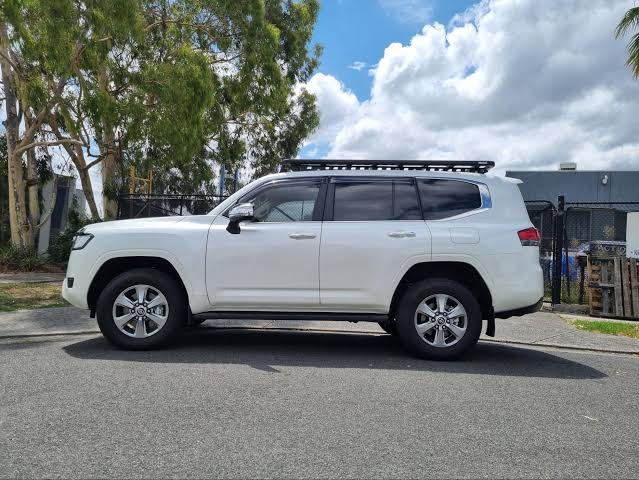
The Core Design Comparison: Structural Profiles & Layouts
To understand the core differences in a platform vs basket roof rack, you must examine how their physical profiles dictate cargo packaging:
[ 1. Flat Modular Platform Roof Rack ]
• Structure: Low-profile, completely flat deck made from longitudinal aluminium slats
• Outer Rails: Zero permanent side rails (optional bolt-on perimeter rails available)
• Accessory Mounts: Continuous T-slot channels running along slats and outer perimeter frame
• Ideal Cargo: Hardshell rooftop tents, flat solar panels, recovery boards, long timber/conduit

[ 2. Traditional Welded Basket Roof Rack ]
• Structure: Deep, fixed perimeter tube cage (120mm to 180mm tall) with a welded wire mesh floor
• Outer Rails: Permanent, 360-degree containment walls that act as a physical cargo barrier
• Accessory Mounts: Clamped onto round tubular steel or alloy pipes using U-bolts
• Ideal Cargo: Canvas swags, duffle bags, plastic jerry cans, bulky camp chairs, and firewood
| Engineering Feature | Flat Modular Platform Rack | Traditional Deep-Sided Basket Rack |
| Base Construction | Extruded 6061/5052 marine aluminium planks | Welded tubular mild steel or structural alloy |
| Average Tare Weight | 22kg to 34kg (Bare platform) | 38kg to 62kg (Heavier steel frames) |
| Roof Profile Height | Ultra-low (Adds 40mm to 65mm above legs) | High-profile (Adds 150mm to 220mm above legs) |
| Suburban Car Park Clearance | High (Easily clears standard 2.1m heights) | Low (Often fouls 2.0m–2.1m parking garages) |
| Rooftop Tent Compatibility | Direct bolt-on via T-slots; zero risers | Difficult; requires custom tall bracket frames |
| Aerodynamic Drag & Noise | Minimal (Front wind deflector standard) | Moderate to high (Tubular wind buffeting) |
| Cargo Loading Versatility | High-precision tiedowns across any slat point | Throw-and-lash containment for irregular shapes |
When comparing a platform vs basket roof rack, the flat platform offers modular versatility. Because it lacks permanent side walls, you can carry oversized sheets of plywood, timber, or hardshell rooftop tents that extend past the width of the rack. Conversely, in a platform vs basket roof rack matchup for general weekend camping, a basket provides immediate physical containment for irregular cargo without requiring dedicated mounting brackets.
To explore modular touring setups and heavy-duty cargo options across multiple vehicle makes, browse our live Roof Racks category to evaluate verified platforms and cross-platform mounting systems.
Dynamic Load Ratings & Tare Weight Penalties
The single most critical safety factor when comparing a platform vs basket roof rack is understanding vehicle roof load ratings:
[ Calculating Net Usable Roof Cargo Capacity ]

   Vehicle Manufacturer Dynamic Roof Limit (e.g., 100kg)
 - Roof Rack System Tare Weight
 ================================================================================
   Actual Permissible Gear Payload
- The Tare Weight Penalty: When assessing a platform vs basket roof rack, weight is paramount. A modular aluminium platform generally weighs between 22kg and 34kg including mounting legs. A heavy steel basket can easily weigh between 45kg and 65kg. If your vehicle has a 100kg factory dynamic roof rating, a heavy steel basket consumes over half your legal payload before you load a single piece of gear.
- Dynamic vs Static Ratings: Dynamic capacity represents the maximum load while driving at highway speeds or over rough tracks. In a platform vs basket roof rack evaluation, saving 25kg of tare weight with a platform means you can legally carry extra fuel, water, or camp gear without exceeding your vehicle manufacturer’s roof limit.
- Outback Track Derating: Australian automotive engineering guidelines recommend derating roof loads by 25% to 33% when traveling across severe washboard corrugations. Choosing an aluminium platform in the platform vs basket roof rack debate gives you a wider safety margin against gutter seam cracking.
For owners of heavy-duty wagons looking for dedicated vehicle-specific platforms, models like the Scout roof rack to suit LC76 demonstrate how low-tare platforms maximize usable payload on remote touring routes.
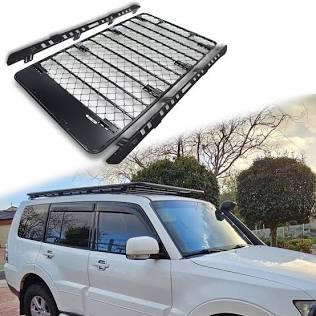
Center of Gravity & Vehicle Handling Dynamics
How overhead mass influences vehicle roll angles is a vital consideration when evaluating a platform vs basket roof rack:
        Overhead Kinetic Pendulum Effect
        [ High-Mounted Basket + Heavy Cargo ]
                       \
                        v
                 [O===========O] ---------------------- [O===========O]
                 Front Axle Line                        Rear Axle Line
              (High Center of Gravity = Excessive Body Roll & Early ESC Trigger)
- The High-Mass Pendulum Effect: Placing excessive weight on a vehicle roof raises its center of gravity (CoG). In a platform vs basket roof rack comparison, a basket carries cargo 100mm to 150mm higher off the roof skin than a flat platform. That additional height magnifies body roll during emergency avoidance maneuvers and off-camber bush tracks.
- Electronic Stability Control (ESC) Interventions: Modern 4WDs use sensitive yaw-rate and roll sensors. In a platform vs basket roof rack dynamic test, an overloaded high basket triggers aggressive, unexpected ESC braking during sharp highway curves. A flat platform keeps mass tucked tightly against the roofline, preserving factory handling characteristics.
- Corrugation Stress on Mounts: Carrying cargo closer to the roof reduces the mechanical leverage applied to rain gutters or roof mounting points during high-speed washboard corrugations.
To complement your vehicle’s roofline with cab accessories that reduce cockpit glare and lower interior heat soak, explore our dedicated Sun Visors category or check out heavy-duty platforms like the Solid 79 Series Sun Visor to keep your dashboard protected from extreme outback sun.
Aerodynamic Drag, Fuel Efficiency & Wind Noise
Highway fuel consumption is heavily influenced by your choice in the platform vs basket roof rack debate:
[ Aerodynamic Airflow Comparison ]

Flat Modular Platform:
Highway Air (110 km/h) ===> [ Angled Front Wind Deflector Blade ] ===> Air Glides Over Deck
                            (Smooth laminar flow; near-zero wind whistle or cab drumming)

Traditional Tube Basket:
Highway Air (110 km/h) ===> [ Upright Tubular Cage & Mesh Floor ] ===> Air Stagnates & Buffets
                            (High turbulent drag; noticeable cabin wind roar; +1.0L to 1.8L/100km)
- Highway Air Resistance: In an aerodynamic platform vs basket roof rack comparison, platforms win decisively. A flat platform features an angled front wind deflector that directs oncoming highway air smoothly over your load. Baskets present an open lattice of round steel tubes and wire mesh, generating turbulent air pockets that create drag.
- Fuel Consumption Impact: Driving an unladen vehicle fitted with an open steel basket at 110 km/h typically increases fuel consumption by 1.0L to 1.8L per 100km. A sleek platform in the platform vs basket roof rack matchup restricts fuel penalties to roughly 0.3L to 0.6L per 100km.
- Suburban 2.1m Car Park Clearance: If your 4WD is a daily driver fitted with a 2-inch suspension lift and 33-inch all-terrain tyres, total vehicle height is critical. In a platform vs basket roof rack comparison, a platform adds only 40mm to 65mm above the mounting legs, allowing you to clear standard 2.1m underground shopping centre car parks. A deep basket adds 150mm to 220mm, often locking you out of urban parking structures.
Accessory Mounting: T-Slots vs Tubular Clamps
Securing gear cleanly is a key operational factor when choosing a platform vs basket roof rack:
[ Platform: Precision Modular T-Slot Mounting ]
Plank Extrusion ===> [ M8 Stainless T-Slot Channel Nut ] ===> Direct-Bolted Bracket
(Zero bar drilling; micro-adjustable positioning for eyelets, awnings, and recovery tracks)

[ Basket: Traditional U-Bolt & Friction Clamping ]
Round Tube ===> [ Steel U-Bolt / Hose Clamp ] ===> Wrapped Around Perimeter Pipe
(Relies on friction; can slide under vibration; clamps can scratch protective powder-coat)
- Platform Modularity: A major advantage in the platform vs basket roof rack decision is the modular T-slot channel system. Longitudinal planks feature internal channels that accept standard drop-in nuts. You can mount eye bolts, shovel holders, MaxTrax recovery track pins, and hi-lift jack brackets exactly where you need them.
- Awning and Rooftop Tent Integration: In a platform vs basket roof rack showdown for overland touring, platforms are the industry standard for mounting 270-degree awnings and rooftop tents. Tents bolt flush to the slats, whereas baskets require bulky raised brackets to elevate the tent base clear of the basket’s side walls.
- Basket Tie-Down Simplicity: The primary operational strength of a basket in the platform vs basket roof rack equation is rapid lashing. If you frequently throw in odd-shaped items like bags of firewood, canvas swags, or wet gear, a basket allows you to toss a cargo net over the perimeter rails in seconds.
To pair your roof storage with front-end mechanical defense, browse our complete Bull Bars category or check out heavy-duty platforms like the Toyota LandCruiser 79 Series BULLBAR Solid for outback animal strike protection.
Loading Scenarios: Which Design Matches Your 4×4 Setup?
To settle the platform vs basket roof rack question for your vehicle, consider how you use your rig:
[ Choose a Flat Modular Platform If You: ]
• Plan to mount a hardshell or soft-fold rooftop tent
• Require side-mounted 270-degree touring awnings and solar panels
• Frequently park in suburban 2.1m underground garages
• Want to carry long trade building supplies, surfboards, or ladders
• Prioritize highway fuel economy, minimal wind noise, and low tare weight

[ Choose a Traditional Basket If You: ]
• Carry bulky, irregular camping cargo (canvas swags, plastic tubs, firewood)
• Prefer throwing on an elasticized cargo net without buying individual mounting brackets
• Do not plan to fit a rooftop tent
• Drive an older touring rig or farm workhorse with ample garage clearance
• Want an economical overhead carrier for basic weekend camping trips
For custom canopy and flatbed builders managing rear load packaging alongside roof setups, explore our DIY Tray Kits category and DIY Ute Tray Kit Dual Cab for complete flat-pack fabrication options.
Australian Road Safety Regulations & ADR Load Restraint
Regardless of whether you choose a platform vs basket roof rack, any cargo carried on an Australian road-registered vehicle must adhere strictly to federal Australian Design Rules and state transport modification codes:
- Cargo Restraint Standards: Under national load-restraint guidelines enforced by state authorities—including Transport Victoria VSI 8 Vehicle Modification Standards and Transport for NSW Light Vehicle Safety Check Rules—all items carried on a platform vs basket roof rack must be secured using rated ratchet straps, lockable brackets, or heavy-duty cam buckles. Elastic bungee cords are legally non-compliant as a primary cargo restraint on public roads.
- Lateral and Forward Overhang Limits: When comparing a platform vs basket roof rack, neither system nor its cargo may project laterally past the vehicle’s outer body line or wheel-arch flares. Forward projection must not obstruct the driver’s 11-metre forward road visibility envelope, complying with vehicle safety frameworks administered by the Department of Infrastructure ADR Vehicle Standards.
- Manufacturer Roof Capacity Compliance: Exceeding your vehicle’s factory roof load limit using an oversized setup in a platform vs basket roof rack installation voids vehicle warranties and exposes drivers to heavy roadside defect fines and denied insurance claims following an accident.
For classic four-wheel drive owners evaluating protective exterior accessories across their fleet, models like the Solid LN106 Hilux Sunvisor or Solid 80 Series LandCruiser Sun Visor demonstrate how precision-engineered hardware preserves vehicle bodywork.
Frequently Asked Questions
What is the main difference between a platform vs basket roof rack?
In a platform vs basket roof rack comparison, a platform is an ultra-low-profile flat deck made of modular aluminium planks with integrated T-slot channels, ideal for rooftop tents and awnings. A basket features permanent tall side rails (120mm–180mm) and a mesh floor designed to contain loose, bulky items like canvas swags, plastic jerry cans, and firewood.
Can I mount a rooftop tent on a basket roof rack?
It is difficult and impractical. When evaluating a platform vs basket roof rack for rooftop tent use, platforms are the industry benchmark because tents bolt directly to the flat planks. Baskets have tall perimeter rails that block tent bases, requiring tall, custom-fabricated riser brackets that push the tent dangerously high above the cab.
Does a platform roof rack save fuel compared to a basket?
Yes. In an aerodynamic platform vs basket roof rack comparison, flat platforms feature front wind deflectors that direct oncoming air smoothly over the deck, restricting fuel penalties to roughly 0.3L–0.6L/100km. Tubular baskets create high turbulent drag, typically increasing highway fuel consumption by 1.0L to 1.8L per 100km.
Which system weighs less in a platform vs basket roof rack matchup?
Aluminium platform racks weigh significantly less, typically coming in at 22kg to 34kg including mounting legs. Welded steel baskets weigh between 40kg and 65kg. Choosing a lighter platform in a platform vs basket roof rack evaluation preserves valuable payload under your vehicle’s factory roof load rating.
Are side rails available for flat platform roof racks?
Yes. If you choose a platform in the platform vs basket roof rack decision but occasionally need basket-style side containment, most platform manufacturers offer optional bolt-on perimeter rails, side rails, or corner barriers that install into the outer T-slots in minutes.
Summary: Selecting the Right Overhead Setup for Your 4×4
Evaluating a platform vs basket roof rack comes down to matching your cargo needs with vehicle engineering limits. If your touring plans include hardshell rooftop tents, 270-degree awnings, low-profile car park clearance, and maximum fuel economy, an extruded aluminium flat platform is the undisputed winner. If your priority is tossing in loose swags, camp chairs, and firewood for weekend bush trips without purchasing specialized mounting hardware, a traditional basket remains an effective, budget-friendly workhorse.
Explore our comprehensive Roof Racks category to compare precision-engineered platform racks and mounting hardware for your vehicle, check out the specialized Scout roof rack to suit LC76 for dedicated LandCruiser wagon touring, browse our complete Bull Bars category for matched frontal impact defense, or protect your cab from solar radiation with heavy-duty exterior 4WD sun visors.