
Restoring, building, and maintaining a classic vintage four-wheel-drive or retro expedition rig requires a careful balance of authentic period-correct styling and heavy-duty modern material engineering. When outfitting legacy icons like the Toyota LandCruiser 60 or 80 Series, Nissan Patrol GQ and Y61, or classic dual-cab workhorses, managing low-angle solar glare and cabin solar heat gain is paramount. Installing a specialized stainless steel trim sun visor establishes an exceptional exterior shade canopy across the top windscreen frame, combining rugged mirror-polished metal trim with high-impact shielding to protect your cabin and elevate your vehicle’s classic aesthetic.
Unlike modern plastic visors that can sometimes look out of place on vintage sheet metal, a stainless steel trim sun visor bridges the gap between classic heritage design and modern corrosion-resistant metallurgy. By framing a dark smoke cast acrylic or reinforced composite panel with marine-grade 304/316 stainless steel trim bindings, these visors offer unmatched structural rigidity against high-speed wind buffeting while resisting coastal salt spray and outback red dust. Whether you are building a weekend camper or a fully restored vintage tourer, understanding the engineering benefits of polished stainless trim changes how your vehicle handles the elements.
In this comprehensive technical guide, we examine the 5 unbeatable advantages of fitting a stainless steel trim sun visor on retro 4x4s. From corrosion immunity and structural wind resistance to period-correct vintage aesthetics, optical clarity, and long-term resale value, this guide provides the ultimate blueprint for your classic build.
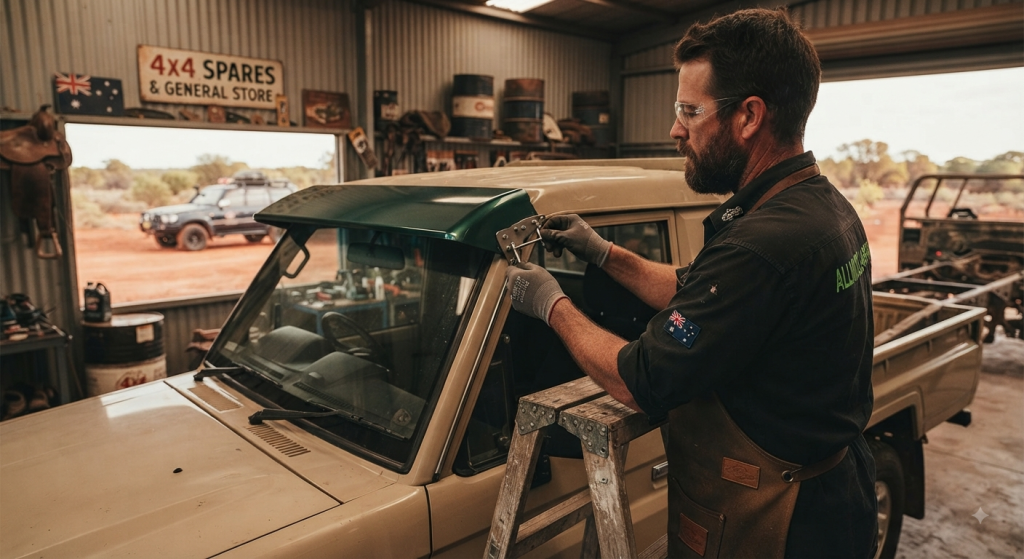
Understanding how a stainless steel trim sun visor manages wind resistance and structural weathering highlights its engineering superiority over standard plastic-edge visors.
         [ Aerodynamic & Architectural Layout of Stainless Steel Trim Sun Visor ]
                                             │
  ┌──────────────────────────────────────────┴──────────────────────────────────────────┐
  ▼                                                                                     ▼
[ Polished Stainless Steel Trim & Frame ]                               [ Optical-Grade Cast Acrylic / GRP Shield ]
• 304/316 marine-grade stainless steel edge binding                    • 4.5mm UV-stabilized dark smoke PMMA or GRP panel
• Mirror-polished finish resists coastal salt corrosion                 • Exterior air gap continuously flushes thermal solar heat
• Rigid metal reinforcement eliminates high-speed panel flutter         • Intercepts 90% of glaring horizon sunlight before glass contact
• Secured with heavy-duty blind rivets and EPDM rubber pads             • Stabilized by a central stainless windstay for high speeds
When traveling at highway speeds, a vintage cab visor encounters continuous air resistance that exerts uplifting and downward pressure on its mounting hardware. A successful stainless steel trim sun visor design relies on rigid stainless steel side brackets and edge mouldings fastened securely into the A-pillar door jambs or outer cab roof channels. Distributing these clamping forces evenly across multiple fastener points during your stainless steel trim sun visor installation prevents localized sheet metal stretching or fatigue cracks around drill holes.
Furthermore, applying a neutral-cure marine polyurethane sealant (such as Sikaflex-221 or 291) inside every drilled pilot hole before driving fasteners home is a critical phase of any stainless steel trim sun visor procedure. Because retro vehicle pillars often feature older seam welds, preventing water ingress during heavy downpours or river crossings guarantees that your stainless steel trim sun visor setup will never cause internal roof pillar rust or headliner dampness.
Evaluating the functional and aesthetic advantages of polished metal trim reveals clear engineering superiority over standard accessories. Here are the 5 unbeatable advantages of a stainless steel trim sun visor:
Unlike mild steel brackets that rust when exposed to coastal ocean spray or morning dew, marine-grade 304/316 stainless steel trim provides permanent immunity to oxidation, keeping your retro build pristine.
The structural steel edge binding on a stainless steel trim sun visor reinforces the perimeter of the shield, eliminating high-speed acrylic flutter and wind whistle at 110 km/h highway speeds.
Polished stainless steel trim complements chrome bumpers, classic mirrors, and vintage badging, giving your retro 4×4 an authentic, expedition-ready appearance that plastic visors cannot match.
By combining a dark smoke optical shade panel with polished metal heat deflection, a stainless steel trim sun visor drops cabin temperatures and protects brittle vintage dash plastics from UV cracking.
Upgrading a classic 4×4 with high-end stainless steel accessories demonstrates meticulous craftsmanship and attention to detail, significantly boosting vehicle appeal for collectors and enthusiasts.
Evaluating physical properties helps builders select the correct shield style and bracket layout for their stainless steel trim sun visor:
| Specification / Feature | Optical Cast Acrylic Visor | High-Impact Polycarbonate Visor | Molded Fibreglass Cab Visor | Stainless Steel Mesh Shade |
|---|---|---|---|---|
| Material Thickness | 4.0mm – 5.0mm Cast Acrylic | 3.5mm – 4.5mm Polycarbonate | 3.0mm Reinforced GRP | 1.5mm Woven Stainless Wire |
| UV Resistance Rating | Exceptional (Will Not Yellow) | Moderate (Requires UV Coating) | High (Painted Gelcoat Finish) | Impervious to UV Rays |
| Average Assembly Weight | 2.5 kg – 4.2 kg complete | 2.2 kg – 3.8 kg complete | 4.5 kg – 7.0 kg complete | 3.0 kg – 5.0 kg complete |
| Wind Drag Coefficient | Low (Tapered Airflow Curve) | Low (Tapered Airflow Curve) | Moderate (Solid Front Lip) | High (Mesh Surface Drag) |
| Glare Reduction Efficiency | 85% – 95% Light Filtered | 80% – 90% Light Filtered | 100% Solid Shade Block | 60% – 75% Light Filtered |
| Waterline Ingress Risk | Zero (When Correctly Sealed) | Zero (When Correctly Sealed) | Zero (When Correctly Sealed) | Zero (When Correctly Sealed) |
| Offroad Vibration Rating | High (With Center Stay) | High (With Center Stay) | Moderate (Heavy Rigid Body) | Moderate (Frame Flexing) |
Selecting high-quality material components determines how your stainless steel trim sun visor performs under extreme heat, freezing temperatures, and heavy wind buffeting.
       [ Material Engineering for Stainless Steel Trim Sun Visor Assemblies ]
                                     │
  ┌──────────────────────────────────┴──────────────────────────────────┐
  ▼                                                                     ▼
[ Marine-Grade Stainless Steel Trim (304/316) ]        [ Optical-Grade Cast Acrylic Sheet (PMMA) ]
• Mirror-polished finish resists rust, pitting, and road salt           • Superior optical clarity prevents driver visual distortion
• High tensile yield strength reinforces visor edge profiles            • Natural UV stability prevents yellowing and surface cracking
• Rigid metal framing prevents high-speed wind vibration flex           • High scratch resistance compared to standard polycarbonate
• Fitted with EPDM rubber buffers to protect factory vehicle paint      • Flexible memory retains shape across extreme thermal cycles
Choosing 304 or 316-grade stainless steel for your stainless steel trim sun visor edge binding provides exceptional surface hardness and weather resistance. Unlike chrome-plated mild steel that eventually pits and peels, solid stainless steel retains its mirror polish indefinitely, even when exposed to harsh outback mud and coastal salt air.
Pairing your stainless steel trim with a 4.5mm optical-grade cast acrylic (PMMA) panel ensures your stainless steel trim sun visor offers flawless outward visibility. Cast acrylic resists micro-scratching and maintains its deep smoke tint across severe temperature swings, protecting drivers from blinding horizon glare without distorting field of view.
explore our complete range of 4x4 armor, side steps, and rock sliders
Every completed stainless steel trim sun visor installation must satisfy national transport regulations. In Australia, exterior vehicle body attachments are regulated by standards published by the Federal Register of Legislation under Australian Design Rules ADR 12/00 (Glare Reduction in Field of View) and ADR 42/00 (General Safety Requirements).
                  [ ADR Safety Compliance Criteria ]
                                    │
   ┌────────────────────────────────┼────────────────────────────────┐
   ▼                                ▼                                ▼
[ Forward Field of View Standards ] [ Maximum Vehicle Projection ]   [ Edge Radius & Safety Rules ]
• Must not obscure driver view    • Must not extend beyond the      • All exposed bracket edges
  of traffic control signals        outer width of door mirrors       must have minimum 2.5mm radius
Maintaining your exterior visor after completing a stainless steel trim sun visor installation preserves polished metal luster and prevents surface contamination.