
When outfitting a dual-cab ute or touring wagon for Australian outback conditions, managing driver fatigue is essential. Installing an exterior windscreen shade provides crucial relief from low-angle morning and late-afternoon sun, stopping solar heat before it ever penetrates your cabin glass. However, many drivers hesitate before buying, asking whether a sun visor fuel economy wind noise penalty will compromise long-distance highway cruising.
Every exterior accessory bolted to your vehicle—from bull bars and roof racks to driving lights—alters your frontal aerodynamic profile. Understanding how an exterior shade influences your sun visor fuel economy wind noise dynamics requires looking closely at fluid dynamics, cab contours, and the construction differences between solid steel and alloy mesh visors.
This technical guide breaks down real-world fuel consumption figures (L/100km), decibel levels, aerodynamic pressure zones, and installation techniques to keep your sun visor fuel economy wind noise footprint to an absolute minimum.
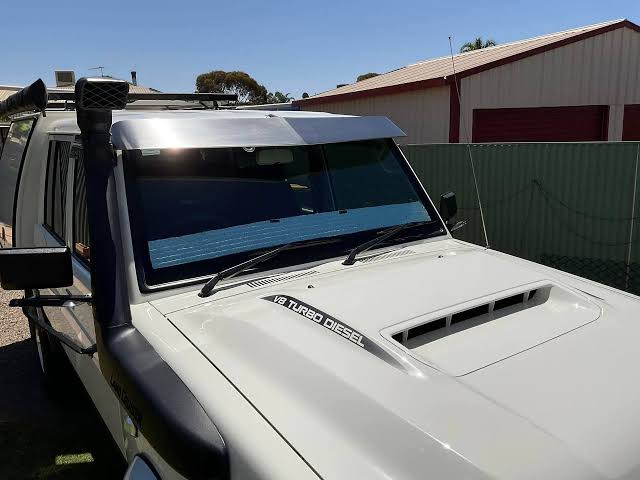
Aerodynamic Physics: How Exterior Visors Affect Airflow
To understand whether you will experience adverse sun visor fuel economy wind noise consequences, you must examine how air travels across a vehicle at 100 to 110 km/h:
                  [ High-Speed Air Stream ]
                             |
                             v
           =====================================  <-- Exterior Sun Visor Blade
             \                                 /
              v                               v
    (Air Deflected Over Roof)         (High-Pressure Stagnation Zone)
              |                               |
              +-------------------------------+
                             |
                      [ Windscreen ]
                             |
                       [ Bonnet Line ]
When a 4WD drives forward, air hits the front bumper and bonnet, pushing upward toward the windscreen. Because the glass is set at an angle, it creates a high-pressure stagnation zone at the base of the glass, forcing air to rush upward toward the roofline.
A poorly engineered shade creates negative sun visor fuel economy wind noise side effects when air gets trapped in the pocket between the visor blade and the glass. Conversely, a well-profiled exterior visor—such as the Solid Heavy Duty Alloy sunvisor—is curved to act as an aerodynamic guide, catching upward-surging air and smoothing its transition over the roof.
The Fuel Economy Reality: Analysing L/100km Consumption
Does fitting an exterior shade drive up fuel consumption? In practical testing across Australian highways, the measured impact on sun visor fuel economy wind noise efficiency is far less severe than most drivers expect.
On modern turbo-diesel utes and wagons, aerodynamic drag accounts for roughly 40% to 50% of total energy consumption at 110 km/h. Here is how different cab profiles handle the addition of an external visor:
| Vehicle Architecture | Typical Factory Drag Profile | Real-World Fuel Impact (L/100km) | Aerodynamic Behaviour |
| Upright Cabs (70, 76, 79 Series) | Flat, near-vertical glass ($C_d \approx 0.50+$) | +0.1L to +0.2L / 100km (Negligible) | The flat glass already creates a blunt stagnation pocket; the visor diverts air smoothly over the drip gutters. |
| Curved Cabs (Hilux N70, D-Max) | Semi-raked glass with gutterless roofs | +0.2L to +0.3L / 100km | Minimal impact when using a contoured visor with rolled, deburred edges. |
| Sleek Aerodynamic Cabs (Ranger, N80) | Highly raked, aerodynamic windscreens | +0.3L to +0.5L / 100km | Slightly higher boundary-layer disruption unless an alloy mesh profile is used. |
Fuel Consumption Comparison at 110 km/h:
Factory Stock 79 Series:       ============== 11.4 L/100km
Fitted with Solid Sun Visor:   =============== 11.5 L/100km  (+0.1L net increase)
Fitted with Roof Platform:     ================== 12.6 L/100km  (+1.2L net increase)
As the data shows, evaluating your sun visor fuel economy wind noise balance proves that an exterior visor causes only a fraction of the drag created by full-length roof racks, rooftop tents, or oversized mud tyres.
Furthermore, there is an overlooked thermal benefit: because a solid visor shades the top third of the glass, it drops dashboard temperatures by up to 12°C. Shading the dashboard vinyl significantly reduces the workload on your air-conditioning compressor, which often recovers the minor 0.1L/100km aerodynamic penalty during summer touring.
Highway Wind Noise: Decibels, Whistles, and Cabin Resonance
While fuel consumption changes are negligible, an improperly mounted shade can introduce unwanted acoustic issues. When owners report an annoying sun visor fuel economy wind noise problem, it almost always stems from one of two mechanical issues:
- Air Cavity Turbulence (The Whistle): Air rushing through tight gaps between the visor mounting legs and the A-pillar can create high-frequency whistling.
- Sheet Metal Flutter (The Drumming Resonance): If a solid steel visor lacks central structural rigidity or is bolted to loose brackets, highway air pressure can cause the metal to oscillate, transmitting a low-frequency drumming sound into the cab roof.
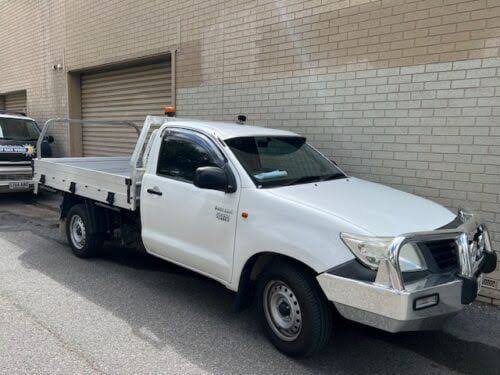
To ensure you enjoy quiet touring without sun visor fuel economy wind noise headaches, quality aftermarket visors incorporate rolled stiffening lips and rigid A-pillar mounting flanges that prevent high-speed flutter.
Fitting a purpose-built Solid 79 Series Sun Visor or an Elite Toyota Land Cruiser 70-79 Series Sunvisor eliminates resonance because the mounting brackets are engineered specifically for the cab’s factory structural pillars.
Mesh vs Solid: Aerodynamic and Acoustic Comparison
Choosing between an expanded alloy mesh screen and a solid steel visor directly impacts your sun visor fuel economy wind noise outcome:
[ Solid Steel Blade ]
• Air must divert over and around the solid wing
• 100% total radiant heat and sunlight blockout
• Requires rigid A-pillar anchoring to prevent flutter
• Slightly higher air resistance on raked modern cabs

[ Alloy Mesh Screen ]
• Air flows freely through hundreds of louvered apertures
• Near-zero air stagnation behind the screen
• Eliminates high-speed wind buffeting and cab drumming
• Lightweight profile reduces dynamic stress on A-pillars
For drivers who spend thousands of kilometres touring at 110 km/h, an expanded mesh model—such as the Solid Toyota Hilux 2015-On Mesh Sunvisor—delivers the ultimate sun visor fuel economy wind noise balance. The mesh allows highway air to pass through cleanly, diffusing blinding glare without creating a solid air dam.
Conversely, for heavy scrub work and maximum cabin heat reduction, a heavy-gauge solid shield—like the Solid 4×4 Sun Visor or the Solid N70 Hilux Sunvisor—provides total overhead shade and physical branch protection with only a tiny, unnoticeable shift in fuel consumption.
Installation Best Practices to Eliminate Wind Noise
Preventing negative sun visor fuel economy wind noise issues comes down to workshop precision during fitment:
[Dry Test-Fit & Align Symmetrically Across Windscreen]
                         │
                         ▼
[Check Equal A-Pillar Gap Spacing (Minimum 10-15mm Clearance)]
                         │
                         ▼
[Inject Polyurethane Sealant into All Fastener Pilot Holes]
                         │
                         ▼
[Torque High-Tensile Fasteners to Eliminate Bracket Flex]
                         │
                         ▼
[Install Rubber Isolator Strips Between Mounting Brackets & Body]
- Maintain Symmetrical Air Gaps: When setting up your sun visor fuel economy wind noise hardware, ensure the gap between the underside of the visor and the glass is uniform from left to right. An asymmetrical visor forces air sideways, creating turbulent cross-wind noise.
- Use Automotive Polyurethane Sealant: Never mount brackets metal-to-metal against the A-pillars. Always inject polyurethane adhesive sealant (such as Sikaflex 221) into the holes and fit thin rubber or foam dampening washers behind the mounting brackets to absorb acoustic vibrations.
- Torque Mounting Hardware Firmly: Loose fasteners allow the visor body to flex under highway wind loads. Torquing all fasteners securely prevents high-speed vibration from transferring into the vehicle roof skin.
Australian Road Regulations and Legal Safety Standards
Any external frontal accessory must comply with state and national roadworthiness rules. When addressing sun visor fuel economy wind noise modifications, you must ensure your installation remains compliant with transport safety standards:
- The 11-Metre Forward Field of View Rule: Under state transport guidelines—including Transport Victoria VSI 8 Vehicle Modification Standards and Transport for NSW Light Vehicle Safety Check Rules—an external sun visor must not encroach into the driver’s primary forward vision. The driver must maintain a clear, uninterrupted view of the road surface 11 metres forward of the vehicle.
- Protrusion Limits and Radiused Edges: Australian Standard AS 4876.1 and state rules mandate that external accessories feature rolled, deburred edges with a minimum 5mm radius. Sharp brackets or protruding fins that create excess sun visor fuel economy wind noise are strictly illegal on public roads.
- Lighting and Camera Clearances: The visor must not obscure factory clearance lights, aerial forward cameras, or windscreen wiper sweeps, complying with standards set by the Department of Infrastructure ADR Vehicle Standards.
Frequently Asked Questions
Does a sun visor fuel economy wind noise increase affect all 4WDs equally?
No. The impact of a sun visor fuel economy wind noise change varies significantly depending on your vehicle’s windscreen rake angle. On upright cabs like the Toyota LandCruiser 70 Series, the glass is already a flat vertical wall, so adding a visor redirects airflow over the roof with virtually no measurable change in fuel consumption (less than 0.1L to 0.2L/100km). Sleeker, raked cabs may see a slight 0.2L to 0.4L/100km increase unless an aerodynamic alloy mesh visor is fitted.
How can I stop my sun visor from whistling at highway speeds?
If you notice high-pitched whistling, air is slipping through an uneven gap between the mounting brackets and the A-pillar sheet metal. To eliminate this sun visor fuel economy wind noise issue, seal all mounting bracket gaps using automotive polyurethane adhesive, ensure the visor is centered symmetrically across the roofline, and verify that all fasteners are torqued down firmly to prevent high-speed flutter.
Does an alloy mesh visor have less wind drag than a solid steel visor?
Yes. When evaluating sun visor fuel economy wind noise differences, alloy mesh visors generate substantially less drag because high-speed air flows directly through hundreds of expanded louvers. This open-flow design eliminates the high-pressure air pocket that forms behind a solid visor, resulting in quieter open-road cruising and lower dynamic stress on the A-pillars.
Can a sun visor actually save fuel in summer?
Indirectly, yes! While the visor introduces a tiny aerodynamic drag factor, its physical shading stops direct infrared radiation from superheating your dashboard vinyl. By dropping internal cabin temperatures by up to 12°C, your air-conditioning compressor runs far less aggressively, helping balance out any minor sun visor fuel economy wind noise drag penalty during hot summer touring.
Does a sun visor cause wind drumming on the roof?
Wind drumming only occurs if a solid visor is manufactured from thin, flimsy metal or installed with loose fasteners. Premium visors feature rolled stiffening ribs and heavy-duty A-pillar brackets. When properly installed with anti-vibration dampening pads, you will not experience cabin roof resonance or drumming.
Summary: Confident Touring Without Compromise
Evaluating the real-world sun visor fuel economy wind noise trade-off reveals that the benefits of external shading far outweigh the negligible aerodynamic penalty. An extra 0.1L to 0.2L/100km is a tiny price to pay for eliminating blinding sun glare, protecting your interior dash from UV cracking, and keeping your cabin noticeably cooler on long outback journeys.
Explore the complete range of external 4WD sun visors to find the ideal match for your vehicle, or pair your cab shade with heavy-duty 4WD bull bars and front accessories to build an off-road touring rig ready for any Australian highway.