
Crossing the Australian outback during summer places extraordinary demands on driver endurance and vehicle cooling. Driving westward into a blinding late-afternoon sun across red-dirt tracks causes severe eye strain and turns your dashboard into a giant thermal radiator. Fitting a heavy-duty Toyota LandCruiser sun visor provides an indispensable external shade barrier that stops blinding glare and radiant heat before sunlight ever penetrates your windscreen glass.
However, choosing the right Toyota LandCruiser sun visor requires understanding how body contours, windscreen angles, and roof designs vary across models. An exterior visor engineered for the upright cab of a 79 Series ute will not fit the curved gutters of an 80 Series wagon or the sleek, gutterless profile of a 200 Series.
This technical guide compares exterior sun visor options across the 70, 76, 79, 80, and 200 Series LandCruiser platforms—examining mounting mechanics, cooling science, snorkel integration, and Australian road regulations.
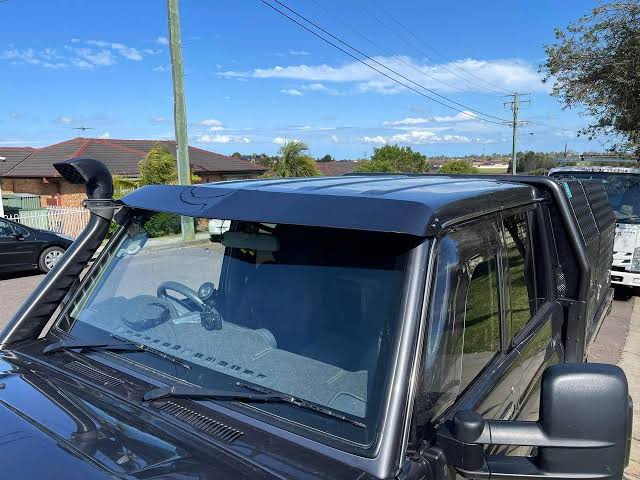
The Science of Windscreen Shading: How External Visors Reduce Cabin Heat
Standard interior flip-down sun flaps help block direct glare from your eyes, but they do nothing to control cabin heat soak. By the time sunlight hits an internal visor, ultraviolet (UV) and infrared (IR) solar radiation have already penetrated the glass, superheating the black dashboard vinyl to temperatures exceeding 80°C.
An exterior Toyota LandCruiser sun visor operates on a simple principle: external shading.
Sunlight Rays (UV & IR Radiation)
       \   \   \
        v   v   v
    [=================]  <-- Exterior Toyota LandCruiser Sun Visor (Shades Top 30%)
            |
            v
     (Cool Air Flow)     <-- Dissipates heat before glass contact
            |
     [  Windscreen  ]
            |
     [  Dashboard   ]    <-- Remains cool, eliminating thermal heat soak
- Direct Radiation Interception: By casting an external shadow across the top third of the glass, the visor prevents the cabin greenhouse effect before it starts.
- Reduced Air Conditioning Load: Shielding the dashboard plastics lowers interior air temperatures by up to 12°C, reducing compressor load and saving fuel on long highway hauls.
- Protection for Interior Plastics: It shields factory dash clusters, navigation screens, and steering wheels from the harsh UV degradation that causes cracks in classic Cruiser interiors.
- Anti-Glare Underside: Premium visors feature a satin anti-reflective green or matte black underside coating, mimicking commercial aviation and long-haul road transport standards to eliminate bonnet reflection.
Model-by-Model Comparison: 70, 76, 79, 80 & 200 Series
Each LandCruiser generation features unique windscreen rake angles, cab widths, and structural mounting points.
| LandCruiser Platform | Windscreen Profile | Primary Mounting Style | Snorkel Clearance Factor | Best Material Construction |
| 70 Series (Short/Troopy/Ute) | Vertical / Flat | A-pillar flange & drip gutter | Factory / Armax cutout required | Solid steel or alloy mesh |
| 76 Series Wagon | Vertical / Flat | A-pillar flange & drip gutter | Mirror-base snorkel bracket check | Solid steel or heavy-duty alloy |
| 79 Series (Single/Dual Cab) | Vertical / Flat | A-pillar flange & drip gutter | Dedicated A-pillar cutaway | Zinc-coated solid steel |
| 80 Series Wagon | Curved / Semi-raked | Rain gutter clamp & A-pillar screws | Snorkel body clearance verified | Alloy mesh or solid composite |
| 200 Series Wagon | Swept-back / Raked | Gutterless door jamb / A-pillar riv-nut | High-mount snorkel interference | Aerodynamic composite / custom alloy |
70, 76 & 79 Series LandCruisers: The Heavy-Duty Workhorses
The 70 Series family—spanning the 76 Station Wagon, 78 Troop Carrier, and 79 Series Single and Dual Cab utes—features an upright cab structure that has changed very little since 1984. Because the windscreen sits at a near-vertical angle, these cabs suffer from intense solar exposure when driving directly into the sun.
Fitting an Elite Toyota Land Cruiser 70-79 Series Sunvisor or a model-specific Elite Toyota LandCruiser 76/78 Series Sunvisor transforms long-distance driving comfort.
Key engineering considerations for the 70 Series include:
- A-Pillar Fastening: Dedicated models like the Solid 79 Series Sun Visor mount securely to the outer A-pillar door frames using heavy-duty stainless steel fasteners, ensuring stability even under heavy highway buffeting.
- Factory Snorkel Integration: The right-hand A-pillar on most VDJ76, VDJ78, and VDJ79 Cruisers carries a factory Toyota or aftermarket raised air intake. A precision Toyota LandCruiser sun visor incorporates a pre-formed scallop on the driver or passenger side to clear the snorkel tube without awkward spacers.
- Classic Styling: Products like the Elite Toyota LandCruiser 79 Series Sunvisor feature a paint-ready primed finish with a polished alloy front strip, preserving the vehicle’s classic outback lines.
80 Series LandCruiser: Classic Gutter-Mounted Glare Control
Produced between 1990 and 1998, the legendary 80 Series wagon introduced smoother curves and rounded glass edges while retaining full-length exterior roof rain gutters.
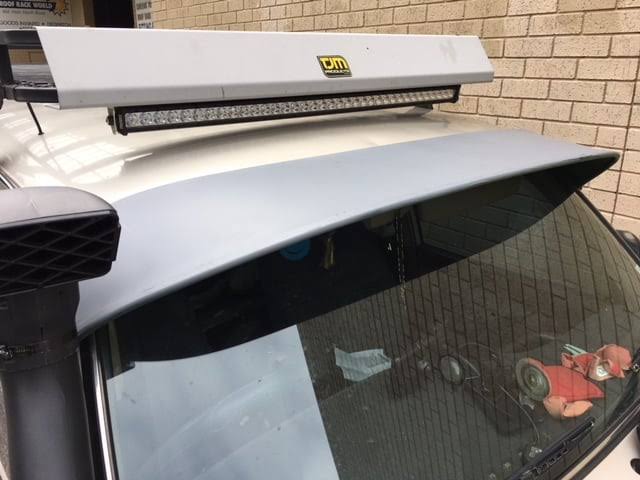
When outfitting an 80 Series, drivers generally choose between two styles:
- Alloy Mesh Visors: Built from an expanded aluminium screen inside a rigid frame, an alloy mesh Toyota LandCruiser sun visor provides excellent low-angle glare diffusion while allowing air to pass through the screen. This design minimises aerodynamic drag and eliminates high-speed wind roar on lifted rigs.
- Solid Steel Visors: A continuous shield, such as the Solid 80 Series LandCruiser Sun Visor, blocks 100% of overhead light. It acts as a physical barrier against midday heat, keeping the wagon’s expansive front interior significantly cooler.
Because the 80 Series uses traditional roof drip gutters, mounting brackets typically use gutter clamps combined with low-profile A-pillar locating screws for multi-point stability.
200 Series LandCruiser: Modern Aerodynamics and High-Speed Touring
The LandCruiser 200 Series (2007–2021) represents a complete departure from earlier boxy designs. With a steeply raked windscreen, curved A-pillars, and a smooth, gutterless roofline, installing an exterior Toyota LandCruiser sun visor on an LC200 requires careful planning.
Key factors for the 200 Series include:
- Gutterless Mounting: Without external roof gutters, an LC200 visor must secure using precision door-jamb return brackets or concealed A-pillar riv-nuts.
- Aerodynamic Flow and Wind Noise: At 110 km/h, air speeds over the curved 200 Series roof are significantly higher than on a boxy 70 Series. A 200 Series Toyota LandCruiser sun visor must feature aerodynamic pressure-relief slots or a low-profile airfoil contour to prevent buffeting and cabin noise.
- Roof Rack and Snorkel Proximity: Modern touring builds often carry full-length platform roof racks and 4-inch stainless steel snorkels. Ensure your visor sits forward and low enough to avoid striking the front rack crossbar or snorkel bracket.
Solid Steel vs Alloy Mesh: Selecting the Right Material
When choosing a Toyota LandCruiser sun visor, the two primary construction materials offer distinct trade-offs:
[ Solid Steel Sun Visor ]
• 100% total sunlight & heat blockout
• Maximum resistance against tree branches on overgrown tracks
• Premium paint-matched appearance to vehicle body code
• Slightly heavier over front A-pillars

[ Alloy Mesh Sun Visor ]
• High-level glare reduction with partial light filtration
• Air flows through the mesh, reducing aerodynamic drag
• Lighter total weight profile
• Distinct outback commercial utility aesthetic
For heavy bush work and severe scrub driving, a heavy-duty option like the Solid Toyota Landcruiser Sun Visor provides unmatched durability against low-hanging branches. For dedicated highway touring and minimal wind resistance, an alloy mesh design delivers exceptional heat rejection with a lighter front-axle profile.
Australian Road Regulations and Compliance Standards
Any exterior accessory fitted forward of the cabin must comply with national safety standards and state road transport rules. Operating an unsafe or non-compliant Toyota LandCruiser sun visor can lead to roadside defect notices or compromise insurance coverage.
Key compliance frameworks include:
- Forward Field of View (11-Metre Rule): Under Australian Design Rule guidelines and state modification codes—including Transport Victoria VSI 8 Vehicle Modification Standards and Transport for NSW Light Vehicle Safety Check Rules—an external sun visor must not obscure the driver’s forward vision. From any standard seating position, the driver must maintain a clear, uninterrupted view of the road surface 11 metres forward of the vehicle.
- Edge Radii and Protrusion Limits: Under Australian Standard AS 4876.1 and state regulations, exterior fittings must feature deburred, rolled edges (typically a minimum 5mm radius) with no sharp outward projections that pose a pedestrian hazard.
- Lighting and Vision Sweeps: The visor must not obscure primary clearance lights, forward-facing cameras on modern driver-assist systems, or the upper sweep arc of the windscreen wipers. Compliance requirements are maintained nationally under the Department of Infrastructure Australian Design Rules.
Professional Fitment and Waterproof Sealing Steps
Installing an exterior Toyota LandCruiser sun visor is a straightforward workshop job, provided you follow proper weatherproofing procedures to prevent water leaks and cabin rust:
[Dry Test-Fit & Align Visor Contours]
                 │
                 ▼
[Mark A-Pillar Mounting Holes & Check Snorkel Gap]
                 │
                 ▼
[Drill Pilot Holes & Apply Cold-Gal Rust Inhibitor]
                 │
                 ▼
[Inject Polyurethane Waterproof Sealant into Holes]
                 │
                 ▼
[Mount Visor & Torque High-Tensile Fasteners]
                 │
                 ▼
[Wipe Clean Excess Sealant & Let Cure for 24h]
- Dry Fit and Mark Alignment: With a helper, position the Toyota LandCruiser sun visor onto the roof and A-pillars. Check that the visor sits symmetrical across the windscreen and clears the factory snorkel before marking drill centres.
- Prevent Corrosion: Drill pilot holes using sharp, high-speed drill bits. Clean away all metal swarf and immediately apply a cold-galvanising zinc primer or automotive rust preventative to raw steel edges.
- Inject Polyurethane Sealant: Never use domestic bathroom silicone, as acetic cure silicones promote metal corrosion. Always use an automotive-grade polyurethane adhesive sealant (such as Sikaflex 221 or equivalent). Inject sealant directly into every drilled pilot hole before driving in the screws, ensuring a completely watertight barrier against roof leaks.
- Secure and Check Clearances: Torque all fasteners evenly. Confirm that door rubbers close cleanly without rubbing against the mounting brackets, and allow the adhesive sealant to cure for 24 hours before heading out on highway trips.
Summary: Equipping Your LandCruiser for the Outback
A well-engineered Toyota LandCruiser sun visor delivers unmatched protection against blinding outback glare, preserves dashboard electronics, and keeps your cabin significantly cooler across long-distance tours. Whether you are outfitting a rugged 79 Series work ute, restoring an iconic 80 Series wagon, or prepping a 76 Series tourer, matching the correct visor to your platform ensures a rattle-free, weather-sealed installation built for harsh Australian conditions.
Explore the complete range of external 4WD sun visors to find the right setup for your vehicle, or contact our team to confirm vehicle-specific bracket clearances, paint options, and combined freight delivery.
FAQ Section
Will a 70 Series LandCruiser sun visor fit an 80 Series or 200 Series?
No. The 70 Series (including 76 Wagon, 78 Troopy, and 79 Ute) features a distinct, near-vertical flat windscreen and an upright cab design. The 80 Series has curved glass with traditional drip gutters, while the 200 Series features an aerodynamic, gutterless raked roof. Sun visors are engineered to vehicle-specific contours and are not interchangeable across generations.
Does an exterior sun visor interfere with a 4WD snorkel?
High-grade, model-specific sun visors are designed with dedicated clearance cutouts or bracket offsets to clear factory Toyota raised air intakes. However, if your LandCruiser is fitted with an oversized aftermarket 4-inch or 5-inch stainless steel snorkel, you should dry-fit the visor first to confirm there is adequate clearance between the snorkel pipe and the outer visor wing.
How do I prevent rust and water leaks when installing an exterior visor?
Always avoid household silicone, as acetic-cure silicones cause bare steel to corrode. Use an automotive-grade polyurethane adhesive sealant (such as Sikaflex 221). Treat all drilled pilot holes with a cold-galvanising zinc primer before injecting polyurethane sealant directly into the hole prior to securing fasteners. This creates a completely waterproof, vibration-proof seal.
Are exterior sun visors street legal in Australia?
Yes, exterior sun visors are recognised as approved modifications under state vehicle standards (such as Transport Victoria VSI 8) provided they meet visibility requirements. The visor must not project into the driver’s primary line of sight—the driver must maintain a clear view of the road surface 11 metres forward of the vehicle—and the visor must feature smooth, rounded edges.
What is the advantage of the anti-glare green underside on LandCruiser visors?
Drawing on long-haul trucking and aviation engineering, painting the underside of an external visor in a non-reflective matte green or flat black absorbs scattered light rays. This stops harsh glare from bouncing off the vehicle’s bonnet back into the driver’s eyes, drastically reducing driver fatigue on long highway stretches.