Evaluating the key differences between an aluminium vs steel ute tray kit is a critical decision for four-wheel drive owners outfitting a vehicle for heavy trade work, offroad touring, or remote outback exploration. Converting a factory sheet metal tub into a practical flat deck platform maximizes usable rear storage space, improves load accessibility, and allows for clean canopy integration. However, deciding between an aluminium vs steel ute tray kit involves balancing complex engineering variables, including unladen kerb weight, Gross Vehicle Mass (GVM) limits, structural yield strength, long-term corrosion resistance, and total build cost.
Choosing the right material when comparing an aluminium vs steel ute tray kit directly impacts how your vehicle handles both on and off the road. An overly heavy rear tray assembly reduces your available payload capacity, increases fuel consumption, and puts additional strain on factory suspension components. Conversely, choosing a lighter material when evaluating an aluminium vs steel ute tray kit saves critical mass for touring gear, dual-battery systems, and water tanks, but may require thicker extruded structural profiles to match the ultimate impact resistance of structural steel. Understanding these physical trade-offs is essential for selecting the right tray architecture for your 4WD setup.
In this detailed engineering comparison, we break down every practical aspect of an aluminium vs steel ute tray kit. From material yield strength and fatigue resistance to payload math, coastal corrosion defense, manufacturing price points, and transport regulations, this guide provides the technical knowledge needed to evaluate an aluminium vs steel ute tray kit.
To understand the core differences in an aluminium vs steel ute tray kit, one must examine the material properties and structural behaviors of both metals under heavy loads.
                 [ Material Structural Engineering Architecture ]
                                        │
  ┌─────────────────────────────────────┴─────────────────────────────────────┐
  ▼                                                                           ▼
[ Structural Carbon Steel (RHS/SHS Frame) ]                 [ Extruded Marine-Grade 6061-T6 Aluminum ]
• High Modulus of Elasticity (200 GPa)                      • Lower Density (~2,700 kg/m³ vs 7,850 kg/m³)
• Superior Ultimate Tensile Strength & Point Load Defense   • High Natural Oxide Resistance against Coastal Salt
• Excellent Fatigue Life under Corrugated Vibrations         • Saves 60 kg – 110 kg of Mass for Payload & Towing
• High Plasticity before Structural Fracture                • Higher Material & Extrusion Manufacturing Cost
The fundamental contrast when analyzing an aluminium vs steel ute tray kit lies in density and elastic modulus. Mild structural steel (such as Grade 250 or 350 RHS) exhibits an elastic modulus of approximately 200 GPa, giving it exceptional rigidity under severe point loads. When evaluating an aluminium vs steel ute tray kit, steel trays can absorb high-energy impacts—such as dropped machinery or rocks—with localized denting rather than structural cracking. This resilience under severe abuse makes steel a preferred choice for heavy commercial work and trade applications.
In contrast, structural aluminum alloys (typically 6061-T6 or 5083-H116) have a lower density of roughly 2.7 g/cm³, compared to steel’s 7.85 g/cm³. When comparing an aluminium vs steel ute tray kit, an aluminum structure achieves comparable bending stiffness to a light steel frame while cutting total unladen tray weight by 35% to 50%. This weight reduction allows four-wheel drive owners to carry more accessories, water, and fuel without exceeding legal Gross Vehicle Mass (GVM) thresholds.
Selecting between an aluminium vs steel ute tray kit requires assessing key physical characteristics, material behaviors, and operational requirements. Here are seven fundamental criteria to evaluate when choosing an aluminium vs steel ute tray kit:
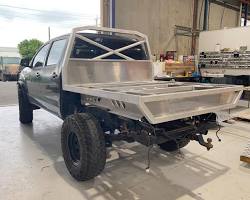
Comparing an aluminium vs steel ute tray kit highlights weight as a primary factor. An aluminum flat tray kit typically weighs between 90 kg and 130 kg, whereas an equivalent steel flat tray kit weighs between 160 kg and 230 kg. Saving 70 kg to 100 kg on the tray alone leaves more available payload capacity for touring gear and canopy accessories.
Analyzing an aluminium vs steel ute tray kit demonstrates steel’s advantage in point-load resistance. Steel floor decks handle concentrated weight—such as engine blocks or heavy steel equipment—without puncture or excessive deflection.
Evaluating an aluminium vs steel ute tray kit under continuous vibration reveals distinct structural behaviors. Steel possesses a defined fatigue limit, meaning stress below a certain threshold will not cause failure over time. Aluminum lacks a true endurance limit, meaning aluminum tray designs require generous radius transitions and reinforced gussets to withstand years of harsh corrugated track driving.
A major advantage when choosing an aluminium vs steel ute tray kit for coastal use is aluminum’s natural oxide layer, which resists rust. Steel requires comprehensive surface treatments—such as hot-dip galvanizing, zinc e-coating, or powder coating—to prevent rust from forming when scratched.
Price is often a major consideration when comparing an aluminium vs steel ute tray kit. Standard steel DIY kits are generally less expensive to manufacture, making them budget-friendly. Aluminum kits involve higher raw material costs and specialized extrusion dies, resulting in a higher initial purchase price.
Evaluating an aluminium vs steel ute tray kit for remote travel favors steel for field repairability. Steel components can be welded using common MIG, TIG, or mobile stick welders found in rural workshops. Repairing a cracked aluminum tray requires AC TIG or specialized spool-gun MIG equipment, which is less common in remote areas.
In terms of vehicle dynamics, comparing an aluminium vs steel ute tray kit shows that reducing mass behind the rear axle lowers the vehicle’s center of gravity. A lighter aluminum tray reduces body roll during cornering and improves ride comfort when driving unladen.
Comparing detailed specifications helps buyers evaluate an aluminium vs steel ute tray kit for their vehicle setup:
| Performance Metric / Specification | Heavy-Duty Steel DIY Tray Kit | Lightweight Aluminum DIY Tray Kit | Hybrid Steel/Aluminium DIY Kit | Factory Stamped Tub |
| Average Unladen Kit Weight | 170 kg – 240 kg | 85 kg – 130 kg | 120 kg – 160 kg | 110 kg – 140 kg |
| Structural Main Runner Specs | 75x40x3.2mm RHS Carbon Steel | 80x50x4.0mm Extruded Aluminum | 75x40x3.2mm Steel Runners | Thin Press-Formed Steel |
| Yield Strength (MPa) | 250 – 350 MPa (Steel) | 240 – 290 MPa (6061-T6) | Mixed Materials | 180 – 210 MPa |
| Natural Corrosion Defense | Requires Primer & Topcoat | High Natural Oxide Shield | High (Alloy Deck / Coated Base) | Factory Paint Finish |
| Point Load Scratch Resilience | High (Dents without Cracking) | Moderate (Prone to Gouging) | High (Steel Subframe Base) | Low (Sill Panel Damage) |
| Estimated Base Purchase Cost | Lower Initial Investment | Higher Material Investment | Mid-Tier Hybrid Pricing | Included with Vehicle |
| Ideal Application Category | Heavy Trades & Commercial | Outback Touring & Beach Driving | Versatile All-Rounder Build | Standard Daily Commute |
Understanding material characteristics helps explain performance differences when choosing an aluminium vs steel ute tray kit.
                   [ Material Science & Metallurgy Comparison ]
                                        │
  ┌─────────────────────────────────────┴─────────────────────────────────────┐
  ▼                                                                           ▼
[ Fe-C Carbon Steel Metallurgy ]                            [ Al-Mg-Si 6061-T6 Alloy Metallurgy ]
• High ultimate tensile strength (400–500 MPa)              • Solution heat-treated and artificially aged
• Plastic deformation absorbs extreme energy before breach  • Non-magnetic, high thermal conductivity
• High resistance to surface gouging from tools             • Superior strength-to-weight ratio for light vehicles
• Micro-cracking limited under directional flex loads       • Requires isolation hardware against galvanic corrosion
In an aluminium vs steel ute tray kit, structural steel relies on carbon-iron crystalline structures that deliver predictable stress responses under load. The ability of steel to undergo plastic deformation means that if an extreme force exceeds its yield point, the tray frame bends slightly rather than failing catastrophically. This structural tolerance is why heavy commercial rigs often choose a steel tray configuration.
When evaluating an aluminium vs steel ute tray kit, marine-grade alloys like 6061-T6 or 5083-H116 incorporate magnesium and silicon to optimize tensile properties without adding dead weight. Heat treatment gives aluminum the structural rigidity required for flat tray floors while maintaining a high strength-to-weight ratio. However, because aluminum reacts galvanically with mild steel, any steel mounting brackets or bolts attached to an aluminum tray must use anti-seize compounds or non-conductive isolation washers to prevent galvanic corrosion.
Examining real-world driving environments demonstrates how choosing an aluminium vs steel ute tray kit affects overall vehicle capability.
When equipping a 4WD for extended outback expeditions, managing the total vehicle weight budget is vital. Installing a heavy steel tray combined with a fully equipped canopy, spare tires, long-range fuel tanks, and water supplies can push a vehicle beyond its legal Gross Vehicle Mass (GVM) limit. In this setup, selecting an aluminum tray saves approximately 80 kg of unladen weight, ensuring the vehicle remains within legal payload limits while preserving suspension travel across rough tracks.
For vehicles used primarily on commercial job sites, carrying heavy machinery, masonry supplies, or scrap metal subjects the tray deck to severe point-loading. In this high-impact environment, choosing a steel tray provides the rugged durability needed to withstand dropped tools and sharp loads without puncturing the floor deck.
Properly assembling and fitting your selected kit ensures long-term structural reliability regardless of whether you choose an aluminium vs steel ute tray kit.
1.Inspect Kit Contents and Prepare Chassis Support:Unpack components, check inventory, and clear a level workshop area.
Unpack your selected kit on a flat surface. Verify all laser-cut crossmembers, main runners, side boards, and high-tensile fasteners match the packing list before starting assembly.
2.Assemble Subframe and Verify Diagonal Alignment:Connect main longitudinal runners with transverse deck support members.
Lay out the main structural runners and bolt or tack-weld the crossmembers. Measure diagonally corner-to-corner across the frame to confirm the subframe is perfectly square before torquing hardware.
3.Install Rubber Chassis Isolation Strips:Prevents chassis metal chafing, squeaks, and stress cracking.
Place heavy-duty EPDM rubber isolation pads along the vehicle’s factory chassis mounting brackets. Isolation padding prevents metal-on-metal chafing and dampens road vibration across the tray structure.
4.Position Deck Floor Planking and Fasten Down:Align floor sheets starting from the headboard frame working rearward.
Lay floor planks onto the subframe, starting against the front headboard structure. Secure the deck panels using countersunk fasteners, maintaining proper expansion gaps along the edges.
5.Attach Mudguards, LED Lights, and Perform Final Inspection:Mount mudguards, wire LED rear lamps, and verify clearances.
Mount wheel arch mudguards allowing for full suspension travel. Wire rear LED tail lamps into the factory wiring harness using weather-sealed connectors, then verify all fasteners are properly torqued.
explore our complete range of 4x4 armor, side steps, and rock sliders
Whether you choose an aluminium vs steel ute tray kit, your completed tray assembly must comply with national transport regulations. In Australia, vehicle modifications are governed by standards published by the Federal Register of Legislation under Australian Design Rules ADR 13/00 (Installation of Lighting) and ADR 42/00 (General Safety Requirements).
                 [ ADR Transport Safety Compliance Rules ]
                                     │
   ┌─────────────────────────────────┼─────────────────────────────────┐
   ▼                                 ▼                                 ▼
[ Maximum Rear Overhang ]        [ Mudguard Coverage Rules ]       [ Rear Lamp Visibility Angles ]
• Must not exceed 60% of wheel   • Mudguards must cover full tire  • Tail lights must remain visible
  base or maximum 3.7 meters      tread width and 45-deg rear angle  at mandatory 45-degree angles
Protecting your investment requires evaluating appropriate surface finishes based on your choice of an aluminium vs steel ute tray kit.
Because carbon steel rusts when exposed to air and moisture, steel DIY tray kits require thorough surface preparation. High-quality steel trays undergo shot-blasting, zinc phosphate pre-treatment, an electrostatic e-coat primer, and a durable textured powder coat topcoat. Alternatively, applying a spray-on polyurea bedliner to the deck floor creates an ultra-durable, slip-resistant surface that absorbs cargo impact noise.
While aluminum naturally resists red rust, unpainted aluminum can develop surface oxidation when exposed to road salt or coastal spray. Many builders choose to leave raw aluminum clear-anodized or raw, while others apply a UV-stable powder coat or specialized aluminum-primer bedliner for an upgraded appearance.
Examining real-world examples illustrates how different vehicle owners choose between an aluminium vs steel ute tray kit:
Use this quick summary checklist when deciding between an aluminium vs steel ute tray kit: